


Malagasy Exhumation ceremonies
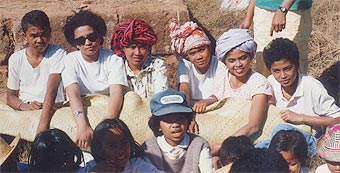
Most of the beliefs in Madagascar fit with the local customs. The exhumation of the dead is one of them based on.
The exhumation ceremony called "Famadihana", means move the remains of the dead body to another place. There are differend kinds of custom according to regions. Normally a dead person from a Malagasy origin should be burried in his or her family tomb. Burials and exhumation require special preparation, you need to see an "astrologer" or "mpanandro" to choose the right date and to prepare the "ancestors" about the exhumation. It's the family head's duty to go and announce the family's "visit" at the family tomb. He will call the ancestors' attention preparing them to make sure that the corpse will be easily recognized for the shroud renewal. At the end of the speech, the "visitors" will take some Malagasy-made alcoholic beverage and they will not forget to share it with the dead, pouring some on the tomb.
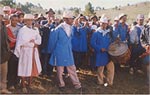 On
the day of the ceremony, the astrologer opens the march from the house
to the tomb with the close
relatives of the dead or all family members. There is a national flag
and dance at the rythm of Malagasy folk songs on the way. There, the women
and the close relatives keep on dancing while the men take out the corpes
with a mat calling each one by their names. The close relatives carry
the corpes around the tomb seven times at the rythm of a lively Malagasy
folk song music; then comes the shroud wrapping.
On
the day of the ceremony, the astrologer opens the march from the house
to the tomb with the close
relatives of the dead or all family members. There is a national flag
and dance at the rythm of Malagasy folk songs on the way. There, the women
and the close relatives keep on dancing while the men take out the corpes
with a mat calling each one by their names. The close relatives carry
the corpes around the tomb seven times at the rythm of a lively Malagasy
folk song music; then comes the shroud wrapping.
There are often more than one corpse taken at the tomb, so while waiting for the last corpse to wrap up in the new shrouds; each family gets together to put the newly wrapped corpse of their ancestor in their laps.
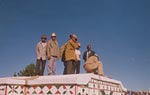 Before
the sunset, the astrologer makes a thanking note and moves on to a special
ritual of locking the tomb.
Before
the sunset, the astrologer makes a thanking note and moves on to a special
ritual of locking the tomb.
The guests are then served the traditionnal "fat rice". Everybody should be happy. The mats which received the bones of the ancestor before the wrapping are supposed to have a healing and blessing virtue so everyone rushes for a piece of it to keep at home. A banana tree is thrown into the pit to fill up the hole.
Men put the copses back into the tomb, and to close the ceremony, the family thanks the guests and goes on with the traditionnal "fat rice" and the folk music.
Written by Haingo
 Click here
to know more about the writer
Click here
to know more about the writer
Click
here to go back to the main page