




By Julia Hawes
This article appears in the January 15, 2001 issue of Wine & Dine Magazine.
Julia Hawes is entranced by the fragrant fusion of cultures that makes Mauritius a dream destination.
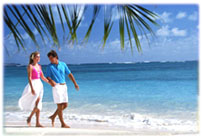
What more could anyone ask for? It's approaching seven o'clock in the morning, the intense Mauritian sun is rising steadily above the horizon and the limpid sea is lapping gently against the white sands, just a matter of steps from where we are sitting. "Welcome to the Beau Rivage Hotel. Have a glass of champagne," says Lionel Alvarez, general manager. Despite our feeble protestations, less than a minute later two chilled, gently effervescing glasses are placed at our al fresco breakfast table.
The beauty of arriving this early (all Air Mauritius non-stop flights from Hong Kong touch down with the sunrise) is that you have a full day of relaxation ahead of you in which to get over the journey, although, having said that, the 10-hour flight passes extremely smoothly and comfortably. At this hour, all is calm; gardeners are tending the beautiful, landscaped grounds, whilst chefs keep a watchful eye over the buffet counters laden with just-baked pastries, tropical fruit, crispy bacon, sausages, eggs cooked to order, freshly squeezed juices and, of course, the bubbly.
This very civilised champagne philosophy permeates through the hotel - one of the first things you notice on arrival, apart from the genuine warmth of the welcome, are the well-stocked ice buckets placed around the reception areas. By your second day at Beau Rivage you will think nothing of having a Mimosa with breakfast, or a glass of champagne as you relax in the elegant, open-sided lobby and plan another day in paradise....
Rustic charm
The island of Mauritius occupies an idyllic location in the Indian Ocean, lying off the east coast of Madagascar at the crossroads of Africa and Europe. It is a volcanic island which gives rise to dramatic scenery, from the fertile, sweeping coastal plains, with swathes of sugar cane as far as the eye can see, to the craggier Central Plateau where the highest peak, Piton de la Riviere Noire at 828 m, is clad with tea and eucalyptus plants. The island is almost entirely encircled by one of the world's largest unbroken coral reefs - you get a spectacular view of this on take off or landing at the international airport.
And yet the truly magical thing about Mauritius is that despite it having been a favourite playground for the rich and famous for decades, it still retains an unspoilt charm - the only buildings you will find higher than three storeys are in the colonial capital Port Louis and the island is still essentially rural. Get off the beaten tourist track, and it feels like you're stepping back in time.
Ancient tractors labour down country roads flanked by volcanic boulders and brightly coloured flame trees; a young man on a motorcycle weaves along a dirt track, a pile of sugar cane balanced precariously on the handlebars; sari-clad women meander into the cane fields, bundles perched jauntily on their heads; chickens scratch for food along dusty village roads and dart away nervously from giggling, excitable children; and old men gather outside bougainvillea-clad churches and community centres, swapping stories, playing boules and watching the world go by.
Early Arab traders are thought to be the first fortunate visitors to come across Mauritius and from the 16th century, this intoxicating island was then alternately occupied by the Dutch, French and English, each country leaving its own legacy, until Mauritius finally gained independence in 1968. Mix these European influences with the local Creole culture and a touch of Chinese and Indian too, and you have a heady blend of peoples, languages and traditions that remain distinct yet complementary. Temples sit side by side with pagodas, churches and mosques; conversations slip easily between French, Creole, English and numerous Indian dialects; Mauritians greet each other with a kiss on both cheeks, Continental style; bars serve local sugar cane rum alongside fine wines; and menus are as likely to serve a local curry as a Chateaubriand.
Beau Rivage is one of the newest hotels on the island and manages to attain the perfect balance between chic and casual. Everything about the property oozes tropical elegance and the staff inject that infectious Mauritian charm and joie de vivre. The difference here is in the details - within a matter of hours of arrival it seems as though everyone knows you by name and they make you feel as if you are part of an extended family. This is what Na�ade Resorts, the parent company, is all about - pure five-star indulgence yet at four-star prices, which is why they call themselves 'a new generation of hotels'. And when they say five-star luxury, they mean it. The large rooms, located in clusters of two-storey, thatched-roof villas, are decorated in warm, inviting Mauritian style, using colours that reflect the sand, sky, ocean and landscape. Bathrooms are sleek and spacious with oversized bathtubs, and the ample walk-in wardrobe is big enough to hide your suitcases away, so you don't have to be faced with a constant reminder that this idyll will have to come to an end. All rooms have a terrace or balcony where you can enjoy breakfast or a sundowner as you look out over your own little piece of heaven.
Spoiled for choice
After a busy day on the beach, thoughts turn to wining and dining, and guests really are spoiled for choice. Chef Patrice Dumont explains that quality cuisine is taken very seriously, and this is underscored by the fact that Michel Roux of Le Gavroche fame was presiding in the kitchen over Christmas, sharing his vast expertise with the team of chefs. The culinary focus in Indouchine, the hotel's signature restaurant, is on reflecting the island's multi-cultural heritage in a contemporary way, rather than the traditional rustic style, and there is an excellent wine list to complement the refined food. Imaginative offerings include pink peppercorn-flavoured scrambled eggs with caviar served with frozen vodka; lobster with a vanilla beurre blanc; millefeuille of vielle rouge (a local fish) and cinnamon-flavoured apple slivers; and tandoori pigeon breast with achar, or pickle. The thoughtful design of the hotel means that, apart from Indouchine which is discreetly tucked away, the restaurants and bars overlook either the pool or the ocean, so you are never far from a breathtaking view. As the evenings draw in, the al fresco areas are lit by candles and flaming torches, and depending on the night of the week, guests can watch the seductive swaying and swirling of girls dancing the Sega; indulge in authentic Mauritian cuisine; or enjoy an African-themed evening featuring dishes such as marinated ostrich with apple chutney, crocodile stew, or roast zebu with cumin and chilli.
Leaving the Beau Rivage was hard, although the champagne send-off eased our departure, and we set off across the island to the Morne Peninsula, on the far southwest of Mauritius, and Na�ade group's Les Pavillons hotel. En route, the vista changes gradually as lush scenery gives way to a more stark, dramatic landscape underscored by the impressive Morne Brabant outcrop that towers above the Les Pavillons resort. The setting here is just as stunning as Beau Rivage - rooms are located in colonial-style villas set in a lush garden overlooking a postcard-perfect beach - although the mood is more low-key and laid-back. Our first night was spent in the beachfront Le Benitier seafood restaurant feasting on lobster by candlelight, under the velvet canopy of night that shimmered with stars. The only sound came from the waves breaking on the shore and distant laughter from a moored yacht.
There is nothing like waking up to crystal clear sparkling waters and clear skies to make the spirits soar. However, if you have had your fill of sun worshipping on the powdery white beach, splashing in the azure waters or just drifting contentedly around the pool, Les Pavillons, like the Beau Rivage, offers a fantastic array of complimentary water sports, from water skiing to snorkelling and leisurely trips over the reef in a glass-bottomed boat. Alternatively, for those after high adventure, the seas around the Morne headland offer spectacular opportunities for big game fishing.
As we sipped our final glass of champagne, awaiting a last tantalising taste of the exceptionally good local white tuna with a dash of green chilli sauce at the hotel's beachside restaurant, Provence, thoughts inevitably turned to our Mauritian experiences. This is a place like no other, that weaves a spell over visitors and seduces each of the senses, with its pristine turquoise waters and expanses of casurina-fringed beaches, warm and sincere people, and a fascinating cultural mix that sees you enjoying five-star hotel treatment one moment and contemplating the beauty and mystery of a humble Indian temple on the shore the next. Discover Mauritius for yourself and you'll be captivated too.
SIGHTS AND SHOPPING
If you can bear to tear yourself away from the lap of luxury at Beau Rivage or Les Pavillons, there are a host of things to do all over the island. Either hotel will be happy to put together an itinerary for you, or you can contact one of the local tour operators - we used Cathay Tours who were efficient, friendly and full of useful advice.
Golf fans will delight in the many courses, some with spectacular oceanfront settings. Shopping is excellent and the numerous factory outlets in Floreal, Curepipe, Grande Baie and Port Louis are crammed with designer labels such as Ralph Lauren - also look out for cashmere items at bargain prices. The regenerated waterfront shopping area in Port Louis features upmarket fashion and jewellery boutiques as well as local handicrafts and textiles. For a more colourful experience, wander through the maze of the vibrant Port Louis market, where the cries of the merchants and the alluring aroma of incense mingling with spices lure you in.
Pamplemousses Botanical Gardens, a short drive from the capital, boasts over 600 species of tree - this includes over 80 types of palm, as well as ebony, mahogany, nutmeg and clove. This serene spot will delight horticultural enthusiasts or those simply after a tranquil interlude. They were created in the 18th century and rank amongst some of the most beautiful in the world. Elegant tree-lined avenues lead you into the heart of the gardens where you will discover the world-famous giant water lilies.
Well worth a visit is Domaine les Pailles, a couple of miles outside Port Louis, where visitors can learn about traditional Mauritian industries such as the spice trade and sugar cane; wander at leisure around a small nature reserve; or savour delicious food in one of the four restaurants. Domaine les Pailles is a unique reconstruction of an 18th century sugar estate and houses an original ox-driven sugar mill, a distillery that produces rather potent rum from molasses, sugar cane plantations, spice gardens, and even a casino. Taking a leisurely ride around the estate in a horse and carriage or on the miniature train is like travelling back to the Mauritius of a century ago.
FOOD GLORIOUS FOOD
Mauritian cuisine is as cosmopolitan as the culture, resonant with Indian, French and Creole influences. Fish and seafood are obviously in abundance - marlin and rock oysters in particular - and other popular staples include palm hearts, venison and wild boar, while tomatoes, onions, garlic and ginger are used as basic ingredients. Chilli is unquestionably the most popular spice, however local curries are milder than their Indian counterparts - Mauritians prefer to use chutneys and condiments, the delicious fiery green chilli sauce for example, to heat things up.
Apart from the excellent restaurants at Beau Rivage and Les Pavillons, there are a handful of independent eateries that we visited where you can enjoy the truly local flavours. If you have spent a day shopping in and around Curepipe and Floreal, head to the charming La Clef des Champs nestling in a suburban street in Floreal. It's a very intimate experience as the restaurant occupies the ground floor of the owner's house. The menu is extensive and offers beautifully presented dishes such as artichoke tartare with tamarind-marinated shrimps and hazelnut oil; grilled langoustine with citronella hollandaise; creamy chicken curry; and spiced Chinese-style duck with braised lettuce.
Domaine les Pailles also features some of the finest food on the island. The complex houses four different restaurants offering Mauritian, Chinese, Indian and Italian cuisine. Clos St Louis, modelled on a traditional French planter's house, serves authentic local food - look out for the heart of palm salad with smoked marlin carpaccio; octopus salad with Rodrigues lime and coriander; and chicken vindaye with a dash of coconut milk - vindaye is a mustard seed and vinegar-based dish, and is served cold.
Chilli addiction
The ubiquitous fiery green chilli sauce, with a creamy, paste-like consistency, was one of our favourite culinary discoveries. Mauritians enjoy it with everything from an omelette at breakfast, to a white tuna steak at lunchtime, or a late night curry. The balance of ingredients varies, but it is essentially a combination of fresh green chillies, ginger, garlic, a spritz of fresh lime juice and a sprinkle of salt, all pounded together with a little vegetable oil using a pestle and mortar. Experiment at home and go with whatever combination appeals to your taste buds.
Street snacks
Echoing the harmonious Mauritian ethnic mix, street food is truly cosmopolitan. Walking down the road in Flacq, the closest market town to the Beau Rivage, you will see baguettes and French pastries sharing the shelves with tasty Indian snacks such as dahl puri (flour pancake wrapped around a dollop of dahl and chilli sauce), vadai (deep-fried lentil patties) and vegetable pakora. Grab a couple of these and munch on them as you wander around Flacq's colourful, animated market where you can buy everything from fresh pineapples, bitter gourds, okra and plump tomatoes to packets of local spices such as cloves, star anise and cinnamon, and Mauritian essentials such as tamarind paste and saffron.
FUTURE PERFECT
So, where can Na�ade Resorts go from here, you may wonder? Elite exclusivity is the answer. A super-luxurious, colonial-style resort called Follies is taking shape on the private island, Ile des Deux Cocos, off the southeast coast of Mauritius. Slated to open in mid-October this year, Follies is the brainchild of Philippe Requin, an award-winning hotelier and the driving force behind Na�ade Resorts. Follies is set to become one of the world's most-talked-about special hideaways. Wine & Dine will bring you the latest details as we receive them...
Beau Rivage, Belle Mare, Mauritius. Tel: (230) 402 2000. Fax: (230) 415 2020.
Email: [email protected]
Hotel Les Pavillons, Le Morne Plage, Mauritius. Tel: (230) 450 5217. Fax: (230) 450 5248.
Email: [email protected]
La Clef des Champs, Avenue Queen Mary, Floreal, Mauritius. Tel: (230) 686 3458/2509.
Email: [email protected]
Domaine les Pailles, Les Guibies, Pailles, Mauritius. Tel: (230) 212 4225
Cathay Tours, Ground Floor, Moorgate House, 29 Sir William Newton St, Port Louis, Mauritius. Tel: (230)212 8584. Fax: (230)212 8587

