Change old fork oil procedure
1.) Beed air from valve stem on crash bar to relieve the system pressure. (very important, trust me - I learned the hard way)
2.) Place drain pans under both fork legs.
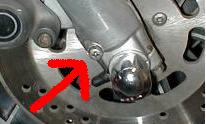
3.) Remove drain screws shown in figure 1. I needed a hand imact screwdriver and a 2# hammer to remove mine.
4.) Hold front brake and compress and uncompress front suspension to help force old fork oil out.
5.) Remove 2 screws holding instrument cluster on. Place rag on gas tank and pull instrument cluster back and set on rag. No need to detach the wiring harness.
6.) Remove 4 handlebar clamp mounting bolts and clamps. Pull bars back and out of way being careful not to bend the steel brakeline too much.
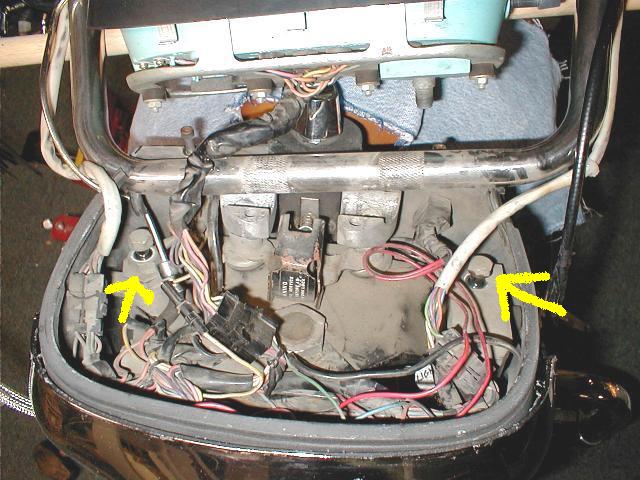
7.) Remove the 2 banjo bolts in the top of fork tubes (figure 2).
8.) Reinstall drain screws in bottom of fork tubes being carefull to not overtighten.
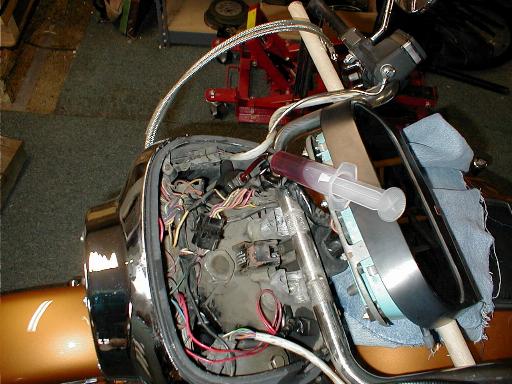
9.) Pour in new oil (H-D Type E fork oil) into the holes that the banjo bolts were removed from. This is the challenging part. The fill holes are small in diameter and while you are filling the fork escaping air tries to bubble out the fill hole. I used a syringe (figure 3)with a rubber tube for the needle and still spilled more than I wanted to. My 1984 FLTC takes 7.5 oz. per side.
10.) Reinstall banjo bolts, handlebars and instrument cluster.
11.) Repressurize air in crashbar to 40 PSI max. Your done! |