| PIRATES OF MASSACRE ISLAND |
| PROJECTS LIST |
| June 2005- 1. 2 ea replica grenades (totally inert) as per examples recovered from the Whydah. Fuze wells of wood drilled, carved, with inert fuze made from cotton rope. Painted with three coats of black oil based paint. Total work time- 3 hrs. 2. 2 each sea chests; one stained and coated with lacquer (with brass fittings and handles); the other painted with two coats of Hunter Green (steel fittings). Total work time- 10 hrs. 3. 3x5 foot flag modeled after that of Captain Edward England. Skull and crossbones hand painted on both sides with white oil based paint. Edges hand stitched and cotton binding added to reinforce leading edge along with cotton ties. Total work time- 12 hrs. 4. Gold bars, as per Atocha wreck recovered by Mel Fisher. Both small and large ENRADA style bars made using molten lead in a hand chiseled wooden mould. After cooling, bars were stamped with replica doubloons and reales to imitate mint marks. Metallic gold spray paint used for finish. A few bars cut with a chisel for dividing up amongst crew. Total work time- 8 hrs. 5. Cat-o-nine tails. Modeled after historic specimen using cotton rope knotted every two inches. Cat attached to wooden baton. Total work time- 4 hrs. 6. Bullet waist pouch per Whydah and Phipps Expedition artifacts. Hand sewn leather secured with cloth ties. Total work time- 3 hrs. 7. Powder flask. Covered a copper powder flask with leather, hand stitched adding loops for cord. Total work time- 3 hrs. 8. Quadrant- wooden quadrant measuring 12" as per Greenwich Maritime Museum specimens. Hand scribed increment marks, stained and lacquered with brass sights and plumb bob. Accurate to within 1 degree. Total work time- 10 hrs. 9. 1/2 pound of sea biscuit [hardtack for you landlubbers]. Used plain wheat flour (unbleached), add water and some salt, knead, bake in oven at 350 degree F for 90 minutes (turn over after 45 minutes). 10. Leather belt hanger for 17th century sword. Hand sewn made per specimens illustrated in period military and pirate pictures (dyed black). Total work time- 4 hrs July 2005 11. Cotton waistcoat- hand sewing light weight off white colored material for hot and humid weather, brass domed buttons with working pockets. Total work time- 50 hours. August 2005 12. Hand sewn canvas snapsack, about five hours sewing. September 2005 13. Work in progress- 1700 era coat modified from a Simplicity pattern (coat pattern from "The Costumers Manifesto" website). Added material to front and back portions of coat according to the historically correct pattern, giving it a more skirt like appearance. Will add buttons down the front of the coat per period drawings and historical garments. Back of coat split, hemmed to the small of the back as per drawings of period military garments and personal preference (no gussets or "godets"). UPCOMING PROJECTS- A. Implements for swivel cannon B. Hand sewn stockings. Photographs of projects- |

|
 |
 |
 |
 |
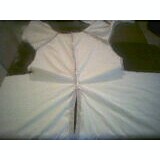 |
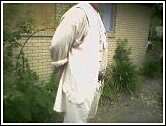
| Back of coat. Lightweight gray wool suiting (100 percent wool) used as fabric, obtained from JoAnn's. |
| Interior of coat lined with off white muslin, everything is hand stitched. |
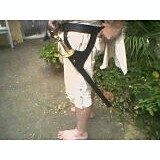
| Sword belt, heavy saddle leather later stained black. |
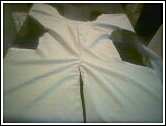
| Hand sewn waistcoat of lightweight cotton. Handsewn button holes and working pockets. |
 |
 |
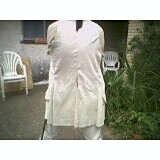
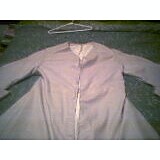
| Front of coat, seams hemmed. |
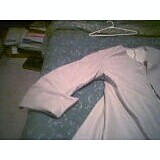
| Sewed on sleeves and cuffs, September 18, 2005. |
| September 18, 2005- during the last few days sewed on sleeves and cuffs, and hemmed neck and front seams. To be done- sew hem on bottom of coat. Order buttons and sew button holes on coat front, pockets, and cuffs. Decide on what size pockets to cut, cut and sew material for working pockets. September 25, 2005- Completed sewing pocket flaps. Hemmed bottom of coat (all six or so feet of fabric). Decided to take coat to seamstress to have her sew the 35 buttonholes (my attempt to hand sew buttonholes failed miserably). To be done- sew on buttons, attach pocket flaps, sew pockets. |
| Progress of hand sewn coat- started 1 Sep 05. |
| October 1, 2005- Buttonholes completed by seamstress. Cut line for pockets, sewed pockets and attached working pockets to front of coat. All sewing complete; all that remains is to attach buttons (awaiting order from Smoke and Fire Company). |
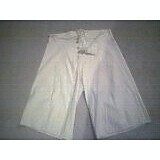
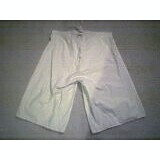
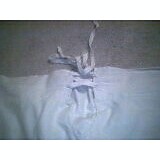
| October 5, 2005- Buttons arrived yesterday. Was busy past four days hand sewing sailors trousers (slops). Am hemming them tonight after some research at local library. |
| October 6, 2005- Completed sailors slops- |
 |
 |
 |
| October 7, 2005- Completed sewing on buttons of coat. |
| 14. Baldric for Cutlass (March 2008) Over the shoulder belt from thick leather, researched and pattern produced from period drawings. Time of construction- about ten hours. |
| 16. Increase heel height for shoes (April 2008) Archaeological specimens of shoes from LaSalle's "Labelle" and Bellamy's "Whydah" show shoe heels as high as 1.77 inch. Therefore, using a supply of thick sole leather, I traced the heel and cut out portions for the leather. My original intention was to tack these into place using nails or pegs, but I wanted something permanent since concrete tears up the soles. . I used a five minute epoxy, which set reasonably and dried quite hard. Excess leather was trimmed away with a razor knife, sanded to profile, then colored with heel black. Also covered the exposed threads on the sole with a good helping of epoxy to prevent loosening of the sole. Total work time- about ten hours. |
| 15. Blacking Musket (April 2008) Removed parts from musket, cleaned, then spray painted with flat grey primer. After primer dried hand painted barrel, lockplate, ramrod thimbles, screws, and buttplate with gloss black paint. Total work time- about 10 hours. |
| 17. Remove highly polished shine from plug bayonet (April 2008) This process will work on any metal surface. Simply used 5 percent vinegar, which is available at any grocery store. Since the vinegar beaded up when placed on the blade, I soaked several paper towels in vinegar and wrapped them around the blade. After several hours I checked the progress, which look promising. The next morning I checked the blade and the polished sheen had been replaced with a natural metallic hue. Cleaned off with soap and water, dried thoroughly, and coated with oil. If storing in a leather sheath the blade should be checked regularly and kept oiled to prevent corrosion. Total work time- a few hours. |