Daisy
- Different names for daisy
- Asteraceae or Compositae, known as the aster, daisy, or sunflower family 'Common Daisy
- Bellis perennis
- Leucanthemum vulgare
- Daisy (given name), a feminine given name, commonly thought to be derived from the name of the flower
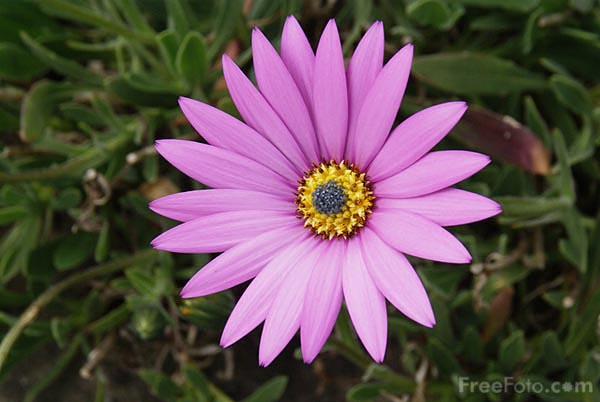
Places where disy can be found:
- Daisy, Arkansas
- Daisy, Georgia
- Daisy,Oklahoma
- Daisy Geyser, Upper Geyser Basin, Yellowstone National Park
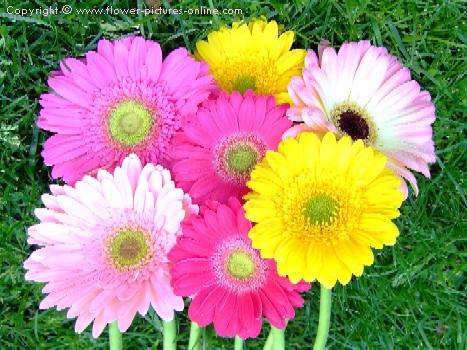
Some thing about growth of plants
It is a herbaceous plant with short creeping rhizomes and small rounded or spoon-shaped evergreen leaves 2�5 cm long, which grow close to ground. The flowerheads are 2�3 cm in diameter, with white ray florets (often tipped red) and yellow disc florets. Although many people think that the flower had a yellow centre with white petals this is not the case. Each individual "petal" is itself an individual flower. In the centre there are many tiny yellow flowers also. The different colours and styles of flower work together in order to attract insects. This type of flower is known as a composite flower. They are produced on leafless stems 2�10 cm (rarely 15 cm) tall. The lawn daisy is a dicot.
Uses of Daisy
It is not affected by mowing and is therefore often considered a weed on lawns, though many also value the appearance of the flowers. Several cultivars and hybrids have been selected with much larger flower heads up to 5�6 cm diameter and with light pink to purple-red ray florets.
Bellis perennis has astringent properties and has been used in folk medicine.In ancient Rome, the surgeons who accompanied Roman legions into battle would order their slaves to pick sacks full of daisies in order to extract their juice. Bandages were soaked in this juice and would then be used to bind sword and spear cuts.
Daisies have traditionally been used for making daisy chains in children's games.
 Home Page