

By Florence Pia G. Yu
Gulf News, 2003
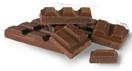
It brightens the mood, says Maureen de Vera, sales executive at Bateel. This is why it is one of the most popular gifts exchanged during Valentines, Christmas, birthdays and other special occasions. "When you want to bond with someone, you bring chocolates," de Vera says.
For the love of chocolate
The thought of melt-in-your mouth smooth, dark blend is certainly hard to resist.
"You eat it not because you need to, but because you want to," says Regis Nadelwais, assistant merchandise manager at Carrefour.� It is popular belief that chocolate can cause a certain kind of "high" similar to falling in love. Even the ancient Aztecs believed it to be an aphrodisiac. There is no solid scientific evidence to this, but chocolate does have a lot of the substance called phenylethylamine, which is supposed to stimulate the libido. "Chocolate gives you a sense of warmth, like coffee," says Ata Atmar, general manager of Bateel.
Today, chocolate is a temptation to the taste buds of many. Yearly, the Swiss each eat 22 pounds of chocolate, Spaniards consume nearly 12 million pounds, and Americans eat 3.3 billion pounds. Europeans make up 15 of the 16 leading chocolate-consuming people worldwide. It is fast growing popularity among Asians as well.
There used to be just three basic chocolates?milk, semisweet and bittersweet. But over the years, these basics spawned hundreds of other variants to suit the different taste buds of bar-munching diehards.� We now have all variants imaginable--chocolates mixed with fruits, nuts, caramel, rice crispies, even coconut. Even the taste has become more specific with so-called premium, dark, "extra bitter", "intense" and "extreme" gourmet chocolates. Whatever the mix, chocolate is always the first thing to go from the shelves, tells PremMirchandani, manager of Lamcy Plaza Hypermarket. Mirchandani tells that around 1,300 pieces of chocolates are sold at Lamcy daily.
From seed to sweet
It all starts with the cocoa bean. Its scientific name is theobroma cacao, which means "food of the gods". Chocolate was first used by the Aztecs as a spicy drink. Spanish explorers, who stumbled upon the concoction in the 16th century, brought it back to Spain and substituted the spices with sugar and vanilla. It was enjoyed as a drink. Chocolate only took solid form in the late 18th century when the first chocolate bar was made by the Fry and Sons in England.
To make chocolate, cocoa beans are roasted, removed of shells, and then crushed. The "nib" or meat of the bean is then heated until it forms a thick paste called chocolate liquor. Cocoa butter, sugar, milk and vanilla are then added to the liquor, and then "conched" or stirred under heat for a few hours to a few days until it reaches the right consistency. The mixture is poured into moulds to give the chocolate shape.
The local taste
Milk chocolate is most popular among locals and expatriates, tells Atmar. About 66 percent of Americans also prefer milk chocolate. "People like it sweeter and milkier, especially Arabs. Europeans like less sugar and less milk and more cocoa," he says. "The ones with nuts and peanuts have always been popular," observes Tuupainen. Brazilian nuts, hazelnuts and almonds are the local favorites.
At local supermarkets, hundreds of brands are vying for attention. Mass produced brands like Hersheys, Cadbury, Nestl�, Mars, Lindt and Toblerone are fast sellers at Lamcy and Carrefour. A local brand, Tiffany, is also a hit among budget-conscious chocolate lovers. Mirchandani says special offers on branded chocolates are picking up sales. Ferrerorocher is also selling well. "The packaging also matters. If it's attractive, consumers go for it," says Mirchandani.
For those upgrading their taste for sweet, there are specialty chocolates, like Ghirardelli, Godiva and Guittard, which can be easily purchased on-line. These high-end chocolates are catching the interest of chocoholics looking for something new, like Bateel's line of date chocolates.
Chocolate has become so versatile it's even finding its way into more foods. "It's just so nice to eat that people just put it into food," says Jason Atherton, Executive Chef of Verre, a restaurant of 3-Michelin chef Gordon Ramsay. Chocolate is so in demand, Atherton tells, that the menu is never without chocolate. He also makes up to four different types of chocolate to serve with coffee.
Going Gourmet
Bitter is better for some chocolate diehards. The current trend for specialty or gourmet chocolates, particularly in the dark, semi-sweet and 70 percent cocoa chocolate, is quickly gaining ground, Atherton says. More chocolatiers are now poring over content labels to find out where the chocolate is made, what beans are used, and the cocoa percentage.
"I look for something with a minimum of 75% cocoa. It may be a bit expensive but it's richer in flavor, compared to just the sweetness of mass market chocolates," Atherton tells.
There are two types of specialty chocolates: the blends or varietal chocolates, and the single-origin or terroir chocolates (also known as pure-origin, or grand cru). Blends are made of cocoa beans from different areas. These leave layers of flavors in your mouth. Most manufactured chocolates are blends. Single-origin chocolates, sort of like specialty coffee, use beans from one plantation. So-called chocolate purists go for these chocolates because they are packed with a lot of flavor.
Connoisseurs say the bean plays an important role in the taste of the chocolate.� "It's just like coffee. The quality of the coffee depends on the quality of the beans, and how you blend the beans to get more flavor out of it," explains Atmar.
The world of beans can be mind-boggling, but basically, there are four categories: criollo, forastero, nacional and trinitario. These beans are grown in equatorial zones.� Criollos are top quality. They have a rich fruit and deep chocolate flavor and are used by top chocolate makers such as El Rey, Michel Cluizel, and Valrhona. Forastero beans, which are common and disease-resistant, are used in 90% of the world's chocolate production. Nacional beans are technically forastero, but are closer to the criollo in nature. It makes up about 2% of the world crop. The trinitario, which originated in Trinidad, is a cross between the flavor characteristics of the criolllo and the forastero. Where the bean is grown can also make another difference to the taste of the chocolate. African beans, which are used in most candy bars, have a mild flavor. Ecuadorean beans have a floral aroma, while Venezuelan beans are spicy and nutty.
"It's a personal preference," explains Tuupainen. Whatever the preference, most people like her just like to put it in plain chocoholic's language: "Chocolate is something nice that you want to indulge in. It reminds you of good times. I don't know how to explain it."
Sources:
www.chocopile.com
www.chocolatevalley.com
www.fmnh.org
www.thecookietin.com
writer's note: see related article
�2003 Writer's Block. All rights reserved.