51 Fleetgate Rear South Room -
Kitchen
Background:
On the way to the kitchen is a pantry on the right of the
passage. There would have been a cold marble or stone slab
against the outside wall to keep perishable food as cold as
possible - there were no refrigerators in those days! The hooks
would have been used to hang meat from, especially cured meats
like ham.
This room was part of the 15th century Hall, which was
probably first divided in the 17th century when chimneys became
popular and the large chimney on the south wall was built. The
cooking range was installed in 1908, though is probably older
than that, being made in Hull to a late 19th century design. This
room would have been the main living area due to the range being
warm all year round, making it very cosy to live in. All the food
would have been cooked and eaten in the kitchen and water for
washing and for the barber's shop would have been heated in the
side boiler of the range. Weekly baths would have been taken here
as well, using tin baths like the one hanging up in thre
scullery. All fresh water for the boiler and kettle came from the
pump in the back yard as there was no internal water supply.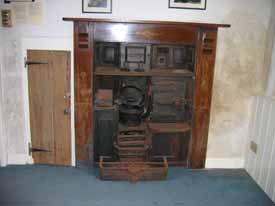
Principal Features:
- The range used coal for fuel and would have been lit
every morning. If the owners were house-proud, the
outside of it would have been polished with black lead
every day.
- The cupboard to the left of the range would have been
perfect for storing food that had to be kept dry, so
salt, sugar and flour would have been kept there.
- Flat irons were used for ironing clothes and would have
been heated to the correct temperature close to the fire.
- The oven would have been used for baking bread, although
at one time there was probably a separate bread oven in
the scullery.
- Lighting was by gas back in 1900 and the fish tail lamp
is still in place.
- Possibly an early modification was the addition of a
sleeping platform over the next door area, supported by
the large beam to the right of the door. Later on a full
upper floor was added and a wall was built under the beam
to form two separate rooms - the kitchen and a separate
scullery.
- The windows are examples of the Yorkshire slide design,
which goes back several hundred years.
- The doorway is very low. People were not generally so
tall as they are now.
- The doors are of a very simple plank construction and the
door fittings are handmade examples of the blacksmith's
trade, forged by heating and hammering into the required
shape.
Menu Home
Room Plan