A Controlled Prairie Burn
Our prairie reconstruction had its first controlled burn on April 12, 2004. Conditions were very dry; there had been very little precipitation in March and April. The burn was conducted by the Minnesota DNR, led by our friend, Forester Randy Schindle. After arriving at the site, measurements were taken of temperature, relative humidity and prevailing winds. Conditions were judged to be within tolerable range for this experienced crew.
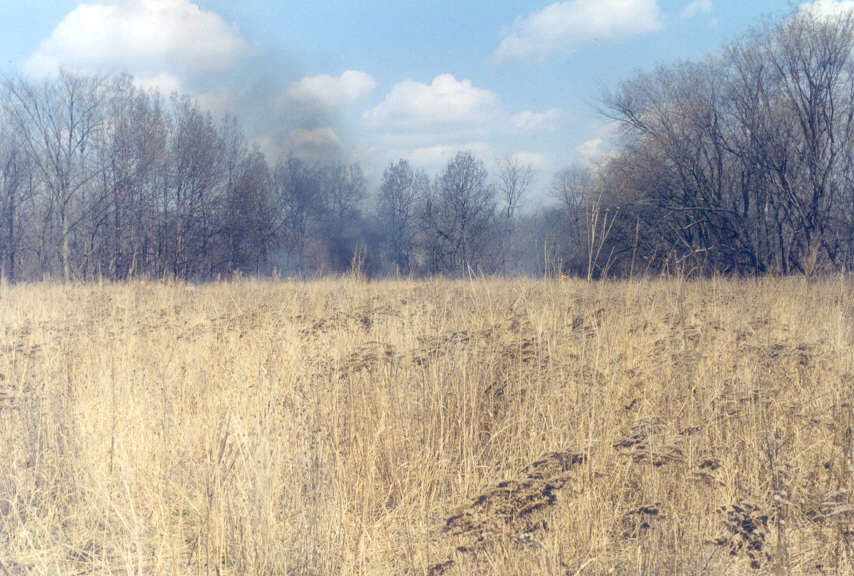 The wind was generally light and from the south, so the crew began by igniting a backfire at the northern edge of the field.
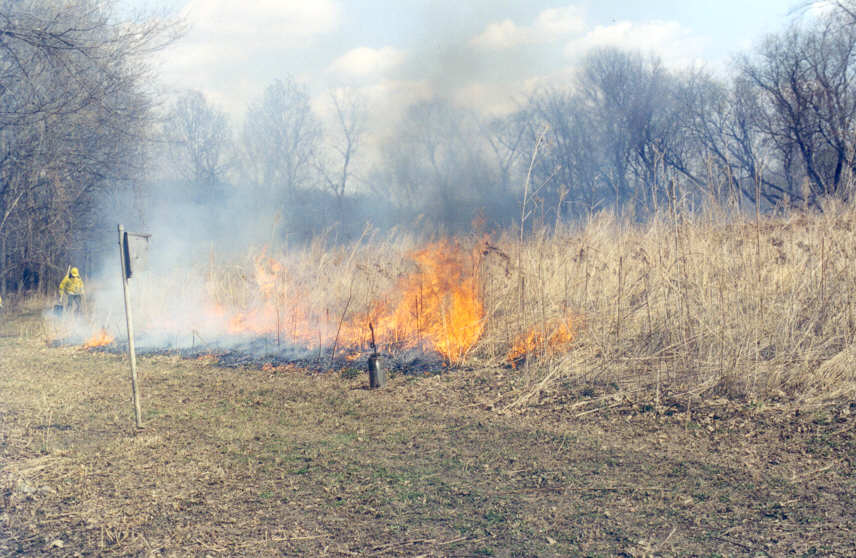 The wind frequently died momentarily. Here we see the backfire being extended along the western edge of the field. The wind has paused, as evidenced by the smoke rising almost straight up. Note the wide mowed perimeter living up to its name as a firebreak.
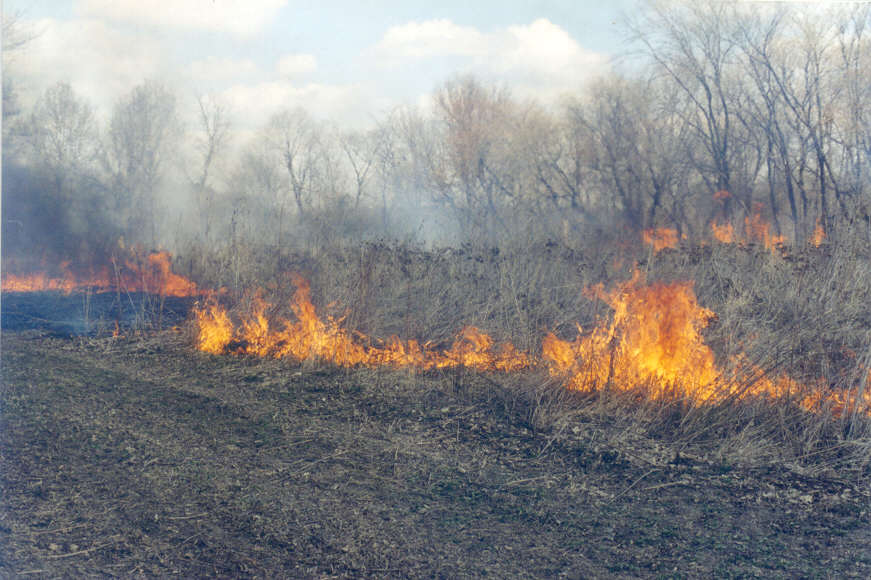 This burn was done in sections. After a burned perimeter established a firebreak, a line of fire was lit 50 to 75 feet upwind of this. As the wind was a little unstable, the break along the western edge was also lit in sections. Here we can see two distinct sections of the fire forming the break along the western edge.
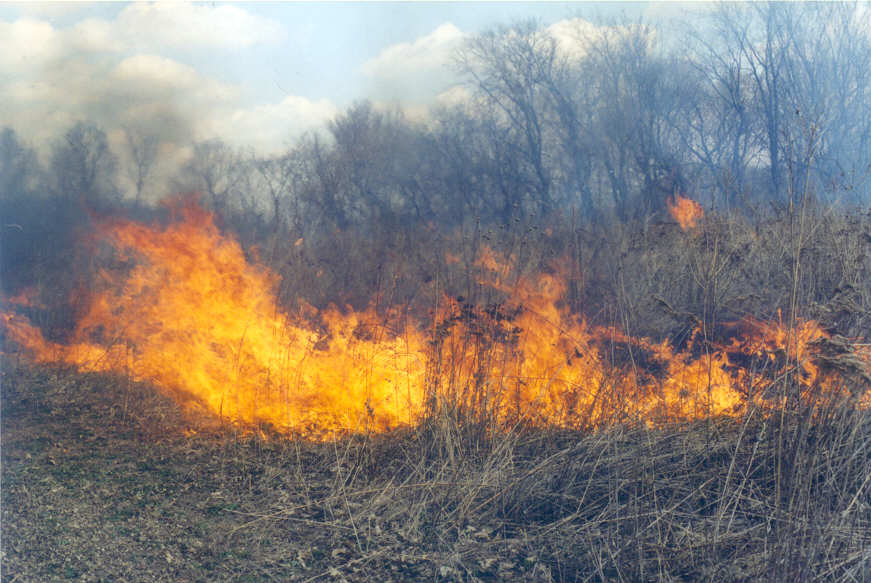 Here an unexpected gust of wind from the east momentarily turns our backfire into a headfire. This is why the backfire was ignited in small sections. The headfire meanwhile was throwing flames 10 to 12 feet into the air and making a ferocious amount of noise.
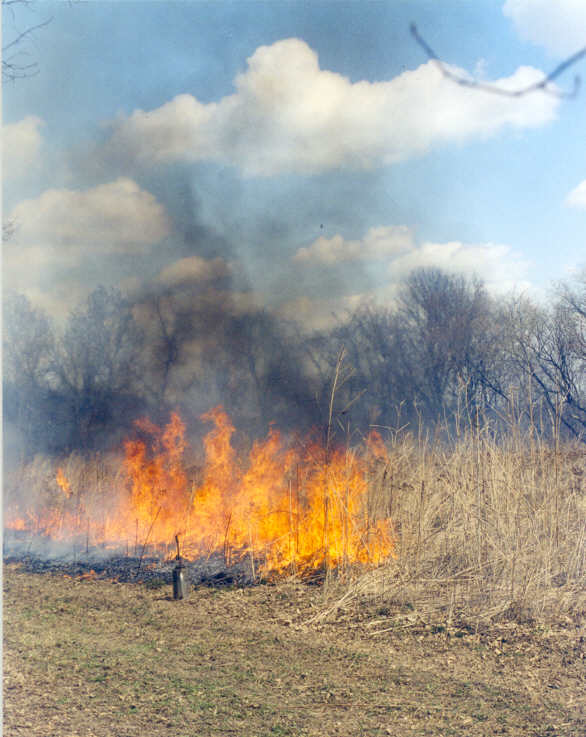 The backfire continues robustly as the winds die again. Fortunately, the breeze returned shortly. This picture illustrates why burn crews do not like to do burns in the absence of wind. A light steady breeze makes a prairie fire much easier to manage.
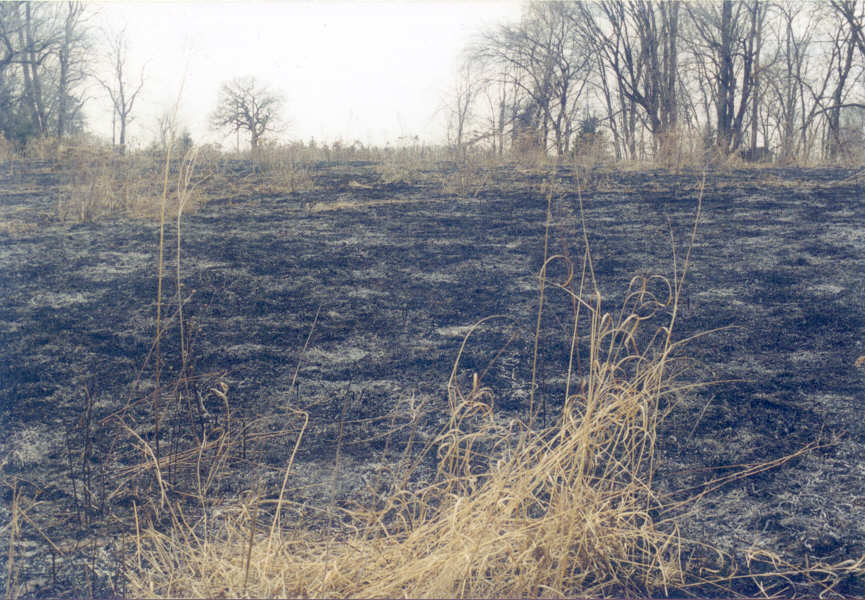 This is how the field looks after the burn. Note that there are scattered stalks of plants which have escaped the fire. As a native planting gets older, the amount of fuel, especially from the grasses grows, resulting in a more intense fire in which few conbustibles are left unburned. This burn was very successful, with only a few small areas escaping the flames.
Click Here To Return To Our Prairie Home Page.