 |
|
|
|
|
|
|
|
|
|
|
|
|
|
|
|
|
|
|
|
|
|
|
|
|
|
|
|
|
|
|
|
|
|
|
|
|
|
|
|
|
|
|
|
|
|
|
|
|
|
|
|
|
|
|
|
|
|
Mitosis |
|
|
The Cell Cycle: |
|
|
|
|
|
|
Most cells go through a series of changes in order to maintain ________________________. One of these changes deals with reproduction of the cell. Cells need to reproduce when their __________________ area can no longer supply the much larger ____________________ with nutrients and rid itself of metabolic wastes. |
|
|
|
The first part of the cell cycle is called ___________________. Interphase is considered the resting stage of the cell. This definition can be misleading since the cell is not really resting. During interphase the cell is carrying out its everyday activities. This part of interphase is called the ________________ phase. It may last several days or several years depending on the type of cell involved.
When the surface area to volume imbalance occurs the ______________ phase begins. Here the genetic material replicates itself. This allows the cell to contain enough material to fully supply 2 cells upon division.
The ______________ phase soon begins. Here the cellular organelles are produced to allow for an adequate amount for the new cell being produced.
After interphase ________________ begins. Mitosis is considered ____________ division, since the focus is upon the genetic material of the cell.
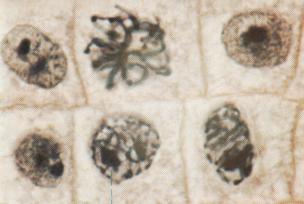
The first part of mitosis is ____________________. During prophase the nucleus begins to disappear. The chromatin pulls together and forms pairs of rope-like structures called ________________________ pairs. The chromatid pairs are held together by a structure called the ___________________ . _________________ fibers also begin to appear and along with the centrioles they migrate to the poles of the cell.
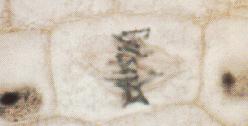
Metaphase begins when the chromatid pairs line up along the center of the cell. This makes it possible for the chromatids to position themselves so that they can migrate to the opposite poles of the cell.
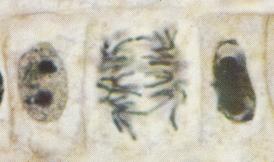
Anaphase is the stage where this process occurs. The __________________ pairs split and the spindle fibers contract pulling each chromosome toward their pole. This process continues until the chromosomes arrive at each pole. The nucleus reappears and the spindle fibers disappear.
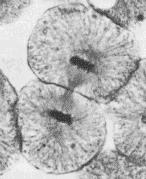
Telophase begins at this point and will continue until the cell splits into two. This split is called ___________________________. We now have 2 daughter cells, each identical in the number and type of chromosomes. They are smaller than the mother cell and will begin to develop starting interphase again. |
|
|
|
 |
|
|
Prophase |
|
|
|
|
|
|
 |
|
|
Metaphase |
|
|
|
|
|
|
 |
|
|
Anaphase |
|
|
|
|
|
|
 |
|
|
Telophase |
|
|
|
|
|
Meiosis |
|
|
|
|
|
|
________________ are special cells used in sexual reproduction. It is important that these cells contain ____________ the normal number of chromosomes than the regular body cells (autosomes). When the sperm and egg unite the resulting zygote will contain the normal number of chromosomes for that organism. A special process called _______________ occurs in the reproductive organs to allow this to occur. Meiosis is a bit more complex than the cell cycle mentioned above; although many of the terms and stages show many similarities. |
|
|
|
Before meiosis occurs the cell duplicates its chromosomes. |
|
|
|
 |
|
|
|
|
Interphase |
|
|
|
|
|
|
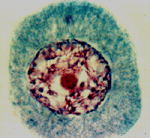
Prophase I : The nucleus disappears, spindle fibers form , and the chromatid pairs form. A major difference occurs here separating this prophase from mitosis prophase. The chromatid pairs pair up with their ____________________ pair, forming a ___________. This tetrad contains 2 original homologous chromosomes and their duplicates. The process of crossing over occurs during this time allowing for genetic diversity in the genome. ___________ ____________ is a process where pieces of two homologous chromosomes, switch places and end up on the other chromosome. (1 cell ) |
|
|
|
 |
|
|
|
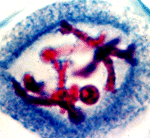
Metaphase I : _______________ line up along the center of the cell. (1 cell ) |
|
|
|
 |
|
|
|
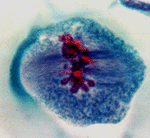
Anaphase I : The tertads split and move in opposite directions. During this phase the chromatid pairs move away from each other. (1 cell ) |
|
|
|
 |
|
|
|
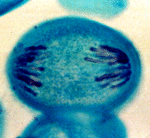
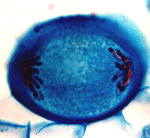
Telophase I : Two cells form each containing a complete set of chromosomes in the form of chromatid pairs. (2 cells ) |
|
|
|
 |
|
|
|
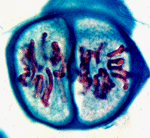
Prophase II : The process continues moving the chromatid pairs toward the center of the cell. (2 cells ) |
|
|
|
 |
|
|
|
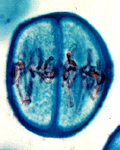
Metaphase II : The _________________ pairs line up along the center of the cell. (2 cells ) |
|
|
|
 |
|
|
|
Anaphase II : The chromatid pairs split moving the individual chromosomes toward the opposite poles. (2 cells ) |
|
|
|
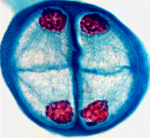
Telophase II : Each of the two cells will begin to split in half and produce 2 more cells bringing the total to 4 cells. Each of these cells contain 1/2 the normal number of chromosomes. ( 4 cells ) |
|
|
|
 |
|
|
|
Meiosis occurs in the testes of the male and is called ___________________ and the ovaries of the female and called _____________________________. |
|