 |
|
|
|
|
|
|
|
|
|
|
|
|
|
|
|
|
|
|
|
|
|
|
Anarchism has but one infallible, unchangeable motto; Freedom. Freedom to discover any truth, freedom to develop, to live naturally and fully.-Lucy Parsons |
|
|
|
 |
|
|
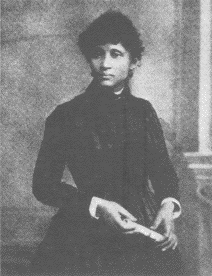
Lucy Parsons fought for the rights of the poor and disenfranchised in the face of an increasingly oppressive industrial economic system. While she affiliated herself with various groups over her lifetime, her personal belief that revolution was required to dismantle the oppression of capitalism never wavered. Her perspective was always from the point of view of class consciousness first; race and sex being seen as elements within the larger struggle. |
|
|
|
|
|
Born in Waco, Texas around 1853, Lucy Gonzalez was of African American, Native American, and Mexican ancestry and most likely born to parents who were enslaved. Lucy was said to have claimed her Mexican heritage as the cause of her dark skin tone. Being in Texas, that may have been the safest of the three choices. |
|
|
|
|
|
|
Around 1870, Lucy met and married a white former Confederate soldier, Albert Parsons, who was a Radical Republican. They left Texas in 1872 due to their political beliefs, Albert being shot and threatened with lynching for registering black voters and their interracial marriage being against the law. Lucy and Albert arrived in Chicago in 1873, where he quickly found work as a printer for the Chicago Times. Lucy opened a dress shop and earned her living as a dress maker which became the main source of support after her husband was fired and subsequently blacklisted from the printing trade. By this time, she had given birth to Albert, Jr. and Lulu Eda, but never ascribed to the role of a nineteenth century homemaker, mother or wife. |
|
|
|
Lucy began hosting meetings for the International Ladies' Garment Workers Union (ILGWU) and wrote for many radical publications. Her most famous articleTo Tramps,advocated that only violent direct action or the threat of such action would gain the workers' demands. She was often considered more "dangerous" than her husband because she was so outspoken in her beliefs on the rights of the poor. Lucy also wrote numerous articles and pamphlets condemning racist attacks and killings. Her most significant piece being The Negro: Let Him Leave Politics to the Politician and Prayer to the Preacher. In 1886 in response to the lynching of thirteen African Americans in Corrollton, MS. She claimed blacks were victimized because they were poor not because they were black. Lucy Parsons believed racism would disappear with the destruction of capitalism. |
|
|
|
On May 3rd, 1886 a massive strike demanding an eight hour work day became violence as police fired into a crowd of unarmed strikers. Many were wounded, and four strikers were killed. Radicals in Chicago called a meeting in Haymarket Square to discuss the situation. The peaceful meeting of 2000 was disrupted by police, and an unknown figure threw a bomb which killed one officer. A riot broke out injuring workers and police. One of the worst violations of US civil rights occurred over the next few days, as police swept the town looking for any and all anarchists and radicals. Although he was not even at Haymarket Square that day, Lucy's husband Albert was one of the eight men accused of the bombing and went into hiding. |
|
|
|
During this period, Lucy was under constant surveillance by the police. She was arrested for suspicion of knowing the whereabouts of her husband and was considered a threat to the status quo. But she was never charged with conspiracy in the bombing. Lucy headed a campaign for clemency when the men were sentenced to death by hanging in October, 1887. She toured the country distributing information about the unjust trial and gathering funds to support the Haymarket case. Everywhere she went, Lucy was greeted by armed police who barred her entrance into the meeting halls. |
|
|
|
Despite these efforts, four men including Albert Parsons, were executed on November 11, 1887. Lucy had brought her two children to see their father one last time when she was arrested, taken to jail, forced to strip, and left naked with her children in a cold cell until the hanging of her husband was over. After the execution, Lucy lived in virtual poverty, receiving eight dollars a week for herself and another $2 for the children from the Pioneer Aid and Support Association, a group formed to support the families of the Haymarket martyrs. They moved to a smaller apartment and she worked longer hours sewing clothes and speaking out on behalf of worker's rights. Her daughter Lulu Eda's death two years after her father's was another devastating blow. |
|
|
|
In October of 1888 Lucy went to London to address the Socialist League of England. On her return, the struggle for free speech consumed her as she compared the freedom she found in England with the repression at home in the US. |
|
|
|
The losses of her husband and daughter along with many of her freedoms being curtailed may have driven Lucy to enter into a relationship with the young anarchist Martin Lacher, a printer who helped her publish The Life of Albert R. Parsons in 1889. They moved into a house outside of Chicago with two large dogs to escape the scrutiny and harassment of the Chicago police. Ironically, her relationship with Lacher ended in police court in 1891 where she sought protection after filing charges he was abusing her. |
|
|
|
Lucy was known for her writings, her courage as an outspoken woman, her unwavering commitment to social justice, and most of all, her powerful, fiery public speeches. She led tens of thousands of workers into the streets in mass protests, drew enormous crowds wherever she spoke and was considered a threat to authorities across the United States. For over 30 years her lectures were shut down by the police, often arresting her before she ever reached the podium. Hearing Lucy speak at all was a rare opportunity that sparked a passion for rebellion in working and poor people from coast to coast.. |
|
|
In 1891 Lucy began editing Freedom: a Revolutionary Anarchist-Communist Monthly in which she proclaimed that the major labor struggles taking place in 1892 meant that revolution was coming. Conditions for workers worsened as the Reading and Philadelphia Railroads closed and millions were left unemployed. Lucy was a frequent speaker to those unemployed workers along with those from the Pullman Railway Company, coal companies or teamsters from Chicago retail stores. She continued to identify class as the pivotal problem in the oppressive systems of her time. |
|
|
|
Although she was outspoken, worked outside the home, led mass demonstrations, wrote incendiary essays and fought side by side with her husband and other men, Lucy believed that marriage and the family were central to the human condition and criticized anarchist papers for carrying articles attacking these institutions. Free love became one of the topics that divided Lucy Parsons and others in the anarchist movement in the 1890's. |
|
|
|
Lucy was the second woman to join the Industrial Workers of the World; since its class conscious perspective mirrored her own political leanings. She believed that a revolution could only come through a well-organized working class movement that seized the methods of production, and that the IWW's tactics of militant strikes and direct action would enable this movement. Lucy promoted the idea of a general strike and spoke strongly for this at the founding convention. |
|
|
|
Lucy began editing The Liberator, a paper published by the IWW based in Chicago in 1905. Through this medium, she took stands on women's issues, supporting a woman's right to divorce, remarry, and have access to birth control. She also wrote a column about famous women and a history of the working class. |
|
|
|
From 1907-1908, a period encompassing huge economic crashes nationally, Lucy organized against hunger and unemployment. In San Francisco Lucy and the IWW took over the Unemployment Committee, pressuring the state to begin a public works project. Unemployed women led a march of ten thousand when the San Francisco government refused to recognize the committee.A Hunger Demonstration in Chicago in January 1915 organized by Lucy pushed the American Federation of Labor (AFL), the Socialist Party, and Jane Addam's Hull House to participate in an even larger demonstration on February 12. Two weeks later, the government began planning for a decentralization of hunger and unemployment policy. |
|
|
|
Seen by some as the final casualty from the Haymarket incident, Albert Parsons, Jr. died in 1919. He was in the Illinois Northern Hospital for the Insane from 1899 until his death in 1919 from tuberculosis. |
|
|
|
In 1925 Lucy began working with the newly formed Communist Party although she didn't officially join until 1939. During this period, Lucy mainly worked with the coalition fo International Labor Defense (ILD), a Communist Party group that initiated a clemency campaign for the Scottsboro Eight and black labor leader, Angelo Herndon cases. This was Lucy's first return to the South and her first work o issues specifically involving race. In the 1920s and '30s, the Chicago Police Department still described Lucy Parsons as "more dangerous than a thousand rioters". |
|
|
|
With advancing age and her eyesight failing, Lucy Parsons continued to actively fight against all forms of oppression until her death. One of her last major appearances was at the International Harvester gathering in February 1941. What was determined to be an accidental fire at her home killed her on March 7, 1942 at the age of 89. George Markstall, her live in companion since 1910 died the following day from burns and wounds received while trying to save her. They were cremated and ashes buried together in a grave close to the Haymarket Martyrs Monument. To add to this tragedy, Lucy's library of 1,500 books and personal papers were never seen again. Several sources implied the police or FBI seized and destroyed her letters, writings and library. Others claim the papers were lost in the fire. This lack of documentation should not diminish the remarkable contributions of this woman of indomitable will, energy and action. |
|
|
|
One of her writings that was preserved can be seen at The Principles of Anarchism. |
|
|
|
For more information on Filling in the Gaps in American History (F.I.G.A.H) and biographies of people of African Descent who are not usually found in text books, contact us at [email protected]. |
|