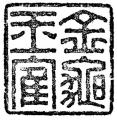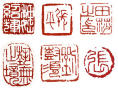
印章又名“印”,古称“玺”,是书法和雕刻相结合的独特工艺美术。篆刻是以书法字体结合镌刻制作印章的艺术。它于方寸之中、红白之间创造各种美的结构和形式,因其字体多为篆书故称篆刻。篆刻与书法堪称中国艺术中的孪生姐妹。
关于印章的起源,《周礼》,《左传》中都有使用印章记载,说明早在春秋中期,印章已应用于社会活动中。从近代考古发现的实物来看,殷商时期就已存在印章了,而战国时期的古印,已经达到相当高的艺术水准。这以前的印章,统称为“玺”。秦统一后,规定只有皇帝的印才能用“玺”,至于官员和百姓的印章,只能用“印”了。以后封建社会中历代王朝大体沿袭这一制度。汉代开始出现在官衔下加“章”或“印章”的印,如“广汉大将军章”等,而唐武则天,因“玺”同息灭的“息”谐音改用“宝”,如“皇帝之宝”等,此外,还有称为“记”、“朱记”、“图章”等。
印章上的文字最早是与当时通用的字体是一致的,如战国时期,采用的是各国流行的大篆、籀文,秦用李斯的秦篆,秦汉以后,用于印章上的字体范围扩大了许多,出现了缪篆、鸟虫篆等多种篆体。隋唐以来,不仅沿袭使用篆体类文字,而且把隶、楷等字体也应用于治印,以至殷代的甲骨文都被吸收进来。当然,始终处于主导地位的依然是篆体类的文字,这一点时至今日仍然没有变。
印章的用材,最初以铜、金等金属材料为主,这与当时的印章大多为铸冶而成是分不开的。亦有少量的犀牛、象牙、玉印和石印。古玺印一般比较扁小,并雕有坛、台、龙、虎等各种形态的印钮,通常挂在腰带上,以便随时使用。先秦古印用材、形制,各随其便,并无 定制。秦以后,官印有明确规定,是区分官阶的标准。其等级次序为:玉最贵,一般为皇 帝所专用,金次之,银再次之,一般官吏只能用铜印,私印印材则没有这么多讲究。隋唐 以后,官印渐大,印材也更丰富。
元王冕发现了质地松软的花乳石,为篆刻艺术的发展开辟了天地。这一发现使文人自篆自刻形成风气。明中叶以后各种独立的艺术式样逐渐发展起来,并形成了各种风格流派。如明代以文彭为代表的吴门派和以何震为代表的徽派;清代以程邃厚重、凝炼风格为代表的皖派,以丁敬、邓石如开创、黄易等西泠八家发扬光大的浙派。清末吴昌硕将古印、陶文、石鼓文等熔于刀法之中,以苍劲古朴之风被尊为吴派。时至近现代,篆刻艺术更为普及, 各种流派不乏继承,亦多现创新。

The origin could be retrospected to middle of Chun-Qiu Period (770 B.C. - 476 B.C.), when application of seals in social activities had been recorded. Different script styles were added in. Ancient seals were quite flat and in general small, with shape of the altar, the dragon, the tiger and so on, usually hung on the waistband for necessary use.
The materials used were first copper and gold, due to technics of smeltery; also a few of rhinoceroses, ivory, jade and stones were applied. Until the Yuan Dynasty (1271 - 1368), WANG Mian discovered a certain soft stone that could serve as the raw material, and thus brought an atmosphere in the literari to make and use stone seals for their own works. An art of seal carving developped and various schools appeared after the middle of Ming Dynasty (1368 - 1644), such as Wu Men School, Hui School, Wan School, Zhe School, as well as the Wu School created by WU Changshuo at the end of Qing Dynasty (1644 - 1911), who combined the ancient seals, the Tao script, the stone drum script in his seals. Nowadays, seal carving is inherited also innovated.