 |
There are 3 ways to
solve systems of linear equations: This page will guide you through your algebra troubles. |

Substitution
Method
| 2x + 4y = -8 y = 5x + 9 2x +4(5x + 9)= -8 2x +20X + 36= -8 y = 5x + 9 y = 5(-2) + 9 |
The second equation is
already solved for "y" So take the value for "y" given in the second equation and replace the "y" in the first equation.
Now go back
to one of the ORIGINAL problems and The complete
answer (the point of intersection) for the 2 |

Elimination
Method
| x - y = 7 x + y = 3 2x = 10 x = 5 5 - y = 7 5 = 7 + y 5 - 7 = y y = -2 |
In using the
elimination method to solve a problem you want to make sure that one of the variables cancels out of the equations such as the equation to the left. To solve the system, the "y's" cancel eachother out and you are left with the equation to the left. By using division you will solve the problem for "x''. Now, take the solution for "x" and put it back into one of the ORIGINAL problems, and solve for "y". The solution to the problem is (5,-2). |

Graphing Method
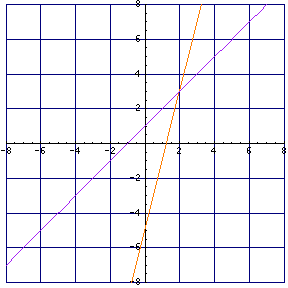
| 4x - y = 5 3y - 3x = 3
y
= 4x - 5 |
To graph the
equations to find the solution, you have two choices : 1. Graph by hand 2. Graph using the calculator Either way you choose, the graph should turn out as the picture below. First, you must the equations in
"y = mx + b" format. "M" The equations
should now look like this. ( All of the numbers Now, these
two lines can be graphed by using the slope and the Here is what the graph should look like:
|
Click Here For Practice Problems!

...And they lived happily ever after!