|
Misty glens, lochs, mountains, tartans, bagpipes, Scottish Fold Cats,
lots of dog breeds and kilts...these are the most familiar images of
Scotland. The Scots say the country does not have
a climate..it only has weather!
Scotland also has those delightful cows with bangs, the Clydesdales and SEAN CONNERY! |
|
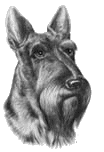
Tousled eyebrows, a bushy moustache and beard with a tail that points to the sky, the Scottie ranged the Highlands before the Roman invasion of the British Isles. It was once known as the Aberdeen Terrier and it is the national breed of Scotland. |
 |
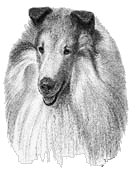 |
Most believe the Collie evolved in the highlands of Scotland and Northern England. Since sheepherding is one of the world's oldest occupations, the Collie's ancestors date far back in the history of dogs. The popularity began with Queen Victoria (1837-1901), who fell in love with the breed on visits to her Scottish retreat. It was then that the lowly farmers dog was elevated to a state of canine aristocracy. |
|
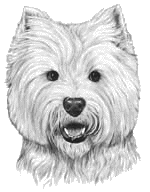
This terrier, according to notable authors, originated at Poltalloch,Scotland, where they had been bred and maintained for over a hundred years. They have a large amount of Scotch spunk determination and devotion crammed into a small body. |
 |
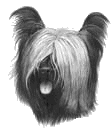 |
This breed is named for the chief of those northwestern islands of Scotland..the only terrier not common to the whole of the country. This dog was known to be without rival in the Skye where he is unmatched in the rocks,dens, cairns, and burrows. |
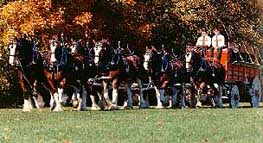 It was bred to meet not only the agricultural needs of these farmers, but the demands of commerce for the coalfields of Lanarkshire and for all types of heavy haulage on the streets of Glasgow. The breed thus developed and soon acquired more than a local reputation. In time, the breed spread throughout the whole of Scotland and northern England. The district system of hiring stallions was an early feature of Scottish agriculture and did much to standardize and fix the type of the breed. The records of these hiring societies go back in some cases to 1837. 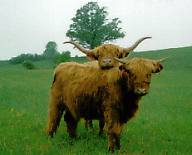 Original cattle of the western Highlands of Scotland and the outlying islands. Since deliberate cattle breeding has been carried out in the UK for about 200 yeats, this breed has existed unchanged and without being crossed with other breeds. The Highland Cattle Breed Society was founded in 1884; the first herd book animals were registered in 1885. For over two thousand years there have been Shetland Ponies in Shetland. Because of the islands' isolation in the past, the characteristics of the pony, especially its small stature and hardiness, are firmly imprinted in its genes. This same isolation has ensured the purity of the breed. The harsh climate of our islands has, through natural selection and adaption, given us the pony we know today with its special protective winter coat and flowing thick mane and tail. The accompanying scarcity of good grazing has given the pony an efficient conversion rate for food and ample milk yield. These adaptions to the environment have ensured its survival. Because island ponies are in their natural environment they are extremely healthy and fit, but over the past two hundred years they have been exported all over the world with remarkable success, simply because they have the ability to adapt to new and very different environments. |
 |
|