1) Black Henna NO!
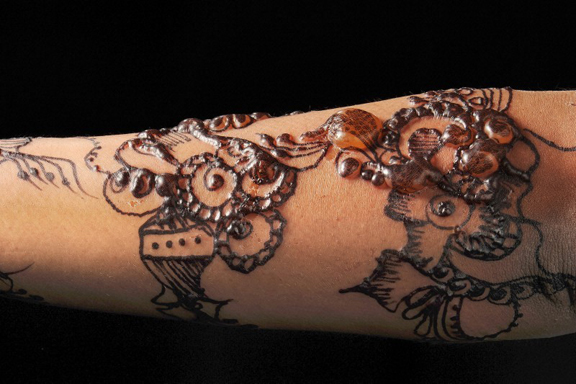
NO! NO! There is no such thing as ‘black henna’ and any henna artist
that tells you otherwise is either ripping you off or just doesn’t know
any better. No natural henna is ever black, FULL STOP! Natural organic
henna is green in powder and reddish brown in application. Black henna
is an artificially produced henna paste and is 'frowned upon' in most
countries. Its dangers are due the fact that it has been chemically
made, containing artificial dye called para-phenylendiamine (PPD). This
synthetic coal tar dye can cause bad skin reactions.
2) Being fidgety and restless Of
course most henna artists understand that it’s physically impossible to
be totally still, especially with longer hours for bridal hennas. But
it’s just plain right difficult to henna your arm or leg if you’re
constantly fidgeting about. Once the henna is applied it cannot be
erased, so if you’re moving or doing grand hand gestures, your henna
design may not come out as perfect as you would want it to be.
3) Price negotiations Most
henna artists maybe a little lenient with price charges, but even then
they’re not at all pleased. Henna artists only make money out of the
appointments they’re making, so cutting into that automatically means
cutting into their income. Not to mention overstepping the costs of
their henna supplies too. Most henna artists determine their charge by
the hour and their level of skill. If you’re coming across an artist
whose charges are insanely cheap, it can either mean they’re just
starting out and want a crack in the henna industry or their level of
work is just not up to par. Don’t be fooled by ‘cheap’ henna.
Most often than not it will lack expertise.
4) Lack of aftercare There’s
nothing more dreadful than getting a phone call or text from a customer
who complains that their henna is “not dark enough”. Chances are, you
didn’t listen to your artist when he or she instructed you on the henna
aftercare. Nothing will drive a henna artist crazier than to hear
that you washed your henna off with water, or that you chipped it off
before the advised time. The longer you leave the paste on, the darker
your stain, just plain and simple.
5) Ignorance about Henna tradition Henna
art is not exclusively Indian or Islamic. Though it’s embedded into its
traditions, anyone can get henna. Just because you don’t practice the
faith or from an Indian background doesn’t mean you can’t get
henna. At the end of the day it’s called ‘Henna Art’ and purpose of
‘art’ is to add beauty to the world, no matter what the tradition or
background.