The Gold Ribbed Hares Ear nymph is a truly old pattern, with a million and one different variations, if not more. It's safe to say almost every fly angler has at least seen a GRHE at one time or another, probably fished with one or more and, I expect, caught fish on them.
The standard tying for the GRHE is a matter of public knowledge incorporating a dubbed hares fur body taken, usually from either the mask or behind the ear, and a rib of gold wire. The nymph is left intentionally shaggy, fibres are even teased out to incorporate some life into the pattern.
All the nymphs I tie using the above as a starting point are variations on the original theme.
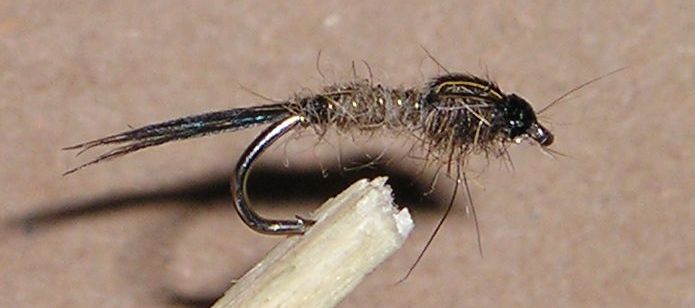
Still my favourite is this:
The basic GRHE nymph
Ingredients for the Basic GRHE Nymph
Hook: Sprite Sproat size 14 Silk: Black, Uni 8/0 or Gordon Griffiths 14/0 Body: Well mixed dark hair from the back of a hares ear Rib: Gold/Brass wire Thorax: As body Tails: 6 to 8 herls from the centre feather of a cock pheasants tail - use the other ends of these to form the wing cases below simply by lashing the herls to the shank, until you reach the thorax, before dubbing and ribbing. Wing cases: 6 to 8 herls from the centre feather of a cock pheasants tail
It's a very simple fly to tie and devastating in it's effect. At first I was going to write individual pages for each of the flies here, but since the tyings are so similar and most of the ingredients the same I decided to include them all on one page.
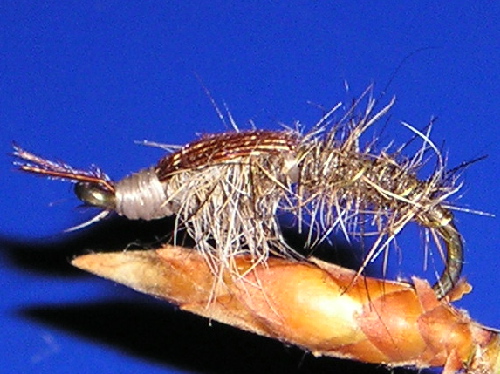
The GRHEPlus
The first fly below is a slight modification to the accepted 'standard' of the pattern - it's unweighted apart from the brass rib and has antenae retained from the ends of the pheasant tails used in the wing cases.
In all cases, the tyer is free to experiment, holographic tinsel ribs make for much more flash, lead underbodies or a brass/tungsten goldhead bead make it sink faster for deeper fishing in running water and of course our old favourite - colour - can be changed just by selecting different hair from the hares ear.
The nymph imitates all sorts of larvae, depending on the size, from tiny caenis when tied with very pale hare and in sizes of 18 or smaller, to giant size mayfly larvae. Thanks to the air it traps between the hare fibres it does a fair imitation of ascending caddis larvae, particularly with the antenae as shown and indeed, I've had considerable success with this pattern during hatches of silverthorn sedges at a local stillwater.
Ingredients for the GRHEPlus
Hook: Partridge Sedge/Caddis size 14 Silk: Tan/chocolate 6/0 Body: Well mixed dark hair from the back of a hares ear Rib: Gold/Brass wire Thorax: As body Wing cases: 6 to 8 herls from the centre feather of a cock pheasants tail
Tie in the thread behind the eye, and take the thread to the start of the bend of the hook. You can, if desired, tie in a tail section now, 5 cock pheasant tail herls are a good example. Beware making the tails too long, the same size as the thorax is about right.
Catch in approx 1 inch of the rib here and bind in tightly. Wax the thread and tightly dub a thin rope of hares fur onto it then wind the thread back to the rear of the thorax area. Rib the fly with the wire in open turns, securing well just behind the thorax area, break off the wire by wiggling it back and forth.
Thicken the dubbing by adding more fur and build the thorax securing just behind the eye - leave a small (1/16th inch gap here to tie off and form a head).
Tie in the wing case herls just behind the eye, trimming the butts back close to the thread, then take the thread in a single, half turn, by going over the thorax area to ensure the thread will be hidden under the wing cases. Take the herls back over the thorax and tie in, the bring the thread forward again, as before in a single half loop going over the thorax. Double the wing case herls over themselves and tie in behind the eye, leaving the tips of the herls covering the eye of the hook. You can trim the tips to length and remove some to leave the antenae or leave all of them. The standard pattern doesn't include them so remove them entirely if you wish. As always, finish with a three turn whip or two half hitches. Some like to varnish the wing cases for durability, this can affect the movement of the herl, but it's the hares ear fur that is the main feature - your mileage may vary.
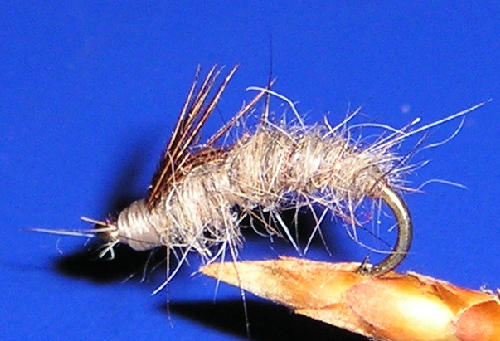
The Spikey Nymph
This is essentially the same tying as the GRHEPlus, with one minor difference.
As you can see, there are no antenae as the tips of the pheasant tails have been re-doubled over the thorax and tied in so they create a shaggy wing case. Great for imitating hatching caddis when tied unweighted and fished just under the surface film.
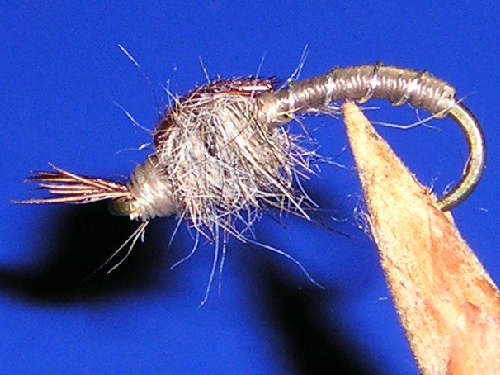
The Hare Buzzer
As a long time devotee of hare as a dubbing material, it didn't take me long to incorporate it into another long time favourite pattern, the chironomid or 'buzzer' pupae.
The life cycle and other patterns are shown on the buzzers page here so I will only show the tying instructions and ingredients here.
Ingredients for the Hare Bodied Buzzer:
Hook: Partridge Sedge/Caddis size 14 Underbody: Lead wire/foil under thorax only Silk: 6/0 in any colour required Body: Tying silk Rib: Fine copper/gold/silver wire Thorax: Dubbed hares ear fur Wing cases: 6 to 8 herls from the centre feather of a cock pheasants tail
Catch in the thread and tie in approx 1.5 inches of the rib material, wind the thread in touching turns to the middle of the bend of the hook, covering the rib as you go to achieve an even abdomen.
Bring the thread back to just behind the thorax, again in touching turns, then rib with the wire and secure behind the thorax. Break off the wire by wiggling it back and forth.
Tie in a short length of lead wire/foil, sufficient to bulk out the thorax while leaving room to finish the fly. Build a roughly spherical bulge under the thorax area with the wire/foil then wind the thread over it and back to secure it well.
Wax the thread and dub a thin rope of hares fur onto it, then over the thorax area with the dubbing. Tie in the pheasant tails as described for the GRHEPlus above and finish the fly in the same way.
I would recommend leaving the tips of the herls showing as in the image. The lead underbody makes the fly good on the point, but also, thanks to the air trapped in the hares fur, can be fished as an ascending caddis nymph. As caddis tend to swim rapidly downwards to escape danger, stopping the retrieve every so often is a good tactic, to allow the fly to sink rapidly.