 |
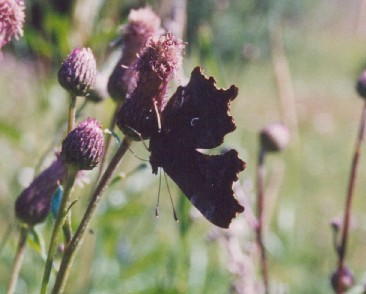 |
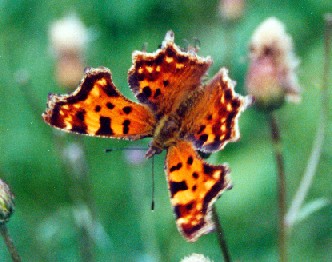
| Polygonia c-album is much flashier than you might think, but is often in hiding, like in the picture on there right where you will find the butterfly resting on Cirsium arvense. In case you ever wondered where the Latin name of the butterfly comes from, look closely, the picture will reveal the reason! - Photographs by Taina |
| Polygonia c-album � Comma (Nymphalidae) Appearance: Has an unusual, ragged shape of the wings. When the butterfly sits wings closed and all you see are the smoky brown patterned undersides, chances are you do not actually see this butterfly at all � you�ll mistake it for a dry leaf. This helps the butterfly hibernate disguised in the leaf litter. The wingspan of this butterfly is from 50 to 55mm. Geographical distribution/ habitat: North Africa through Europe to the Eastern part of Asia. Prefers woodland edges and gardens. Host plants: Common Nettle (urticaceae), hop (humulus) elm (ulmaceae). Food plants: Particularly juices of rotting fruit; sap of trees, nectar of flowers. Flight time: Two broods, on the wing from Mar-Sept. Hibernates as an adult. Other: The butterfly is a strong, dramatic flier and flies long distances searching for suitable host plants, but is not migratory. Has great similarity with the North American Polygonia species that often breed on nettle and are strong fliers. Taina's Butterfly Page Photos and Information Index Home Butterfly Garden |