 |
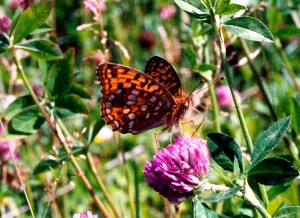 |
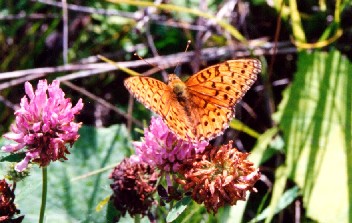
| Argynnis adippe - the first picture, a more mature individual, while the one with wings half closed is newly emerged. Look how gorgeous the underwings are - between the two rows of silvery white spots there are about 6 reddish brown spots with a blueish center, on this individual butterfly they are exceptionally clear. - Photographed by Taina |
| Argynnis adippe – High Brown Fritillary (Nymphalidae) Appearance: This majestic butterfly is powerful in flight; when blown off course by current it swings round and continues flying on course with ease. Its upperwings are rich orange brown with dark spots and markings, generally darker on the female. The underside has yellow-greenish scalings, silver spots on the hindwing and a row of reddish-brown spots. The forewing is orange-brown with dark spots. While the female is usually larger than the male, the butterfly has a wingspan of approximately 60mm. Geographical distribution/ habitat: Europe, North Africa and Asia. Absent in Britain and has suffered decline from habitat destruction. Inhabits flowery meadows, woodland edges, uplands. Host plant: Dog Violet (Viola canina). Food plants: Visits various wildflowers. Flight time: From July to August. One generation per year. Other: Resembles closely two other Fritillaries, Argynnis aglaja and Argynnis niobe from which it can be told apart by the underside of the wing. Argynnis aglaja has a greenish underside without the row of reddish-brown spots. Argynnis niobe has a more even row of silvery spots, and the reddish-grown spots are not as clear. This identification task is not an easy one – but don’t rack your brains with it, enjoy instead how beautifully this butterfly can fly! Photos and Information Index Home Butterfly Garden |