 |
|
|
|
|
|
|
|
|
|
|
|
|
|
|
|
|
|
|
|
|
|
|
|
|
|
|
|
|
|
 |
|
|
A Day in Dabola |
|
|
|
Homepage |
|
|
|
A day in Dabola starts shortly after the rise of the sun.� The first twenty minutes or so are usually a bit blurry for me.� I boil some water, that has already been boiled for 10 minutes then purified and filtered to make it drinkable and use some instant coffee that a colleague picked up for me on a field trip in the nearest town. I mix this with a powered milk substitute to make an unpleasant but functional morning coffee. I shuffle outside, clutching my coffee and complete the wake-up process by swatting away the insects that await my morning appearance. |
|
|
|
Running water is not common here; most locals drink from wells and wash with the same water, or in a nearby river.� Showers can be buckets showers (this is exactly as it sounds, and involves pouring a bucket of cold water over yourself); packet showers (a camper's toy, that enables you to fill a plastic pouch with water, hang it somewhere and use the trickle that stems from the hose, this has the added benefit that you can leave the pouch to heat in the sun beforehand if you are so inclined), and if you are lucky enough to be somewhere with running water you can have a normal shower.� Normal, however, means that the water is a light to medium brown colour and in the hottest weather when you need cold water most, it is usually quite warm.� Some such normal showers, even provide the option of a hot or cold tap, however, this is purely for your aesthetic benefit and has no impact whatsoever on the water.� The colour of the water is a constant reminder not to open your mouth or swallow it, and to ensure that any open wounds are kept well away.� |
|
|
|
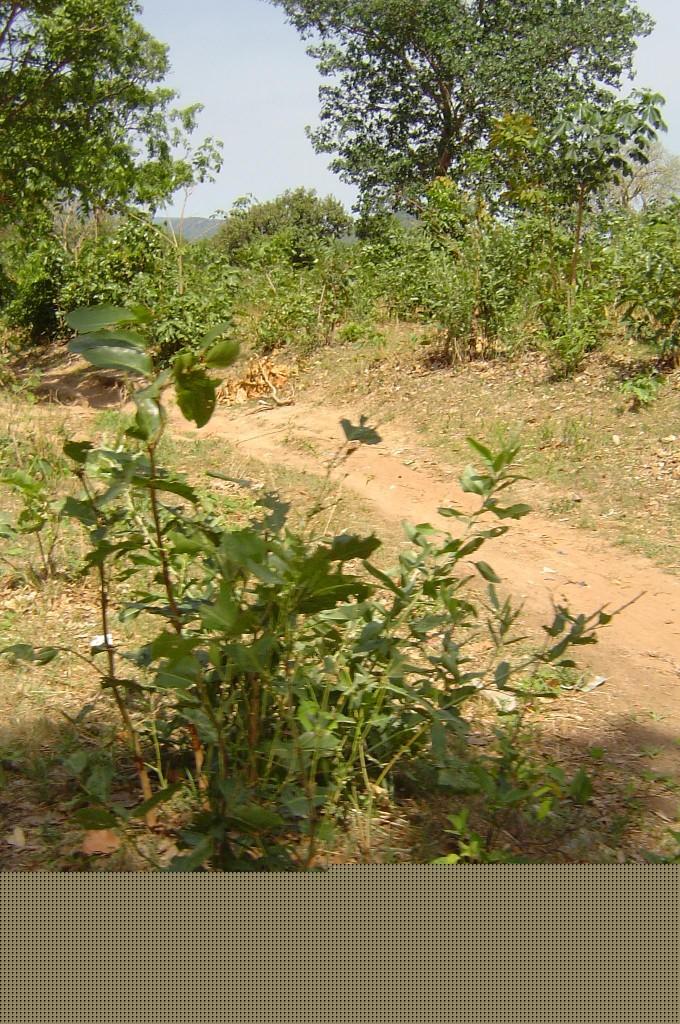
The commute to work follows a paved road for about 500 meters then resorts to the more common dirt tracks.� It?s an interesting obstacle course, necessitating a lot of swerving to avoid chickens, goats, sheep, cows as well as the natural highs and lows of the terrain. Animals wander everywhere here; it's not unusual to see a wild cow strolling calmly through the busy village on market day.� Fighting for road space with wild cows is a daily event.� But don?t think they are the innocuous, heavy, healthy doe-eyed Friesians we are used to.� They are a tan colour, small, bony, and have large pointed horns.� Goats and sheep don't present as much a problem for travelling as they tend to scarper quickly. Chickens however aren't that bright and have a tendency to make a last minute dash across the path of oncoming vehicles...this rarely ends well.� Although I must confess brings to mind endless "why did the chicken cross the road" jokes.� |
|
|
|
 |
|
|
|
|
|
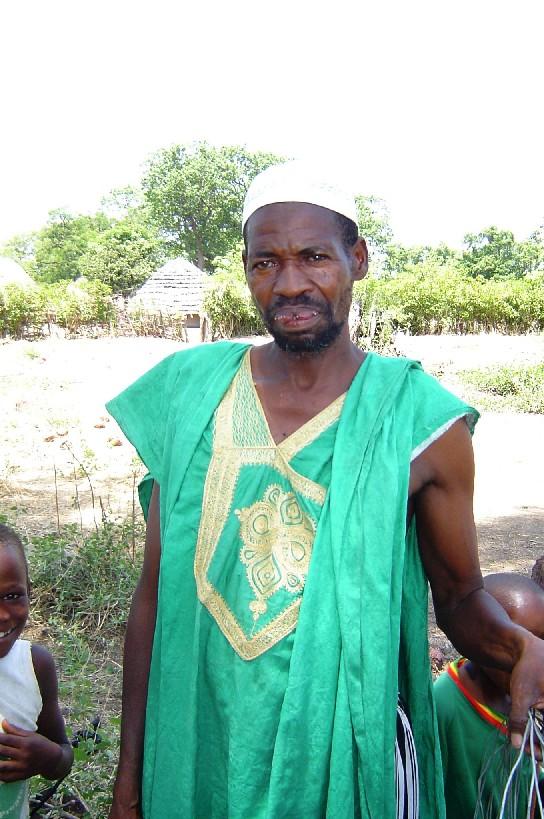
The people here haven't yet grasped the western concept that it is rude to stare.� So they frequently do.� Especially when they see a white woman; blatantly they stop and stare, they congregate and stare, the children point and stare and occasionally wave, shouting "tubabou" the local word for "white stranger", all the while openly staring in amazement and sometimes distain. The journey to work is always punctuated by groups of such children pointing and staring at us while yelling "tubabou" loudly and repeatedly.� A quick wave and smile will either silence them completely or encourage them to redouble their efforts.� It seems to be the novelty of having white people around.� |
|
|
|
|
|
Arrival at work brings with it the traditional drawn-out process of greetings.� African's never seem to display any public signs of affection amongst family but they do love to shake hands.� Shake hands to say hello, to say goodbye, if you say something with which the company you're in agrees strongly, they will shake your hand, if you tell a joke they find funny they will shake your hand and so on There are even types of handshakes, mostly with the younger folk who have three-position formula that reminds me of the American fraternity-style manoeuvres. However, if you say something that either surprises them or that they don't like, they will make a bizarre high pitched noise.� I won't even attempt to describe it. On arrival at work, each person has to be |
|
|
 |
|
|
|
|
|
|
greeted with a handshake and repeated enquiries of "�a va?" from both sides.� Once you have each repeated the basic "�a va?" ad nauseum, you can then proceed to "et la famille?� �a va la famille?", then "et la sant�" then "et la nuit?". Return from lunch requires the greeting process to begin again.� |
|
|
|
Lunch is usually rice with a peanut sauce, or rice with a vegetable sauce. When I first arrived there were potatoes available at the market too, but now they are nowhere to be found.� Dinner consists of tomatoes, avocados and cucumber if we're lucky.� (Tonight was lucky night.) Food isn't about enjoying the meal, or liking the taste, it's simply necessary. It's approached with the same attitude as you or I would have to filling the gas tank...it's something you do to enable you to keep going.� It is ironic that rice is the sustenance food here as it costs about 300,000 GF for a large sack, but most people earn only between 150,000 and 300,000 Guinean Francs a month (that's about 25 to 50 Euro). So you can see how even the most basic of foods present a huge problem.� By international standards, people here live in what is considered absolute poverty which simply means that we live on less than one US dollar a day.�� |
|
|
|
The work day varies greatly.� The best laid plans fall to the wayside as the difficulties of daily life take on a schedule of their own.� Meetings are missed, vehicles breakdown, relatives die, crops have to be tended, roads are flooded, all of which are interpreted as the will of God by locals. It seems the will of God manifests itself in every detail, especially in impeding tasks that locals consider labour-intensive or tiresome. Field trips to rural communities reinforce the difficulty of implementing even the simplest of projects.� Africa isn?t just a plan ride away; it is a trip back to the middle ages.� Houses are built of straw, sticks and mud; farming tools are made of wood and stone.� The river is your laundrette and your shower.� The village well is your only tap (faucet) and your lucky if you don?t have far to walk to find it. Crops grown in your field become your local supermarket and your health and well-being lie the hands of the village witch doctor.� White skin burns with astonishing ease under the harsh Guinean sun and SPF 50 does little to help; a search for air conditioning will only lead you to the shade of the nearest tree. On returning from a field trip, I find myself thanking my lucky stars that I was born in the West.� |
|
|
|
Electricity in rural communities is non-existent, and here in Dabola it is still sparse. Luckily we're in the rainy season now. (There are only two seasons here: the rainy season and the dry season ? the last part of the dry season just before the rains is also informally known as the hunger season.)� The rainy season means that it is not too hot - 30 to 33 degrees but with ridiculous humidity.�� The electricity will come at about 7 p.m. and depending on how much rain there has been, and might last until midnight or might not last 10 minutes.�� Even when there is power however, the voltage fluctuates greatly and comes and goes at irregular intervals. If the lack of electricity does not make work difficult enough, the heat can bring your laptop to an irritating crawl or complete halt. |
|
|
|
�Leisure activities don't exist here, unless of course, you happen to enjoy working in the fields, in which case you'll have no shortage of fun things to do.� By the time the work day comes to a close, the lack of entertainment no longer matters as sleep is the only thing on your mind. |
|
|
|
The discovery that I shared my room with a couple of lizards, gave rise to an unusual nightly routine.� This consists of spraying mosquito repellent, checking for uninvited guests (lizards, spiders, scarabs etc.), and the strategic positioning of some essentials for the night.� Candles, a lighter, a headlight, and bug spray must all be positioned within arm's reach so that I can find them quickly in the dark. My nightly routine completed, I crawl under my mosquito net and fall asleep to the sounds of the African night. |
|
|
|
Homepage |
|
|
|
INSERT IMAGE |
|
|
|
INSERT IMAGE OF CHILDREN HERE |
|
|
|
INSERT IMAGE OF VILLAGE HERE |
|