
Home
PLEASE NOTE:
that where a word within the text is followed by a question mark in brackets, it
has not been possible to decipher the word or it is illegible.
Given this situation your guess will probably be as good as mine.
| | Evan Fraser, |
| | the hard working typist. |


APRIL 3
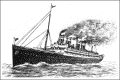
Left Lyttelton at five pm by S S Willoshra (?) 7,800 tons, chartered from the Adelaide firm by the Union Steamship Co, Captain Neville, Commander. Her accommodation is 231 first 120 second & 74 third class passengers, crew 130, total 555. She can steam 16 knots but her ordinary speed is 13. Good passage to Dunedin arriving at 11pm.
SATURDAY 4
My daughter, Elsie, from Oamaru was on the wharf to meet me, and a good thing, I was not well, seasickness was partly to blame though not altogether, we walked about Dunedin till evening when I was much better.
SABBATH 5
After a good nights rest I got up completely recovered, after breakfast went out and met Elsie at the Port Office, we had a walk around and at noon I went aboard the ship and a little before 1pm she sailed.
MONDAY 6
Arrived early at Bluff but it was eleven before we got along side the wharf. Could have gone by train 16 miles to Invercargill but it was not worthwhile as we would only have had two hours there.
Bluff is a rather scattered little town of eighteen hundred inhabitants, in the word of an old salt to whom I spoke, cold and bleak in winter, very windy in summer. Left Bluff between five and six pm.

TUESDAY 7
A little rough through the night but smoother as the day advanced. Judging by the tables at meal times, quite half the passengers must be in trouble. Towards evening it got very cold, bringing into use rugs, Top coats and gloves.
WEDNESDAY 8
Breezy and cold, the ship tossing about a good deal, making exercise on deck difficult.
THURSDAY 9
Getting warmer, got to Hobart about three pm. After passing the doctor we were allowed ashore, had a walk about the town, a ride on the Trams, got some post cards and returned to the ship. The S S Wimaroa (?) was alongside just leaving for New Zealand, but before I got the cards ready it was too late.
Hobart seemed a fairly good town of forty four thousand inhabitants, good public building, wharf accommodation, Trams electrically propelled narrow guauge, cars not so steady as Christchurch but not to be despised, they seem to be well patronized the streets have not been laid off on the modern system of town planning but they seem fairly good and well kept. Sailed for Melbourne in the evening.
FRIDAY 10
Fine in the morning but through the day the wind began to blow and towards evening the sea got rough and continued through the night. Some of the passengers thought it a hurricane and a good many got laid up again, I stood it very well.
SATURDAY 11
As the day advanced it got calmer and after another medical inspection we got to the wharf at Melbourne about three pm. My brother, Archibald, his wife, son-in-law and his son were waiting. I was taken to the son-in-laws residence at the corner of Reynard and Shaftsbury Streets Coburg (?). My brother having let his own house and was staying there.
From the Sabbath morning April I have thoroughly enjoyed the trip, everything about the ship, Captain, Officers and Crew as well as the passengers in fact everyone on board was all I could wish for. The table and catering were excellent. The Music Saloon and lounge room were provided with chairs. Lounge, electric light and heaters, everything for the comfort and convenience of the passengers. Everyone having to be catered for, there was a smoking room where everyone so disposed could smoke, play cards e.t.c. and boose (?), this room is provided with lounge chairs and seating accommodation for everyone. Boats are carried for six hundred adults, in short, it would be difficult to see anything which could be improved upon.
One of the passengers with whom I got acquainted was David Baird, a native of Victoria, his parents were scotch. He is a thorough Scot physically and mentally, a credit to his native land, about six ft in height, some fourteen stone in weight. For five years he was head of the stock department at the Agriculture College of Victoria and for the last sixteen years has been farming at Totara Flat near Hokitika. He has sold out there and is going into business in Victoria one hundred and sixty miles from Melbourne, he has promised to send me some poetry of his own composition as well as news (?) from some acquaintances.
Another passenger was Mr. Edgar a retired farmer who with his wife were on a visit to Australia, both were exceptionally interesting. They knew James and Charles Kerac (?) two of my ship mates from home. They live at Tapanui. Another ship mate was Paul Duvault, a professional singer who with a company is making a tour of the colonies. He is a French Canadian, he seems a fine free (?) man to converse with, but, owing to Mal de Mer amongst his company could not be got to give a test of his quality. I had a conversation with the first and second Engineers and both of them and the Captain so far as I could judge were very fine men.
On board we had a number of a United States Commission, a Theatrical Company and a Singing Company.
Taking things all round my stay on the Willoshra was all I could wish for, and I hope an augury of what I may expect on the whole of the tour.
My stay in Melbourne is too short to see everything in this, the second largest city in the Australian Colonies.
On Sunday morning April 12 we went to Brunswick Presbyterian Church (the Pulpit of which was occupied by the Rev Thomas Tait prior to his coming to Christchurch New Zealand, where he Ministered for upwards of ten years to St Pauls congregation and from which he recently went to Adelaide South Australia) in Brunswick Church we heard a Mr Tait, a cousin of Thomas.
APRIL 19 SABBATH
Went to Scots Church and heard Dr Marshall who has Ministered there for a number of years.
Since coming to Melbourne on Saturday April 11 to leaving on Tuesday April 21 we have visited quite a number of places such as the zoo, picture gallery, library, the Aquarium, St Kilda, Kew, Collingwood e.t.c. Melbourne or rather the Melbourne district has a population of about (650,000) six hundred and fifty thousand inhabitants.
APRIL 21 TUESDAY
In company with my brother Archibald Fraser and his wife we went aboard the P & O steam ship Malvia.
I may say there are some things about Melbourne behind the times. The Trams in the principal parts are cable worked, in some of the outer parts there are electric trams, in other parts horse trams.
The Central Trams are worked by a company under a long lease which expires in 1916 and though no one I saw seems to know what is to happen when there is general impression that whether the system is taken over by the Govt. or the Municipalities, very radical changes will be made.
Left Melbourne at 3pm and after a rough passage which did not agree well with a good many of the passengers including me, my brother and his wife, we landed at Outer Harbor at six am April 24. Went by train twelve miles to Adelaide, called on the Rev T Tait formally of St Pauls Christchurch. Saw him, his wife and daughter, they seemed to take well with Adelaide and made us very welcome. Adelaide is a very fine town, it is claimed to be thoroughly up to date and up to the most approved system of town planning. The tramways are much the same as Christchurch and far ahead of Melbourne. Not being too well I did not see so much as I might have done. Returned to the ship at 4:30 and left the wharf at 6.
APRIL 27
Since leaving Adelaide the weather has been rough, a good deal of sickness prevailing on the whole I have been fairly well and nothing remarkable has occurred. Arrived at Freemantle a little past one. Went by train twelve miles to Perth. Perth is not a bad town, not so well laid out as Adelaide. There is a departmental store, Boan Bros, near the railway station which took my fancy a good deal. Went up to the top of the
building by lift, there is a fine view over the town, the top floor is concrete and I should think occupies a quarter acre. You can walk around and see over the town in every direction. You can have dinner, drink, forenoon or afternoon tea, fruit salad or anything else in the food or drink line. The roof is said to be sixty feet above the street, the building can supply almost anything in draper clothing, boots, books e.t.c. We had only two and a half hours, most of which we spent at Boans. The streets are narrow, the trams are electrically driven, there are some good buildings and altogether the place is very good.
Left Freemantle at 9:30 and are now full speed for Colombo, which we expect to reach on Wednesday.
APRIL 28
Up to now no musical talent has been apparent. Some quoit playing has been going on but otherwise things are rather flat. Today an attempt is being made to start sports and in the evening we had singing and some music from a lady violinist.
Latitude noon 29.21 Long 112.54
WEDNESDAY APRIL 29
Day broke beautifully, temperature getting warmer, sea calm, though cross swell makes the ship roll. Up sooner than usual, the decks are washed down every morning by Lascars, a dark coloured race who talk about bare footed and are always busy. Cricket, Bowls, Quoits and other minor games are putting life into the younger passengers and on the whole we are getting on very well, it is proposed to have a dance tonight.
Lat 24.50 Long 102.7
THURSDAY APRIL 30
Weather fine, Mal de Mer overcome; so far as I can see no one suffering. We are now in the Tropics. At noon the latitude was posted 20.12. The crew and some of the passengers are getting into lighter clothing, lots of them white. I never have cold feet now and would fain express a hope that I may no more be troubled with that unpleasant feeling I don't feel the weather at all unpleasant but the reverse.
FRIDAY MAY 1
The weather is getting warmer though tempered somewhat with a cool breeze. For some days the wind has been behind us and blowing the same speed as the ship, so we have been in a calm, now it is blowing across making the ship cooler. This evening we had the first concert which went off very well, though there was no first class talent. Songs recitations and instrumental solos - passing an hour pleasantly. In the second saloon they had a longer entertainment than us beginning sooner and ending later. Some of us thought it would have been better if the entertainment had joined forces.
SATURDAY MAY 2
Nothing of note occurred today.
SABBATH MAY 3
Mass this morning. My brother attended but not appreciate nor understand it. We have on board the Roman Catholic Bishop of Sale (?) Australia, four priests and one nun.
A church of England service was conducted by Captain Thompson and though it seemed to me rather formal it was carried through in a very decorous and impressive way. At dinner a proclamation was read from Father Neptune and afterwards posted up in relation to his arrival the next day.
In the evening I had a long conversation with a Dumfries Man for the last twelve years living in Colombo. I understand he is a member of a Mercantile firm doing business in Ceylon and knows the place well. He gave me some very good hints on how to proceed on landing there and particularly requested one to call on a gentleman well known in Ceylon when visiting Aberdeen. His name is Joseph Fraser, he says Mr Fraser during a twenty five year residence in Ceylon while acquiring large interests himself had done the whole island a great service, particularly in introducing improved methods of tea cultivation. He said mention Willie More and that would be sufficient introduction.
MONDAY MAY 4
Weather this morning very fine, a cool breeze blowing which moderates the heat. Afternoon less wind more heat. A crossing the line pantomime lasting over an hour was got over with apparent good humor, though a little rough, everyone seemed to enjoy it.
TUESDAY MAY 5
Good breeze blowing which kept the weather fairly cooled off very well in the evening.
WEDNESDAY MAY 6
Landed at Colombo at about 9am. Went ashore and had a two hour drive in a motor car about the town and suburbs. Spending the rest of the day about the town and returned to the ship at six pm.
THURSDAY MAY 7
Spent the forenoon in the town. There are a great many points of interest to a stranger both in the town and its suburbs. There are a number of good buildings such as the Governors house, Post, Telegraph and other public buildings, a number of good Hotels and Stores e.t.c. The streets are good in the best parts of the town but in the native parts they are not so good. The good stores though apparently run by natives are in reality I understand financed by moneyed foreigners, and I would think judging by the number of natives in and about them they are paid by results, inside the stores at and about the doors and in the streets you are continually pestered to buy and it is hardly possible to shake them off. They don't seem to understand a refusal and will follow you around till they get you to buy, sometimes one fourth the price they offered at first. Then occasionally you meet the women who are as anxious to sell as the men and to crown all there are the children from two up Salaaming and holding out their hand, out in the suburbs at one time I met a youngster Salaaming as usual, I saw no more than one but no sooner had I given him a copper than more of them turned up from I did not know where. There is the electric lights, electric fans in the restaurants and so on. Also electric trams and other conveyances such as motor cars, horse carriages, not to mention carts, drawn by small bullocks. Most of the natives we saw were undersized, both men and women, though occasionally we saw a better class of native belonging to
a different tribe. The little men are alert and keen at driving a bargain. In the afternoon we remained on the ship it being wet.
FRIDAY MAY 8
Wet during the afternoon. After taking a number of passengers and a quantity of cargo on board we sailed at noon. During the afternoon had a conversation with a person on a Tea and Rubber plantation from India, he says Rubber can be produced in the district where he comes from at eight pence a pound and Tea pays equally well. The Rubber is sent to England in boxes and sells at the present time for from one and ninepence to two shillings a pound not so long ago it sold at a much higher price. The wages for Native labour about the Wharves is eight pence a day and on Tea and Rubber plantation half that amount.
There are now on board Men and Women from India and China and some of their statements about the cost of production in different places are not very consistent - with one another, for instance a planter from India told me that it costs two shillings a pound to produce Rubber in the Malay States. I mentioned this to some others and they said
they had been talking with a Malay planter and he told them that it cost him eightpence halfpenny. A merchant from Shanghai said he knew numbers of men - who had lost their all, in some cases thousands, one in particular who told him the Rubber cost one and ninepence halfpenny and after adding all the other expenses two and fourpence in London would not pay him.
SATURDAY MAY 9
Weather fine but rather warm. A dance in the evening.
SABBATH MAY 10
At mass in the morning. There are no doubt some who appreciate it, for me it was vox-et praeterea Nihil (?). On reading a copy of the Scottish American lent me I came across a story told by Lord Strathcona to illustrate his belief in the ubiquity of the Scots, a Scot in Shanghai discussing this question with a Southerner undertook to find a Scot in every ship in the Harbour. The Southerner doubted the assertion where upon Sandy went to the door of the engine room of every of the ships and shouted, "Are you there Mac?" , he was invariably answered, "Ay Ay Sir." I took up the paper and walked along the deck for a short distance where a business man from China who joined the ship at Colombo generally XXaled (?) himself, read this story to him and asked if it agreed with his experience. Though not a Scot himself he said he believed it was literally true in China at any rate. He traveled over a great part of the country and wherever he went they were there as Business men, Bankers, Engineers and so on. I related the story to another well traveled man, he said it was quite right and repeated what we had heard before. An Englishman is only happy when grumbling, a Scotchman is only at home when abroad. An Irishman is only at peace when fighting.
MONDAY MAY 11
Passed one of the Orient line of steamers with Sir Ronald Munro Ferguson on board, he sent a wireless message for Australians and Scotch men wishing them a pleasant and prosperous voyage.
TUESDAY MAY 12
Early this morning one of the Stewards - got overboard it is generally thought intentionally. Every effort was made to rescue him, but all to no purpose.
WEDNESDAY MAY 13
The weather is getting very little cooler though we are getting to the north of the equator, today the wind is calmer than of late which adds to the heat. We are two hundred and eighteen miles from Aden.
THURSDAY MAY 14
Arrived at Aden at 1:30am, lying one mile off. Left at 6:30. Saw little of the town of Aden proper is said to be four miles inland, there being but a few buildings fronting the Bay. Today is the most oppressing we have had. Passed a number of ships.
FRIDAY MAY 15
We are now in the Red Sea. Through the night the ship had to slow down on account of fog, making navigation dangerous. This morning it is still warm and oppressive though not so warm as yesterday.
SATURDAY MAY 16
Getting gradually cooler, fine breeze blowing. We had a fancy dress turn out last evening, considering the drawbacks it was very good.
SABBATH MAY 17
Land to be seen on both sides. We are getting very close to if not in the Gulf of Suez. Weather good, strong breeze, much cooler, passed two ships this afternoon. Arrived at Suez about five. Passed the doctor. Put off some cargo, took on vegetables and left at seven entering the Canal immediately.
MONDAY MAY 18 5am
Passing slowly through the Canal. Speed limited to five mile an hour. Not a great deal to be seen along the banks, looks like a country place, a little Sarsib (?), a few tress and
houses. 8:30am arrived at Port Said. Would have preferred to go through the Canal during the day. Went ashore and had a good look around. Suez is a town in the making. Some good buildings and many more being built. Some good shops. The French seem to have a good hold, which is to be expected, seeing the town practically owes it's existence to the Canal. Left Suez at 1:30pm and entered the Mediterranean.
TUESDAY MAY 19
Sailing the waters of the Mediterranean with little wind and smooth waters. Passed on sight of the Island of Crete and saw but one ship during the day.
WEDNESDAY MAY 20
About eleven pm entered the Straits of Messina on the Italian side we passed three towns well lit up. Being dark we saw little but the lights, but as the straits did not seem to be more than five miles wide we saw them quite well and I should be inclined to think early closing of shops is not the rule in either of the towns there.
THURSDAY MAY 21
Still on the Mediterranean Sea passed through the Straits of Bonafacia between the Islands of Corsica and Sardinia about ten at night, saw nothing but two guiding lights. Concert and distribution of prizes to sports winners in the evening.
FRIDAY MAY 22
Cast anchor at Marseille about noon. The first French town I have seen. Had a two hours drive around. Some good buildings and shops, it seems a busy place. Electric Tram Cars with Motor Cars, Motor Wagons and conveyences of about every description except Rickshaws. Left by Train de Luxe for Calais at five. We had bumps, jolts, swaying about and such things till eleven, when I got to bed. When partially asleep was awoke by some other effects of an unpleasant nature such as chairs falling from somewhere, smashing lamps and sudden stoppage. It appears an engine was doing some shunting and when partly on the line the driver noticed the approach of our train, he made for safety and our engine caught the shunting engine, tipping it over on its side and in the process lost a buffer, tore open side of his tender and lamed (?) things, generally the consequence being that he could not go on. We were very fortunate in not having a severe accident no one being hurt. After waiting two hours another engine was got, and without any more mishaps we got to our destination over four hours late.

SATURDAY MAY 23 7pm
Went by train to Victoria Station, London and taxi to Hotel Russell, Russell Square. Crossed from Calais to Dover by Channel Steamer, The Malwa - is a fine comfortable
ship, her passenger accommodation is up to date in every way, with conveniences of every description. She is fitted with hydraulic cranes for the handling of cargo, electricity for lighting and other uses such as working fans for cooling the room in warm weather, the roof of the dining room being a moving mass of them. Coolies are employed largely especially the decks, they seem always at it barefooted be the weathercold or hot.
SABBATH MAY 24
In the afternoon went to Marylebone Presbyterian Church and heard the Minister the Rev R.C. Gillie preach. The church is a fine building, the preacher good, the congregation very decorous and attentive. Not crowed but fairly full. In the evening we went to Dr Morgans church, Westminister Chapel, Westminister, but as Dr Morgan was absent we did not go in.
MONDAY MAY 25
When we got to the Hotel Russell on Saturday evening we met our brother Donald from Canada. Our company then consisted of Donald from Canada, Archibald and his wife from Melborne, Victoria, Australia and myself from New Zealand. During the day we visited Shepherds Bush, going and returning by the underground railway,
generally called the tubes. These railways are worked by electricity, reached by lifts, and well ventilated. Donald and I also visited Westminister Abbey and saw Archie and his wife off to street in Glouchestershire to see some of her relatives.. Had lunch and dinner at Holburn (?) Restaurant. The home rule for Ireland passed in the House of Commons Today.
TUESDAY MAY 26
Went to city of London visiting a number of places such as the Offices of the Canadian Pacific Railway the P & O. We passed the Bank of England and went along a number of streets well known such as Old Broad Street, Threadneedle Street, London Wall, Thames embankment and we also saw the Horse guards, more for show than use I fear. Had lunch at one of the Lyons Restaurants a company who runs a large number of such places in London and suburbs and the Directors of which have just recommended a divided of sixty per cent. The busy street of London must be very relieved by the rise of motor cars, motor buses and taxis cabs for passengers, motor wagons and motor lorries for goods. They are such swifter much easier to handle and take much less room than horse conveyances. Underground trains and railways must also be a great relief being expeditious and cheap.

WEDNESDAY MAY 27
Left London by train at 10am for Edinburgh arriving there at 6pm. Put up at Balmoral Hotel Princess Street. After dinner had a look around.
THURSDAY MAY 28
Seeing some of the sights such as the Castle, Calton Hill, and other place, we also went down Leith Walk and other parts of the suburbs. The Streets are inferior to the London Streets, the traffic much less. Motor buses much better, tramways worked by cable instead of electricity but notwithstanding these drawbacks Edinburgh is a fine city.
FRIDAY MAY 29
Still in Edinburgh seeing the sights.
SATURDAY MAY 29
Left at 10:40am for Aberdeen, arriving there at 6:15pm after a fine railway journey. Went by motor car to Mrs Reiths Sunnybank Cults, where we were to put up during our stay in this district (Typist note... Cults is a small village about 8 miles SW of Aberdeen in the area these men were brought up)
SABBATH MAY 31
At the United Free Church Cults in the forenoon Dr Morrison Minister of the Church conducted the service the congregation was small.
MONDAY JUNE 1
Spent most of the day in Aberdeen.
TUESDAY JUNE 2
Spent most of the day in town. Saw Mr Joseph Fraser of Ceylon at the Palace hotel.
WEDNESDAY JUNE 3
At Links Pier Fish Market getting home at 5pm. Rain is much wanted for some of the crops.
THURSDAY JUNE 4
The winds this morning are cold but on the whole the weather is good. Strawberries are beginning to fruit.
FRIDAY JUNE 5
Went to town at 7 this morning to see the fish sales. We also visited two cattle sale yards. Good milk cows cost as high as twenty five pounds to thirty, also the corn market where farmers meet to talk over prospects.
SATURDAY JUNE 6
At Cults and about Aberdeen through the day. Went to Cults by tram and train in the evening. Saw Mr Reith Kennerty (?) (many thanks to Brad Hepburn in London for helping with this part of the diary...Mr Reith is "John Reith of Culters was the manager of Kennerty Dairy Farms having taken over from his father, William Reith") a friend of Mr Paterson Timaru, also Tom Preston a member of a family I used to know when a boy. Culters is much improved and the Paper works enlarged since I saw it last fifty years ago. Rob Roy still stands on the Rocks as of yore.
Returned to Cults by train about ten pm.
SABBATH JUNE 7
South United Free Church in the forenoon, fine buildings, good congregation, the Minister Mr Irvine did not strike me as above mediocrity the Choir Do,. Queens Cross Church United Free in the evening rather poor congregation. Neither the Minister Mr Lewis DD nor the Choir seemed to me above mediocrity.
MONDAY JUNE 8
Went to town in the afternoon.
TUESDAY JUNE 9
In company with Donald, Archie and his wife, went by motor car to Draim (?) leaving at noon we passed through Cults where I was introduced to an old man, Mr Knowles, who said he was a schoolmaster and remembered the three of us which is more than I could say of him. Went past the old sawmill where I used to work, the old blacksmiths shop and other places I used to know in my young days such as John Milnes, the cottage where I spent two and half years with an Uncles then through the wood to the house where I first saw the light fifty nine years and fourteen days ago, even went down to the Healy Wallie (?), a spring at one time considered medicinal along the top of a low hill which used to be covered with broom and gorses but is now planted with trees. The old house is now covered with slates instead of red tiles, upstairs under the roof used to be lit by two gable windows, now it is lit by roof windows. There have been changes, more land is now cultivated and all the old inhabitants are gone. Went past East Guardian over roads I used to travel when a boy. Over the grounds around Drum Castle including the gardens. The Castle is said to have been built by William the Lion in the end of the twelfth or beginning of the thirteenth Centuries. The house is dated 1619. Returned to Cults at 5:30pm.
WEDNESDAY JUNE 10
Along with Archie went by tram to Bridge of Don, along the river banks, past Don Milnes, Gordons Mill, Grandholm Mills to Piries Rag Mill near the Paper works. Through Woodside took the tram to town, had lunch at the New Market in which we spent some time, then back to the Cults by train. The weather was not suitable for walking outside being foggy and wet.
THURSDAY JUNE 11
About Cults till five pm. After tea went by motor car to Eakt (?) saw John Begg a brother of my late wife then to Hirse (?) Mr Thompson farmer a relative of my brother Donald's late wife. Then to Glashmore tenanted by another relative. Then on through many turns to the Deeside Road - eight mile from Aberdeen and back to Cults after tea.
FRIDAY JUNE 12
Went with Archie to Mannofield by Tram across by Andersons Drive and other streets to Rubislaw Quarries down to and along George and St Nicholas Streets to Union Street and to Cults by train.
SATURDAY JUNE 13
Left Cults by motor car over the bridge of Dees, on to Stonehaven passing Portlathen, Muchalsand Fettercairn on to Thornley farm. Tenanted by Mr Mackay, had lunch and remained to four pm. Then to the Farm of Balnakettle Leaving there at about eight o'clock and back the way we had come arriving at Cults about ten. At the farm of Balnakettle saw what we were assured was a good potatoe planter Kidds patent, manufactured by Wallace and Co. Glasgow. The weather was first rates with a little more rain would be ideal for the farmers.
SABBATH JUNE 14
At the West United Free Church in the forenoon. The Minister the Rev Eslimout (?) Adams preached, he was very good, the best I have heard in Aberdeen. The Choir though small was good, the congregation rather thin but there seemed to me a good atmosphere in the place, that undefinable so much wanting in many Churches. Did not go out in the evening.
MONDAY JUNE 15
Town in the forenoon. Visited the library and reading rooms, seemed to me to be well arranged and comfortable. The only Australian paper in the building was the Leader
from Melbourne, a very good paper for upcountry readers in Victoria, but giving little information for readers outside the Colonies. Spent the evening with Mr James Reith and his daughters. A retired farmer ninety three years of age, a widower with five unmarried, three of them schoolteachers. They seem very nice and comfortable.
TUESDAY JUNE 16
Went by motor car to farm near Udny, tenanted by Mr R Findlay. Left Aberdeen at noon arriving at Farm, Corsie Muirs (?), a little after one, stayed for some hours the went to see a retired farmer, Mr Dick, about two miles from Udney Village, then to the Logurive (?) farm to see a brother of my late wife W Begg and back to Cults at ten.
WEDNESDAY JUNE 17
Left Cults at 7:20am, Aberdeen at 8.5 by the Great North of Scotland Railway arrived at Craigellachie at 10.6. Changed carriages for Granton on Spey where we spent some hours, it is a small clean town of some fifteen hundred inhabitants, the principal industry about here is Whisky making along the banks of the Spey river, distilleries are very common and all "Glenlivet". The Glenlivet - Distillery proper is at Ballindalbal (?) all the other distilleries about having a prefix to their names. Returning to Craigellachie at 6.5pm we again changed and got to Elgin at 6.50 and put up at the Station Hotel. At Granton we had lunch at Grants Temperance Hotel. Grant is a very common name on Speyside it being generally called the Country of the Grants. After dinner at Elgin we got a carriage and pair with liveried driver and had a tour around the town, or rather city, which I understand it claims to be we were taken to the principal places and got to bed about 10:30. We had a short time looking over the ruins of the Cathedral it must have been a magnificent structure and one cannot help being sorry for the misdirected zeal which brought about its destruction, though admiring the energy which better directed might have done the good and not the destruction.
THURSDAY JUNE 18
Had breakfast and left at 9:20 arriving at Inverness at 11:12. Passed Forres where we changed carriages and Nairn. I would have liked some hours at both these places. In Inverness we put up at Queensgate Temperance Hotel and before lunch had a wolk over some of the streets. Spent the afternoon in sightseeing by motor car, when out driving round, Donald was taken ill and we had to leave him at the hotel, during the evening we got a doctor.
FRIDAY JUNE 19
Dr Kerr who is attending Donald took Archie and I for a drive round when visiting his patients explaining the different places as we went along, he seems to be a popular man and has a good knowledge of the town and its history. He is a native. We enjoyed the drive very much.
SATURDAY JUNE 20
Donald is improving. Out about the streets during the forenoon met an old resident named Dickson who knows the family to which John Fraser an old acquaintance of
mine in Christchurch belonging. He took me to see Mrs Kelly, a sister of John Fraser who seems to be in comfortable circumstances I also saw a son of hers who keeps a shop in Queensgate Street. Went in the afternoon to see the entrance to the Caledonian Canal and the wharf where passengers join the steamers which ply for him along the canal. A very serious accident took place on the Highland Railway near Carbridge (?) on Thursday 18th. Caused by what is here called a Cloudburst, the water rushed down a narrow gorge and undermined a bridge which had stood for many years - when the train came along, the engine crossed safely but some of the carriages went down causing so far as is known at present the death of five persons two of them well known Inverness men and one a niece of Lord Guthrie and granddaughter of the late Dr Thomas Guthrie a well known Edinburgh Divine. The other two were a man and his wife from England.
SABBATH JUNE 21
In the forenoon went to the United Free High Church and heard a very good address. There is a fairly good Choir no organ. This is the Church where the Rev Donald Fraser, afterwards D.D Ministered when I left home, but afterwards went to Marylebone London. The Rev Dr Black also preached here before the present Minister he was one of the outstanding men in this part of the country. Had a walk in the afternoon. At the North Free Church in the evening. The Rev John McLeod preached a plain practical sermon. No organ. No Choir. Sat during singing, stood during prayers. The North Free Church used to be ministered to by the Rev Murdo McKenzie one of the leading men of the Wee Free denomination. He died some eighteen months ago. Went for a walk after service.
MONDAY JUNE 23
Went for a walk in the forenoon over the principal traffic bridge and out by the canal.
Had a walk along some of the principal streets in the afternoon.
TUESDAY JUNE 23
Donald is not yet strong enough to accompany us down the canal so Archie and I go
by ourselves. Donald and Archie's wife return to Abdn tomorrow. The coal for Inverness is mostly from Sunderland and Goole the timber from Norway. At Culloden Field in the afternoon stones mark the places where the English who fell were buried, where the Clans stood and where some of the Chiefs fall. We saw the commemoration Cairn, the Cumberland stone and stable hollows, the ruins of the stables where some of the English were housed after the fight. Inverness the capital of the North is without a doubt a fine town.
WEDNESDAY JUNE 24
Archie and I left Inverness by steamer at 8am down the Caledonian Canal. The Canal connects Loch Ness with the Moray Firth it extends from the Moray Firth to Loch Linnhe. There is a look at the end of the canal to regulate the height of the water where it joins the Firth and six more locks at the Inverness end, Loch Ness being fifty or sixty feet above the Firth as we go along there are more locks for raising and lowering the steamers. The scenery is generally good some of the hills are bare and rocky but most of them are green to the top, houses are to be seen here and there and fertile spots and a small town now and again. Fort Augustus is as nice as is Fort William at the base of Ben Nevis. Here we leave the Caledonian and go on the steamer for Oban passing through Loch Linnhe. Oban seems a fine little town of five or six thousand inhabitants it depends to a large extent on tourist traffic. Places of accommodation are numerous. As we could only stop one night we did not have time to see many of the places of interest in and around the town.
THURSDAY JUNE 25
Left Oban at 8:30am by steamer through Kerrera Sound, Firth of Lorne Scarba Sound and Croisnan (?) Canal to Ardrishaig. The Canal is worked by a small Screw Steamer being too small for a boat any size. Went from Ardsishaig to Gourock by another steamer then on to Glasgow by train arriving there about seven. Went to the Waverley Temperance hotel and had a two hours walk before retiring.
FRIDAY JUNE 26
Spent the day seeing some of the famous places about Glasgow such as the Cathedral, Necropolis, St Andrew Catholic Church, University and Bollibing Greens, Glasgow Green, Fish Market and so on.
SATURDAY JUNE 27
Left Glasgow at ten am for Stirling, arriving a little before eleven. Went out to the Wallace monument up to the top of the 246 steps. From the top there is a fine view for a long distance over the Country. Returned to Stirling and walked in the procession to the site of the Battle of Bannockburn and back. This day the sixth hundredth anniversary of the battle is being celebrated by a monster procession, banquet and speeches today. I would have liked to see the whole of the celebration but failed to arrange it. They began on Friday with a concert, on Saturday the procession and banquet. On Sabbath Religious Services. We returned to Aberdeen and Cults in the
evening. There are quite a number of interesting things to be seen in the Wallace monument such as Busts of Sir Walter Scott, William Murdoch, inventor of gas James Watt, John Knox, Allen Ramsay, Livingston, Lannahill, Burns, Adam Smith, Carlyle, Brewster, George Buchanan, Hugh Millar, Robert Bruce, W.E. Gladstone, a bronze bust of Carlyle. Portrait of John Lockart Architect of the monument. Copies of letters of Sir William Wallace, Kossuth (?), Garibaldi, Marjorie (?) Lou Blanc and Karl Blind.
SUNDAY JUNE 28
Bonaccord United Free Church in the forenoon. Thin congregation, fair choir, liked the pastor Mr Russell very well. Walk on Deeside Road and across the river to Banchory-Devenich.
MONDAY JUNE 29
About Aberdeen through the day. Called on one of the men to whom I had an introduction Mr Beverley. In company with a partner he runs a grocery and spirit business in Union Street. He received me in a very civil and courteous way and after spending some time with him, he made me promise to call again.
THURSDAY JUNE 30
Left Aberdeen by the Deeside Railway at 7:10am, the others following at 8.5. Arrived at Ballater and engaged a motor car to take us further on, that being the railway terminus. We went on to Lynne of Dee stopping for some hours, on the return journey called at Royal Braemar Balmoral Castle, The Falls of Corremulyie (?) and Ballater, returning by train to Aberdeen 7:42pm. Having a pass we went over the grounds and gardens at Balmoral but could not get into the Castle. There is nothing tawdry, garish or rude about the Castle or the grounds everything seemed to me plain, restful and in fine taste. Along the greater part of Deeside the scenery is good especially so in some places.
WEDNESDAY JULY 1
About Aberdeen most of the day. In the afternoon we saw the family of a cousin. He and his wife are dead. A sister of their late mother lives with them, I understand there are four of a family, three girls and one boy, one of the girls is the housekeeper another a teacher and the third a nurse. The mother's sister Miss Drummond was a relation of the late Henry Drummond and use to know Dr Gidd a prominent Presbyterian Minister in New Zealand, and his sister, Mrs Smith wife of the Rev Gibson Smith also a Presbyterian Minister. Both Dr Gibb and Mr Smith are settled in Wellington.
THURSDAY JULY 2
Went by train to Kemnay saw Mrs Brown, a widow, Mrs Henry who with her husband keeps a shop, a Temperance Hotel and hires out cars. Also William Begg from Logiereive (?) and Archie Begg. Tenant of the farm Craigmyle formerly occupied by his father. These four are sisters and brother of my late wife and the farm of Craigmyle was the place where the family spent their youthful days. Returned to Cults in the evening.
FRIDAY JULY 3
Went to Buscburn (?) in the evening to call on Dr Oliphant whose wife is a Reith. The doctor has a fine practice. He has about two thousand names on his insurance list, has charge of a Sanitarium as well as a general practice he seems a fine fellow with a fine wife.
SATURDAY JULY 4
Called on Mr Calder another man I was asked to see. He is in business at twenty four Guild Street. Promised to call again. Called at the library and reading room. In the evening went to Persley to see two more Reiths. We spent a pleasant evening and returned to Cults after eleven.
During the time our headquarters has been at Cults we have visited more relatives of Donald's late wife than anyone else, and every one of them seemed to be in comfortable circumstances and were very kind to us.
SABBATH JULY 5
At Mannofield Parish Church in the afternoon, Rev Mr Reid the Minister officiated. Small Choir of untrained voices, fair preacher, thin congregation. There do not seem to be any outstanding preachers in or around Abdn at present. They want Chapman or Alexander to give them a good shaking up.
MONDAY JULY 6
Left Aberdeen for Glasgow at 6:40am. Arriving there at 7:30pm. Passed Perth, Callender, Dunblane, The Trossacks (?), Loch Kettering, Loch Lomond, Invermaid, Balloch e.t.c. The trip is through the finest scenery imaginable the rugged grandeur of the country we passed through is such as can never be effaced from memory.
TUESDAY JULY 7
Went down the Clyde by steamer passing a large number of shipbuilding yards, the noise rivitting being constant betokening the building of many ships. Arrived at Rothesay in 3 1/2 hours, spent the day seeing the sights in and around the town. Certainly Rothesay is a fine resort for tourists, no expense is spared in making it attractive. There is a fine Esplanade along the bay front with seating for lots of people. A tram ride of five miles takes you to Ettrick Bay another attraction. Taking it all round it is well worth a visit.
Returned to Glasgow by steamer to Craigichoran (?) and train to Glasgow at nine.
WEDNESDAY JULY 8
At 10:30am Archie and I went to the Art Gallery and Museum. Fine display of pictures, statuary, ships models, engines and electric appliances and other machinery. Instead of spending one and a half hours as we did, we could have spent one and a half months in seeing everything.
During the afternoon we paid a visit to the Burns Country, returning at 8:45. Saw the Burns Monument on the banks of Bonnie Doon surrounded by well kept gardens, Alloways Auld Haunted Kirk, the house where the Poet first saw the light. The Burns Museum containing a great many relics of the Poet; The auld and New Brigs and sundry places in the town associated with Burns name.
THURSDAY JULY 9
Through the day was at the offices of the McRaes Timber Merchants, and at Mr Roberstsons Sawmills, near to the Fairfield Shipbuilding Cos yards. Saw Archie and his wife away to England to visit her native place and some of her relations.
FRIDAY JULY 10
At McRaes office. At Miss Shorts of Grove (?) Street, Miss Short is one of the ladies who send heather to the Scottish Society in Christchurch. Also to see Thomas McGregor manager of the North British Locomotive Works employing between eight and nine thousand men, he was apprentice mate of mine. Went to his house and had tea with him. Returned to hotel about ten.
SATURDAY JULY 11
Returned to Aberdeen and Cults. Saw Mr Calder 24 Guild Street.
In the afternoon with Donald and Mrs Reith visited Mrs Stewart widow of Mr Stewart Head Teacher in one of the schools who died suddenly about two years ago. Also Mr J Moir, Farmers Middlefied Woodside.
SABBATH JULY 12
Ferryhill United Free Church in forenoon. Astranger preached, he was very good. A good congregation, fair singing Back to Cults on the Southside of the Dee. There was a good company to tea including Rev Mr Middleton of Brechin.
MONDAY JULY 13
In company with Donald had an hour with Mr Beverley 401 Union Street, then saw Mr Calder 24 Guild Street then with car to say farewell to Mr James Reith to the Fraser. Caledonion place and the Press office. Mr Alexander editor of the Aberdeen Free Press took us in his car around the town leaving Donald at Brebners (?) and taking to his home No. 1 Queens Cross. Here I spoke for a few minutes with Mr Alexander Senior an old apprentice mate of mine, who for a number of years was editor of the Free Press but for the last three has been bedridden and is nearing the end. After tea with the family I was taken home to Cults.
Aberdeen the Granite City, is without doubt a fine city, being built of granite it always looks clean, the streets are laid with granite blocks which makes it rough for traffic, the footpaths are paved mostly with granite slabs and are slippery for hobnailed boots. There is a fine College on which large sums of money have been spent of recent years. Fine hospital buildings and a splendid fish market. The buildings are about three quarters of a mile long 45 - 55 and 65 feet wide with concrete floor. Docking accommodation is provided where the trawlers can land the fish on the concrete floor on an average five hundred tons are landed daily, sold by auction and sent off by special train chiefly to London. Herrings are not sold in this market but elsewhere room is provided for them. The fish market is one of the sights of the town.
Cults is one of the finest suburbs of Aberdeen quite a number of retired gentlemen live there it is 3 miles from town served by both train and tram, around about are farms, so it is both in town and country.
TUESDAY JULY 14
Along with Donald left Cults at 9:40am. Aberdeen 10:40. Arrived in Edinburgh at 2pm. Donald went on to Duns in Dumfriesshire I stayed for the night. I put up at St
Andrews Hotel, St Andrews Street. Went out to see Mr Spence Brown, Castle Street then got a car and went to see Mrs Duff, sister to Mrs McIntosh of Christchurch. Spent an hour and had tea with her. Then to Mr McRitchie, 4 Archibald Place, he is president of St Andrews Society, Mr Spence Brown being secretary. Mr McRitchie made me stay for dinner then took me to the zoo where we spent 1 1/2 hours after which he saw me home to the hotel.
WEDNESDAY JULY 15
Left Waverly Station at 10:30am for London Messrs McRichie and Brown even at the station to see me off. Donald joined the train at St Boswells and we reached London sharp to time and went to the Hotel Russell had dinner at the Holborn and bed about 10.
THURSDAY JULY 16
Went by motor car this forenoon to the office of the CPR The Royal Bank of Canada. Bank of Scotland, and had a look around some of the principal London streets. Then to the Holburn Restaurant Kingsway for lunch.
In the afternoon we went to Fulham to look for Andrew Mason an apprenticce mate and found him at The Poplars, Derby Road East Sheen (?). He is now a partner in a business at Fulham.
FRIDAY JULY 17
Left London at 11:15am for Glastonbury Glostershire, arriving a little after three. We passed a good many towns on the way but did not have a chance to leave the train. At Glastonbury we took coach to Street, a town similar size to Glastonbury 5000 -6000 inhabitants, Street is I understand Mrs A Frasers native town. The principal employer is Clarke Bros Boot and Shoes Manufactures. Their productions are mostly of a light class and some of them get as far as New Zealand. We went by motor car to Wells the famous Ecclesiastical Town and site of the Cathedral. After seeing over the Cathedral Buildings we went on through Rock defile to Cheddar of cheese fame just as we leave the Rocks there is a cave into which visitors are conducted at its entrance, there is exhibited a human skull found in the cave some years ago. We are informed that the scientists put the age of the skull at 40,000 to 80,000 Years, The cave is lit with electricity 1/4 of a mile long with very good stalictites at different places. Cheddar is a small place and but for Rock Cave and Cheese there is not much to see. After leaving Cheddar we went on through the Lake Country passing Widmore where King Arthur is said to have signed the Treaty with the Danes. Back to Street for the night a brother of Mrs A Fraser is in business here.
SATURDAY JULY 18
Left Street by car for Glastonbury and then took train for London changing trains at Bournemouth. Having some time to spare we went by car to Winbourne. After returning from there we had some time for a look round Bournemouth, it is a watering (?) place with provision for tourists, fine sea beach, sea bathing e.t.c. Leaving Bournemouth we went on to London arriving at 8pm.
SABBATH JULY 19
St Pauls Cathedral in the forenoon, Canon Rawnsley gave a good address on family life which was published next day in the Times. In the evening went to Kingway hall west end Mission now conducted by Mr Ratenbury who conducted the service. Roughly I would think the auditorium would seat 2000 people, it was well filled singing hearty a fine service all round. This Mission was originated by Hugh Price Hughs and carried on by him while he lived.
MONDAY JULY 20
Visited the British Museum. Our visit was only a formal one as a month would have been too little time for a cursory look at the exhibits there. In the evening we had Mr A Mason to dinner at the hotel, he seems well preserved.
TUESDAY JULY 21
At Westminster Abbey in the forenoon. House of Commons Gallery from four to six in the Afternoon.
Covent Garden Theatre in the evening. The performance was an Operatic version of Falstaff. We saw it out but I cannot say that it impressed me a great deal, no doubt it was well got up and gone through with a good deal of precision, but the intervals were too long. The singing was good. The large audience appreciative.
WEDNESDAY JULY 22
Donald left for Shields to accompany Mrs Reith of Cults to Liverpool. During the forenoon and afternoon I had a walk through some of the street. We had some rain in the afternoon but it did not last long. Returned to the hotel at 9:30.
SATURDAY JULY 23
After breakfast visited market and the Tower of London passing Billingsgate Market. Lunched at Lyons restaurant and returned to the hotel.
Left Euston railway station at 2:40pm for Liverpool, arriving there at 6:35. Put up at the Exchange Hotel the property of the Lancashire and Yorkshire Railway Co.
FRIDAY JULY 24
Got up early, had a bath and breakfast then a ride on the over head train along the docks which are very commodious, a good look round some of the streets and so on.
The town does not seem particularly clean the streets paved with blocks, the footpaths laid with flags about two feet square. The drink trade much to the front, in fact so much to the front that the calm of the Licensed Victuallers so far as Liverpool is concerned would seem well founded. That theirs is THE TRADE. Left by the Empress of Britain for Canada at 2:30pm. About two hours after leaving I received one letter from Ivy and two Newspaper from Mr Spencer Brown of Edinburgh-descriptive of the procession, banquet, concert and Sunday Services on connection with Bannockburn celebrations.
SATURDAY JULY 25
Half the passengers must be laid up with sickness though it is not rough, all our party, now five have it, Donald least of all, I have had it but not bad, Archie about the same as I. The ladies Mrs Reith and Mrs A Fraser are feeling it worst. This is Mrs Reiths first sea voyage and she was afraid of sickness so she was only what she expected. She has had the doctor and is being well looked after.
SABBATH JULY 26
We are having calm weather, sickness is abating. I had some breakfast this morning and feel fairly well. The weather is colder than we have experienced since leaving the coast of New Zealand. As is customary the Service of the Church of England was gone through in the forenoon, a fair number attending. Foggy and clear alternately during the afternoon, occasionally the fog horn was sounded. Had dinner and feel much better. First number of papers "Diary of my voyage to Canada" was distributed this morning.
MONDAY JULY 27
Sea very smooth. Occasional fogs. Sickness almost gone. The second paper came out this morning.
TUESDAY JULY 28
Fog and fog horn alternating with brightness and quite are about all the changes we have. In a voyage of but one weeks duration there is not time to get up sports or concerts but judging from appearance there is no lack of musitions (yes that is the spelling) on board. Towards evening the fogs deepened.

WEDNESDAY JULY 29
Day broke fine, no fog. Weather pretty cold. getting near the icebergs. Towards evening it got warmer. We have sailed in sight of land most of the day, said to be New Foundland, have seen steamers and sailing craft. In the evening we had a concert by some of the ships company which went of very well.
THURSDAY JULY 30
Fine morning. We are now in the Gulf of Lawrence. Water very smooth little wind. Warmer weather.
But for the fog the voyage across the Atlantic has been very fine. There has been nothing to alarm the most timid. Many of the passengers must have allowed their imaginations to run riot or there could not have been so much sickness. I certainly did not expect such a smooth passage, and was thus agreeably disappointed. The weather continued fine all day, and since a little after noon we have been sailing alongside land on the left side said to be the Province of Quebec. Part of the time land has been faintly visible on the right.
FRIDAY JULY 31 8am
We are now sailing up the St Lawrence expecting to get to our journeys end in four or five hours. The river is too wide and the atmosphere not clear enough for seeing much, but we can notice clearings and dwellings here and there. Judging by the rough hilly appearance of the country along the river, one could not form a high estimate of the quality of the land but it seems to carry a good many settlers.
We landed at Quebec about one pm and after awaiting a short term to the CPR Hotel Chatteau Frontinac and had luncheon. The ship Empress of Britain owned by the Canadian Pacific Railway Co is a very fine steamer of 14,000 tons 18,000 horse power well found and fitted every way. I think she is the finest boat we have traveled in so far. She can do eighteen knots an hour if pushed. Six copies of the newspaper were distributed and much appreciated. The distances traveled were 214. 402-426-432-390 and 437.
My brothers second son Archie and two friends met us on the steamer, had luncheon with us at the hotel where they stayed for the night. We also met an old friend of Donald, the Rev John McPherson Scott and some clerical friends from Toronto who were returning from a holiday at the fishing lodge on the Tobiaque river.
The hotel is a splendid building with over 600 bedrooms it occupies a conspicuous position in Quebec overlooking the town and harbour has a fine promenade Dufferin Terrace, in front where crowds were moving about or sitting down listening to music provided by a band during the evening. During the afternoon we had a drive round to see the sights which were very numerous about Quebec. Visiting the Fort Plains of Abraham, Governors House, Parliament house, and the oldest street a very narrow and rather dismal place also many statues such as Champlain, Wolf and Montcalms.
SATURDAY AUGT 1
Left Quebec at 8am by train for Riviene De Loup 115 miles getting there in five hours had lunch and went on to Cabano where is located Frasers principal Sawmill. Riviene De Loup is not much of a place but Cabano about forty miles though there is a railway from Riviene De Loup to Edmondson where it joins the CPR.
(NOTE from the Typist...The spelling in the diary is Riviene Du Loup. The correct spelling according to modern map is Riviere Du Loup. Cabano is not shown on my map. The area of these two places is on the south side of the St Lawrence Seaway well out toward the Atlantic.)
SABBATH AUGT 2
There being no Protestant service and the catholic being conducted in French we did not attend. Went on the lake in a motor boat in the afternoon.
MONDAY AUGT 3
Had a look around the mill during the afternoon. Went by motor to Notre Dame De Lac in the afternoon, seven miles.
TUESDAY AUGT 4
Went by motor car to Edmonston 40 miles and Baberbrook 53 miles. At each of these places there are powerful water mills cutting large quantities of timber. We passed through some good agricultural land, some fine scenery, some good little villages, embowered in greenwood, with every appearance of peace and plenty.
WEDNESDAY AUGT 5
About Cabano through the afternoon. After lunch we crossed the lake in a motor boat to Touladi River and spent the afternoon trying to catch fish, but only caught a few small ones. On the banks of the Touladi most of the timber for the Cabano Mill is got, floated down the stream to the lake in spring. Made into rafts and taken across by a small steamer. For the last few days there have been rumours of war, and, now we hear that Germany, Austria, Russia, France and Servia are in it.
THURSDAY AUGT 6
We now hear that England and Belgium are in the wars. This forenoon we were for some time at the mill. After lunch we had a motor ride along side the banks of the lake, 4 miles one way, 9 the other.
FRIDAY AUGT 7
bout the mill during the forenoon. Visiting different houses afternoon. Tea with my Brothers Mill Manager in the evening
The town of Cabano has about 2,000 inhabitants mostly French Canadians as are mainly all the people here. It is located in the province of Quebec, there are a few shops and some small sawmills in the vicinity. But the largest mill and the one that employs the greater part of the able-bodied dwellers is Frasers Ltd, it employs about three hundred men in the summer and many more in winter in the woods. During the open part of the year, about seven months, it cuts 150,000 feet of lumber a day - mostly Spruce 200,000 shingles white Cedar and 20 to 30,000 laths taken from slabs mostly, and refuse from the lumber saws. The mill is got up with labour saving devices and every appliance for cheapening production and preventing waste. For lumber the logs are taken from the lake by a chain, up into the mill by an inclined plane, onto a carriage where it runs past the bandsaws taking a cut each way the boards fall on a traveling table by which they are run to the next saws, finally coming out straight on the edges parallelly and cut square on the ends the slabs are taken, cut into lengths generally four feet and after passing a number of circular saws emerge as laths 4" x 2" x 1/2". Shingles are made from blocks of white Cedar by shingle machines. The blocks stand on end in the machine are automatically moved to be cut taper (?) and fed side ways against the circular saws when the shingle falls it is picked up and placed on a spring table passed on a circular saw which straightens one side, rises, when another shingle is reversed sawn and the process repeated the sixes of shingles are 16" long different widths 1/2" one end 1/4" other. To do from 15 to 18,000 shingles a day requires a good lot of practice.
The shingles are tied in bundles by boys who need a lot of practice also. The lumber is
sorted into qualities. At this mill there is one of the latest Planing Tongue and Grove machines capable of tuning out 7,500 feet superficial an hour 6" broad. There is an under story in the mill where all the refuse and sawdust falls and is taken away by travelers to fire the boilers or onto a burner. In front of the boilers a brick furnace is built into the top of which the saw dust is run by the travelers and one man can see to several boilers. The planning machine is fitted with tubes wherever there is dust and all the refuse is drawn away by suction fan. No refuse is allowed to collect about any part of the mill or plane. To work this mill and its adjuncts requires one thousand horse power or more.
SATURDAY AUGT 8
Left Cabano by motor car at 8:30am passed Notre Dame De Lac a small place with a few good houses, along the shore of Terniscouta Lake and the Madawasco River to Edmondston, had a look at the mill which is driven by the river and where there is a proposal to erect pulp mills. The town is small. Leaving, we crossed the St John River which is near the town into the State of Maine U.S.A. had lunch at Van Buren passed Fort Fairfield and the Grand Falls on the St John River, here the river runs through a rocky gorge. There is said to be a fall of 120 feet and a power of 44,000 horses possible of development. Arrived at Plasters (?) Rock 130 miles from Cabano at 6.30pm. Here is another sawmill managed by Donald my brothers eldest son. There are a few good houses but most of the people are employed at the mill. Stopped all night.
SABBATH AUGT 9
Left at ten am for camp or fishing lodge on the Tobigue River arriving there 32 miles at twelve.
The place is all but perfection. Situated on the bank of the river, on a nice clearing, with forest for a background, and along the river bank and also along a gully on one side there is the usual rank growth of young trees and shrubs and also wild raspberries, blueberries and strawberries. The lodge is a fine summer residence with a fine reception room large enough for 60 people, a number of bedrooms, kitchen and cooks rooms. The verandah along the front is about 60 feet long and quite 12 feet wide. For fishing there are three canoes and generally plenty of Salmon, though we did not succeed in charming many. Archie caught two, the others none though, we were at it from Monday Augt 9 to Tuesday Augt 25th. There is no doubt what ever but sailing on the river and lashing the water is healthy exercise.
MONDAY AUGT 10
The fishing is done from a canoe, the canoe is managed by a guide or assistant who finds the bait and baits the hooks. Sometimes the Salmon up to 20 pounds are caught and two or three miles up the river there are some tributaries where Trout are caught though very small.
TUESDAY AUGT 11
Archie caught an eleven pound Salmon.
WEDNESDAY AUGT 12
On one of the tributaries the Marnoyikel (?). Some Trout even caught. Mrs and Mr McDonald Fraser Jnr arrived about nine pm from Plastic Rock.
THURSDAY AUGT 13
Spent the day as usual.
FRIDAY AUGT 14
Archie Snr caught a small Salmon. I caught some trout on the Marnoikel.
SATURDAY AUGT 15
Mr and Mrs Fraser caught some trout. I walked to Rileybrook and back a distance of eleven mile, the first good walk I have had since leaving home.
SABBATH AUGT 16
Went for a walk both forenoon and afternoon. Weather showery.
MONDAY AUGT 17
As usual.
TUESDAY AUGT 18
Trying the Salmon and reading the War news. Archie Jnr, Mrs Fowler and his three children arrived from Cabano via Plaster Rock this afternoon. Also a young man, a friend who went fishing and caught a three pounder.
WEDNESDAY AUGT 19
Mrs Fowler tried the Salmon without success. Mrs Fowler, Mrs Fraser and the children went Trouting and caught about thirty. Mrs Reith left for Kineandine (?) Settlement, this morning Donald and Archie accompanied her and returned at night - 114 miles.
THURSDAY AUGT 20
This afternoon Donald Fraser Jnr, his wife and friend Mr Tenant, two ladies and a small boy from Plaster Rock paid us a visit. After tea they returned home. The War news is getting interesting.
FRIDAY AUGT 21
A Fraser Jnr, Mrs Fowler the young man, Richard Murphy, and the three children left about seven this morning for Fredericton. Wet in the afternoon.
SATURDAY AUGT 22
Rather wet for out doors.
SABBATH AUGT 23
A short walk during the forenoon. In the afternoon went to see an old acquaintance of my brother 3/4 of a mile away, Mr Millar. Then went to Riley Brook on the opposite direction to see some more old acquaintances. There is a Presbyterian Church at Rile Brook. On the way home called on a farmer, Mr Grant.
MONDAY AUGT 24
Left fishing lodge at 8am arriving Plaster Rock at 10:30. Some parts of the road were rough, had a look over the mill and went out 8 miles to Rushbrook to see a small mill, on the way we stopped to collect raspberries and at the mill had lunch of beans, raspberries and tea. We then went fishing and berry collecting and returned to Plaster Rock as it was getting dark calling on Mrs Ridgwell where Victor and his wife lodged when there.
The Toboque river is a fine stream about 100 miles in length and I would think three times the site of the Avon, it is widely known for Salmon. This fishing is let at stated times by auction. The last time it was let Frasers Ltd outbid the Tobique Club for a part of the river. They had a disagreement about something and after the sales the Club gave them the price they paid together with this part they wanted thrown in Frasers built the lodge which they named Pisteau Lodge.
Besides the fishing on the river there is shooting in the woods. The principal wild animals Moose, Caribou, Deer and Bears. There are also some small harmless snakes. The first three are edible, but before you can shoot them you must procure a license and then you can only kill one bull Moose, one Caribou and two Deer. There are also three kinds of vermin which have given me a lot of trouble. Small black Mosquitoes and Midges.
I can never go out but they are at me in hundreds, thousands, if not millions. There are Sparrows, Swallows, Partridges and Hawks and numbers of wild flowers. Few country houses have gardens. Houses in or near towns have gardens but few of them fenced. Most of the able-bodied men go to the woods cutting timber during the winter months they say it pays better than any other work to be got.
TUESDAY AUGT 25
Got up at 6:30am had breakfast before 8 expecting to get away at 8:30 but the car engine was sick and we did not get away till past 10. Went through rough country with very good scenery for some miles till arriving at Perth, a town of roughly three thousand inhabitants, there we crossed the St John River and went on down the valley of that river passing a few small towns such as Bath Bristol and Floreneeville. Arriving at River De Chute where my brother made his first start in the lumber business. Here we stopped for a short time, had forenoon tea and a look which at one time I would have considered a pretty large affair, but, after seeing the mills at Cabano and Plaster
Rock it is comparatively small.
Again we went on, stopping at Woodstock we had lunch with Mr Dunbar (?) an old Scotchman in business in a small way as a mechanic there.
Going on we arrived at our objective Fredricton, between eight and nine o'clock. This is the capital of New Brunswick and the headquarters of Frasers Ltd. While at Fredericton we stayed with Donald.
WEDNESDAY AUGT 26
Spent the day in town and short trip out in the country.
THURSDAY AUGT 27
Seeing the firms Fredericton Saw Mill in the forenoon. We went by motor car the , distance is about three miles. The mill is up to date, has two of four or five hundred horse powers, cuts 80,000 feet of long lumber a day, besides laths and shingles there is also a fine Planing Tongue and Grooving Machine. Spent the afternoon writing letters and taking them to the post office having a look at the shops on the way back.
FRIDAY AUGT 28
Had a look around during the forenoon. Made a start in the afternoon but returned on account of rain.
SATURDAY AUGT 29
About town forenoon and afternoon.
SABBATH AUGT 30
At the Presbyterian Church forenoon and evening Dr Smith the Minister preached both times.
MONDAY AUGT 31
Went out on foot the forenoon with Archie, my brother, had a look around the shops went over the river by traffic bridge to St Marys, one of the three small towns St Marys Gibson and Marysville on the opposite side of the river from Fredericton. There is also a Cotton Mill at Marysville.
TUESDAY SEPT 1
Walking to town in the forenoon. Went in the afternoon to see Mr Campbell an old acquaintance of Donald's. Mr Campbell is about eighty years of age, he is quite strong and vigorous, he owns a farm but on account of the scarcity of men does not cultivate it so much as he might and perhaps ought he informed me his Grandfather landed in Canada in 1819 and he himself is a native, and I should think a good specimen, intelligent and well informed.
WEDNESDAY SEPT 2
Being rather wet we were not much about the Frasers Office for a short time, they have a good roomy building and employ four or five clerks.
THURSDAY SEPT 3
At town in the forenoon at Marysville during the afternoon it is said to have three thousand inhabitants but to get that number part of the country round about must be included, on the way we passed through St Marys and Gibson. On the way home we made a second call at the sawmill Victoria Mills.
FRIDAY SEPT 4
Had a look through part of the town but spent most of the time at home.
SATURDAY SEPT 5
About the residential parts of the town through the day. Most of the houses are wood, the latest ones painted white. The general appearance of the buildings to betoken comfort.
SABBATH SEPT 6
At the Presbyterian Church St Pauls forenoon and evening Dr Smith Preached the morning on the War a sermon I would like to have in print. Dr Watson, Cincinati (?) a native of this district in the evening.
MONDAY SEPT 7
Labour day, a general holiday at town twice for papers to see the War news. On the way we passed where youth and beauty were enjoying themselves, there was a fairly good turnout I don't think it was the only place where the holiday was being kept, but owing to the unsettled state of the weather it was unsafe to go further a-field.
TUESDAY SEPT 8
Somewhat wet. Spent most of the day getting and reading newspapers.
WEDNESDAY SEPT 9
Left at 7:30 by river steamer for St John, arriving there at 5pm. Had a walk round before dinner. After dinner went to an exhibition which I understand is held every second year most of the exhibits seemed to be local with s few from a distance. As we were passing along a small stand took my attention, when I stopped to see what it was a number of papers were pressed on one by the two lady attendants on looking at them I could see it was, votes for women, I had got two live suffragettes. I told them that I came from a country where women had the vote, they wanted to keep me to tell them about it and when I told them I was one of five, and a stranger they pressed me to meet them next day but just then I was hauled away, none of my company being at all sympathetic.
THURSDAY SEPT 10
After breakfast had a drive round for three hours, then returned to Fredericton at eight pm by train.
St John is the largest town in New Brunswick it is somewhat picturesque being built on uneven ground. I believe it is the only open winter port in New Brunswick the tides rise and fall thirty feet preventing the setting of ice.
The St John is a fine river smooth as glass, out shallow, only small steamers can get up to Fredericton. On our way down by the steamer we stopped at quite a number of landing stages and shipped such things as apples, corn cob, cucumbers, marrows, pumpkins, cabbages and so on. The appearance of the houses seemed to indicate comfort but not affluence.
FRIDAY SEPT 11
Getting papers and reading War news.
SATURDAY SEPT 12
Same as yesterday.
SABBATH SEPT 13
At St Pauls twice Dr Smith.
MONDAY SEPT 14
Getting papers, 7, reading War news during the forenoon. In the afternoon drove to see Dr Smith who was out. Saw Dr Allison a friend of Donalds, his medical adviser and a well known Surgeon.
TUESDAY SEPT 15
The usual routine. Up at seven. Breakfast at eight getting newspapers nine to ten. Reading to one. Newspapers at four. Reading to six - Dinner. During the evening we sometimes read, have music, gramophone selections. Visitors and so on.
WEDNESDAY SEPT 16
As usual during the forenoon. During the afternoon visited Dr Smith. Both he and his wife are all one could wish.
THURSDAY SEPT 17
Dr Allison called today. He examined Donald's blood pressure for which there is no known cure. My blood pressure was tested and found normal. In the evening we had a visit from Mr Christie, his wife and son. Mr Christie is traveling for a Toronto Chocolate firm he had a stand at the St John Exhibition where we met him.
FRIDAY SEPT 18
Passed the day as usual except about two hours in the garden.
SATURDAY SEPT 19
One and a half hours gardening. Rest of the day as usual.
SABBATH SEPT 20
At St Pauls forenoon and evening. Dr Smith preached both times. During the day Mrs Reith returned from Woodstock where she had been spending one week. A Fraser Jnr also returned. He is most of his time on the go being the business man of the firm. Donald and his wife from Plaster Rock also arrived from a visit.
MONDAY SEPT 21
About as usual. Donald and his wife left for Plaster Rock.
TUESDAY SEPT 22
As usual during the forenoon. At three pm went by motor car across the river, called on a Mrs Watson then along the river seven or eight miles returning home before six.
WEDNESDAY SEPT 23
As usual in the forenoon. Went out by motor car three or four mile to see an orchard, it had a very good display of apples, principally Alexanders and quite a number of strawberry plants but little of anything else. The thermometer showed 96 on the verandah. Saw a band off to the War and had some visitors in the evening.
THURSDAY SEPT 24
As usual forenoon and afternoon. At Dr Smiths in the evening.
FRIDAY SEPT 25
As usual.
SATURDAY SEPT 26
Seeing the open air market in the forenoon. There were quite a number of country carts with their productions apples, meat and so on.
SABBATH SEPT 27
At Methodist Church in the forenoon. St Pauls in the evening A Fraser Jnr left for Montreal in the evening.
MONDAY SEPT 28
During the afternoon we visited the Govt. Buildings, Natural History Museum and Council Room and the Episcopal Cathedral. Also a Mr and Mrs McDonald and Dr Smith at home in the evening.
TUESDAY SEPT 29
During the afternoon we were driven out some seventeen miles to see some Fruitland. Mr Slip, a lawyer in Fredericton has brought some eight hundred acres of land, is lying it out in sections, planting apples and selling them as apple orchard plots. He has now had it for four years, has planted seven thousand trees in seventy acres, and has a large number of trees coming on. We spent an hour going over the place and saw some fine crops. We got a good idea of what can be done here at apple growing. The present price for good apples is from one and a quarter dollars a bushel, four to five shillings for forty pounds though they are much cheaper at times.
WEDNESDAY SEPT 30
This forenoon we went to the sawmill getting home at eleven. Then to an Indian village and got a few of their productions returning home at one where we spent the afternoon.
THURSDAY OCT 1
Spent the forenoon in the usual way. In the evening we had as visitors Mr and Mrs McDonald and Dr and Mrs Smith. The evening passed away very pleasantly.
FRIDAY OCT 2
In the afternoon we attended a party at Mr and Mrs McDonalds. There were also present a number of others including a young lady who was having music lessons when War broke out. She was at Heidelberg in Germany and had some awkward experiences before she got home. We spent a very fine time.
SATURDAY OCT 3
Home during the forenoon. In the afternoon had a visit from Mr and Mrs Campbell.
SABBATH OCT 4
St Pauls forenoon and evening. Dr Smith was the Preacher.
MONDAY OCT 5
Making sundry visits. Finally left Fredericton for Montreal. The town of Fredericton is the capital of New Brunswick, it is a small place having about seven thousand inhabitants. Here are located the Govt. Buildings, the Residence of the Lieutenant Governor. The Episcopal Cathedral. There are also a few factories such as timber mills, boot factory, boat building e.t.c. The town is well supplied with churches, two Episcopal, one Catholic, one Presbyterian, one Wesleyan, and three Baptists also the Salvation Army.
For a start in the War work Canada is sending 22,000 men, 7,000,000 98lb bags of flour, New Brunswick 1000,000 bushels potatoes, Prince Edward Island 1000,000 bushels oats.
The town of St Johns seemed to me to be an active place. Built on limestone rock which in many places is cut down for the street it is a picturesque place, very hilly, very rocky, good shops, good shipping accommodation. Tides rise and fall twenty eight to thirty feet. They have what they call reversible falls, one way when the tide is coming in, the other way when the it is going out. There is a zoo. The town is served by two railways and electric trams. There are two morning and two evening papers and some good suburban residences. Competition exists between St Johns and Halifax in Nova Scotia. There are large quantities of timber brought down the rivers to supply a number of sawmills about the place, it is situated at the mouth of the St John River on the Bay of Fundy. It is a good shipping business being open in the winter.
My brother has a very good house of I should think sixteen or eighteen rooms it is comfortable fitted with radiators for warmth in the winter, electric light. Double windows which are removed during the summer months. He has ample grounds unfenced, with flower plots e.t.c, also a vegetable garden a short distance away, it is one and a quarter miles from the centre of the town.
The Rev W H Smith MA BD PhD the Presbyterian minister of Fredericton whom we came into contact with a good many times is a very fine fellow, I understand he is a native of Nova Scotia and was settled there before coming to Fredericton. He is exceptionally fine frank and free man. I often met him in the street he was always the
same I would thing he takes a good position as a Preacher being fluent and using no notes he told me he always wrote his sermons and did not find it necessary to memorise them.
The St Johns River is about 450 miles long and fall into the bay of Fundy is sometimes called the Rhine of America. At Fredericton it is three quarters of a mile wide, but shallow, only small steamers can get up that far.
TUESDAY OCT 6
After a rather rough railway journey, though we had a good bed, though we did not sleep too well, we had breakfast on the train and arrived at Montreal at eight am. Went to the Windsor Hotel where we stayed while in Montreal. Went out during the forenoon and called at the CPR Offices and Station. After lunch at the CPR Restaurant we got a carriage and drove round calling at St James Cathedral and Romish Church of Notre Dame, up to the top of Mount Royal, seven hundred feet above the St Lawrence River. From the top of Mount Royal is obtained a fine view of the city and the country around. Everything is made convenient for visitors during the summer months food can be procured as well as fancy goods, books of views, post cards e.t.c. After coming we called at and went through a fur shop which claims to be the largest of its kind in existence. It has certainly a fine display of furs and a very civil proprietor, Mrs Dejardins (?).
WEDNESDAY OCT 7
Got up at 7. Breakfast at 8:30. Went out through the forenoon and had a look around some of the streets. In the afternoon went out again calling at the Bank of Montreal a spacious building. The roof of the main part is supported by a number of polished green marble pillars. It is the headquarters of the Bank and evidently laid out for dispatch of business.
The Royal Bank of Canada headquarters a good building but inferior to Bank of Montreal. The Bank of Commerce Branch also a good building.
After we had a good look round and tea at restaurant we returned to hotel at six. At eight I went out for one and a half hours by myself.
I understand Montreal is the largest city in Canada. The streets are well kept many of them over a chain wide and pavements of cement slabs, good buildings numbers of them six, seven, eight, and up to eleven stories high. Fine Churches especially Catholic who seem to predominate, fine shops, good electric trams with exceptionally long cars. Uniform fare of five cents, pay as you enter systems. The cars run very steady. The crowning feature about Montreal is Mount Royal.

THURSDAY OCT 8
Left Montreal at 8am for Albany, New York, arriving a little before five pm. On the way we passed through Canadian Territory for about one hour then into the United States for the rest of the journey. In some parts the land seemed good, in other parts rough, rocky, swampy. The main crop we saw was maize and not much of that. We
run for a good part of the time along the side of Lake Champlain seeing streamers,
barges and boats evidently in use for commercial purposes. We also passed some towns such as Sarato (?) Springs e.t.c.
On arriving at Albany we had some difficulty in getting hotel accommodation the Teniaae (?) to which we were recommended could only let us have one room for which they wanted fifteen dollars for one night.
After some trouble we found a very good place, the Kenmore on one if not the Chef business street. After getting fixed up and having something to eat we went out to see the shops and have a general look round in this the first place I have ever been in outside the British Empire. Shops, electric cars and streets were just about the usual run but we had little time to see much of the place, got back to the hotel and turned in at 9.
FRIDAY OCT 9
Got up at six had breakfast at 7: and left by steamer, Washington Irving, down the Hudson River for New York City. The steamer is a splendid four story boat paddle, licensed to carry six thousand passengers but I think without crowding could carry ten thousand.
The Hudson is a fine stream passes through almost every description of land scenery and buildings as we sailed along the one hundred and fifty miles, the passengers from some hundreds to some thousands the towns we passed from hundreds to Yonkers with its ninety thousand. On the banks of the Hudson there are lots of historical places and places associated with historical and well known names, residences of millionaires and so on. We landed at New York a little after five and after some bustling got on a car up Forty Second Street and to the Murray Hill Hotel where we are to stay while we are in New York. After getting settled and had dinner it was too late to go out.
SATURDAY OCT 10
Very warm through the night, got up at six, did some writing. After breakfast went out to Broadway. After walking about for some time took a tram ride for some miles coming back a different way. After lunch at the hotel we went out by motor car for three hours going along Forty Second Street, down Fifth Avenue round by the Hudson River through some parts of the city and back to hotel at five. After tea had a walk for some time getting to bed at ten.
During the day we also visited the Central Railway Station, a magnificent building. Have not seem anything quite like it, quite a number of railways have accommodation in it and I should think thirty thousand people could easily fine shelter within its wall. It has polished stone floors, marble pillars and stairs. Even so many things can be purchased in the building, food, books, tobacco and so on.
SABBATH OCT 11
In the forenoon went to Fifth Avenue Presbyterian Church and heard Dr Jowitt his Church is a fine proportional building, was well filled, it is said to seat twenty five thousand people. There was no Church cough which was complimentary to the Preacher there were printed forms of the service and a very decorous congregation.
In the afternoon we took tram to near Brooklyn Bridge and walked back over the
bridge. On the bridge there are two railway lines, two tram lines all worked by electricity, two roads for wheel traffic and one footway. The bridge is across East River and there is another bridge not far from it. On account of the very heavy traffic it has been necessary to add to its strength which has hundreds of wire cables. Returned to the hotel about seven.
MONDAY OCT 12
Went out for a look around some of the streets. After spending some time there we took tram for the 125st one of the principal shopping streets, walked about while the ladies had a good examination of windows had lunch when I separated from the others who took tram back. I walked all the way back up Fifteenth Avenue to have a good look at the street of which I had heard so much, the greater part is very good, the street itself is wide as are the footpaths which for the most part are paved with cement slabs. A great many fine buildings hotels, Churches and soon I went into a shop on 125st arranged for the purchase of a fountain pen and as Canadian money is not legal tender in the States I walked up Fifth Avenue to the hotel, got change walked to 3rd Avenue took tram to 125th paid for and received pen and returned to hotel by Madison Avenue tram. After tea went out and got two books about New York and returned for the night.
To cope with the traffic on the municipal streets there are overhead trains, street trams here call surface cars and subways all electrified. In the principal streets the electric cables are underground, in other streets overhead. Some of the cars are pay as you enter in others the conductor collects the fares, two and a half cents and gives no tickets unless the passenger is to join another car. A large number of the streets are wide some of them two chains with footpaths. A good many of the streets are topdressed with tar, the footways laid with cement slabs. Houses of six and eight stories are very common, ten and twelve less common still. Above that there are a few, the highest is Woolworth's building, fifty five stories.
Hydrants for fire purposes are common on the inside of the footways in some cases on the outer edge. Overhead railways are sometimes along the centre of the streets with a tram line beneath. Sometimes along the front of houses. The tramways are generally along the street. Electricity is very common for house lighting but my time prevented many enquiries. I notice John Wannamaker of Philadelphia is to occupy premises formerly held by Stewart the Millionaire.
THURSDAY OCT 13
Went out this morning with Donald and Archie about 9:30 by tram along Forty Second Street to the Hudson River, across by ferry boat to Hoboken. The boat takes passengers and cargo, on landing we took a car for some miles then walked for some distance, took a car to the wharf and recrossed the river some miles east from where we crossed first. Got a car and went to Forty Second Street. Had lunch at one of Childs restaurants. Went for a short time to the Central Station and back to hotel about three pm. A good many of the buildings in Hoboken are brick and the smaller are wood, the
streets where we were are mostly paved with stone blocks and are rather rough, the footpaths are laid with cement slabs not very large, the part of New Jersey we passed through had better street and houses but it is quite likely we passed through some of the worst parts of Hoboken and the best parts of New Jersey. Except for a few minutes we stayed at the hotel during the afternoon.
WEDNESDAY OCT 14
Left by rail from Central Station for Niagara passing through Albany, Schenectady, Utica and Rochester. Some swampy but mostly good agriculture land. We traveled by the New York Central also passing such places as Harmon, Poughkeepsie, Yonkers, Hudson, Rome, Oneda, Syracuse, Lyons and Buffold. Stopping at Harmon, Albany, Utica, Syracuse, Rochester and Buffalo. Yonkers is a considerable town on the Hudson with ninety thousand of a population.
Syracuse, Rochester and Buffalo are manufacturing towns of some note. Arrived at Niagara at 6:25pm. The train we came on is said to be the fastest on earth, though there is room for doubt. We got accommodation in one of the hotels and after tea I had a walk along one of the street which is certainly well lit. The name of our hotel is the Imperial. We came from New York by the Empire State Express, our car was a Pullman Pallace Car. The chairs are single very comfortable. We traveled in a similar car from Montreal to Albany. In my bedroom at the hotel is a Gideon Bible.
THURSDAY OCT 15
Got up at seven had a walk around some of the suburbs. There some good residences as is usual with a business town. Crossed the river above the falls on a stone bridge and back again and along the banks to have a good view of the rapids. After breakfast went by motor car and a guide to have a good view of the falls which are stupendous. We went down a company of both sexes after being dressed in rubber garments by a lift stopping at three different places on the way down and had a good view at each stoppage, when at the bottom which must be well on to a hundred feet down we could get out where some of the water came down and but for the rubber one would get a good drenching. After coming up we went along the bank below the falls down to near the water by a device for the purpose along the river for some distance then back up, and returned to the hotel at 11:15. The town seems a nice place good streets, trams, shops and so on. Some of the hotels are closed the principal business being tourist which the War hurt very much.
It is calculated there are five millions of horse power in the falls and one tenth of it is being utilized at the present time. The falls are a fine sight, the water drops straight down for one hundred and fifty to two hundred feet. There are two falls, the principal one being eleven hundred feet broad.
At one pm left Niagara by train arriving at Toronto at 4:30. We were met at the station by the Rev Mr Scott an old acquaintance of Donald, and Taken to his Manse in Broadview. On the way from Niagara to Toronto we passed over what we were told is some of the finest land in Canada especially for agricultural purposes. Vehicles keep to the right in USA.
FRIDAY OCT 16
Got up and had breakfast at 8. In company with Mr Scott. We went to the CPR Offices to arrange about passage to Vancouver, then a photographers to have our portraits taken then back for dinner. In the afternoon went by motor round some of the residential parts of Toronto. Judging by appearances I should that there are many well to do people. Fine houses, fine surroundings and few fences. The town seems well laid out. Very good streets, stone blocks being much used with cement slabs for footpaths. We also went to the university buildings, but on account of meetings did not see through much of it.
In the Govt. building were introduced to Mr Alison (?) Fraser, an Inverness man he is in charge of the archives of the Province of Ontario, would take him for its historian. He has the characters of being an able man, a graduate of Glasgow University. An enthusiastic Scot, with Scottish love and history at his fingers ends, we had some conversation with him but did not care to impose too much on his time, went home to Mr Scotts for the evening.
SATURDAY OCT 17
Went out with Mr Scott during the forenoon calling at the Palarial Offices of the City Council where the meeting are held and the Councils work is done, at the Police Court rooms where minor offenders such as drunks e.t.c are tried after seeing Civic buildings offices we were taken to Eatons Department Stores, an enormous building where thousands are employed. I understand the firm manufactures all description of clothing and sells almost everything. We went through a very small part of the building and got but a faint idea of its size. Another similar business is run in Toronto but not on such a large scale (Simpsons). With Mr Scott's son Robt, Archie and I had another trip round calling at the Ford company motors store. The Dominion Alliance Office which was closed, a book store then to Mr Wansels (?) a retired Jeweller who has been a well known business in Toronto for 50 years. Had tea with him and some of his family, he is a fine old Scotchman 85 years of age 63 of which he has spent in Toronot having arrived in 1851. He showed us grouse killed on the Lamermoor hills, at Torlily Cudles 200 years old another as old and quite a number of other curiosities including a fine old copy of Robert Burns Poems and correspondence. Got home at 9pm.
SABBATH OCT 18
At Mr Scott's Church forenoon and evening. Mr Scott took the service in the forenoon, Mr Mahon of St Andrews in the evening. After the evening service we were showed over the Sunday School buildings behind the Church. Church and School are fine brick buildings, the former seating 1100 the number of members and we believe about 1200. The number of Scholars on the books is 1200 the average attendants 900. 17 Missionaries have gone out from the congregation and two are being supported at present. When a student, Mr Scott used to conduct services at the Scotch colony in New Brunswick where my brother first settled 30 years ago and soon after commenced a mission where his Church now stands near by. Since then his Church has gradually grown to its present dimensions.
Without a doubt Mr Scott is a very fine man much of the milk of human kindness and from what I saw a general favorite, he spent a lot of time showing us around.
MONDAY OCT 19
This forenoon Mr Scott took us to a meeting composed principally of Ministers. Where Dr McDonald of the Toronto Globe gave an address on a war subject, he is an energetic lecturer and his audience was very sympethic.
After the lecture which was given in the Y.M.C.A room we were taken over the buildings which are very commodious and complete. During the afternoon we visited a number of places and called at the residence of a gentleman we met at St Johns, he was from home.
In the evening we, that is, my brother Archie and I parted from our friends and set out by rail across the Prairie Lands of Canada traveling night and day.
WEDNESDAY OCT 21
At 2:15 pm we arrived at Winnipeg, the wheat centre of Canada. Saw nothing noteworthy on the way from Toronto, several small towns and generally agricultural land, we put up at the CPR Hotel Riyal Alexandra. The land does not seem to me to be first class on the way along. We have passed through much swampy and rocky country with patches of good country. In Winnipeg there are thousands of idle men for which the war is blamed. Winnipeg is a busy growing town. The hotel is an extensive place. The charges for rooms four dollars for a single 6 dollars for a double room a night. My room is 630. During the afternoon and evening we walked about the street and back, (THERE NOW FOLLOWS THREE TOTALLY ILLEGIBLE WORDS.)
THURSDAY OCT 22
Through the day we had a good look around the streets also went through Eatons departmental store, a branch of the store at Toronto, also very extensive, had lunch there. The Prairie Lands are said to commence 40 miles from here so we are well into them.
Leaving Winnipeg we passed through a long stretch of Prairie Land. Mostly flat but in some places undulating here and there we passed towns of fairly good size.
Footnote;
What happened after leaving Winnip,eg ie: the Rockies, Vancouver and the ship sailing home is not included. I would find it odd that he did not complete it and suspect that it has been lost.
Evan Fraser
Retyped by Sandra Munro

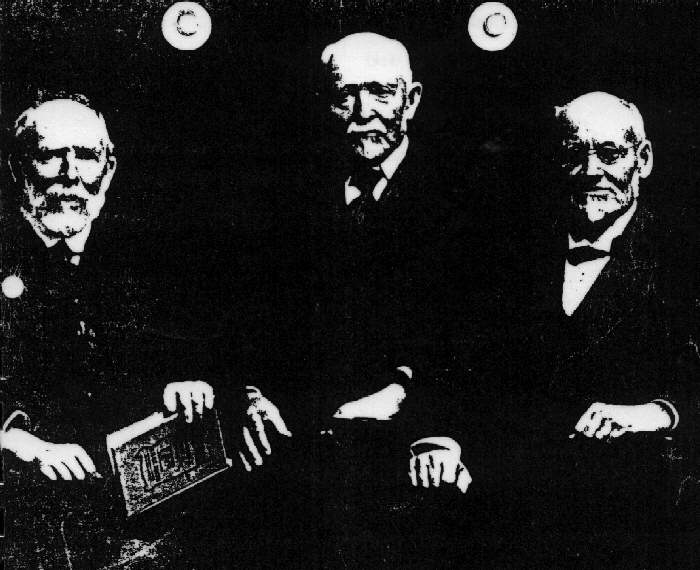
Home