

If you dont have a pc then you are wasting your time and money buying a one.
FEATURES TO LOOK FOR
CCD
the most impotant bit as you will see if you have read the above intro. Cameras now top the 5 mega pixels barrier but this is over kill unless you do professional graphics or desktop publishing. The average home user shouldnt really need anything over 2.5 mega pixels, anything more is a bit of a waste.
LENS
Some of the higher spec cameras have more expensive and better engineered lens for improved clarity of image. Carl Ziuss is a reconisable name in this field. If you plan on talking say for example wide angle photos then its worth investing in a camera with interchangable zoom lens's, but be prepared to spend a little extra.
ZOOM
In digital camera there are 2 types of zoom, telephoto zoom and digital zoom. Telephot zoom is exactly the same as a standard camera with a zoom lens that moves in and out. Most standard non professional cameras dont have any more than 10X zoom. Then there is digital zoom. basically all this does is chop the edges off the picture so only to concentrate on the centre of the frame giving an apparent zoom. This action reduces the deffenition of the picture and its not a true zoom.
LCD DISPLAY
Onlt the cheapest cameras dont have LCD's (liquid crystal diplay), the LCD has many purposes, firstly nad primarily to line up and take the photo, the LCD diplays what the CCD sees alolowing you to see exactly what the picture you are about to take looks like and is very useful for lining up a shot and much better than the eye piece. The LCD is also used for viewing pictures you have taken as well scrolling through menus to adjust camera settings.
FLASH
All digital cameras come with a built in flash, but if want something a bit more powerful than a standard flash then you'll to spend a bit more on a better camera which has such add-ons.
MEMORY
Similar principles apply to digital cameras as they do to mp3 players, the higher quality images you want to take the more memory the images will require. A 640 x 480 low resolution image will need about 70kb but the higher resolutions may need many mega bytes. Manufacturing are always a bit shy when supplying memory, they are often under capacity. A typical 8mb card will be plenty if you take low res images but you will run out of memory after as few as 6 shots in high res modes. So expect to have to purchace additional memory cards. There are many different types of memory card, and different cameras use different memory media. Below is a summary of the different cards you can expect, they are different.




SONY




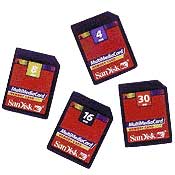


The kodak and Sony cards are designed for their own products, so you will be obliged to purchase their cards if you have one of their products. The others are less restrictive and are used in many different devices such as mp3 players, and pocket pcs also covered in my guides. So if you already have a device which uses a memory card, then it is worthwhile trying to get a camera which uses the same memory card so you can swap them between your devices.
USB
most digital cameras now have a USB port instead of the slower serial ports, so avoid anything with a serial connection to your pc.
INTERPOLLATION
this is related to the manufacturers mega pixel rating. A camera may claim to have say 5 mega pixels interpollated, what this is turn means is that the camera actually has a smaller CCD sensor than that specified and image is enlarged using software which expands the picture then uses mathematical formulau to fill in the blank spaces left. The picture quality will remain the same but it will be bigger, and the amount of detail captured will be that of a lower rating camera. Not a feature that particularly impresses me, its more of a case of baffling people with numbers leading them to believing they are getting something better than they are. Its a case of replacing some of the hardware with software.
OTHER CAMERA FEATURES
Auto focus
anti red eye
brightness
contrast
time and date stamp
authors info attached to pics
timer
BATTERIES
Since most cameras now have LCD's with backlighting the power demands are much greater than that of a normal SLR camera. This can make them as expensive on batteries as purchasing film and developement costs on a normal camera. Plus an important thing to remember is that if the camera uses say AA cells, then its not advisable to use rechargables since a rechargable battery has only 1.2v compared to a non rechargable at 1.5v. So your standard rechargables will drain after only a few shots. To get around this DONT buy a camera which does not have a built in rechargable battery of its own. Take my advice!!!!
LENS COVER
Doesnt sound very important, but if your camera doesnt have one then the lens will dust up and possibly scratch very quicky, and once its scratched the only way to replace it is to send it back to the factory. Very costly.
VIDEO RECORD
Some cameras now have the ability to record short snippets of low resolution video in mpeg format.
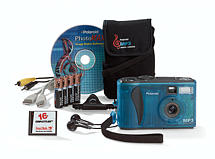
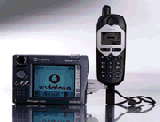
Digital camers have even made their way onto the phones themselfs and also now built into watches.
Well since i have one myself it can be clear that they are a handy tool. No more processing at the chemist or messing around with film. But the main benfit is the ability to take a shot, veiw it back and if isnt good enough then take it again.
I have on many ocasions taken a picture then connected the camera up to the computer and sent it by email and all in less than than a minute.
The only real bad point is that if you want hard copy's of the pictures you will need the more expensive paper to get good quality prints, and the ink from a home printer tends to fade after time. An alternative is send them to an online photo printers and pay them to print your pics, then they wont fade. Also if you want a good camera then expect to have to pay a lot of money, and if you want a lot of high resolution images then dig deep again for more more memory.


