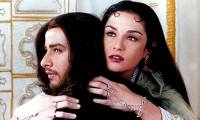
Akbar Khan not only attempts a historical, but makes a colossal film on one of the seven wonders of the world, Taj Mahal. Naturally, the expectations are as monumental as the subject matter.
Although a number of dream merchants have attempted films on TAJ MAHAL, Akbar Khan's interpretation of the story is far more engaging than those attempted in the past. As a student of history, you do know about the legendary lovers, Shahjahan and Mumtaz Mahal, but what you don't know are the minute details, besides the heavy-duty politics and the lust for power that the royals engaged in during that era. You get to see all this and more in TAJ MAHAL.
TAJ MAHAL has gloss, sequences that make a sweeping impact and most importantly, soul. But that doesn't mean the film is devoid of blemishes. Yet, all said and done, there's no denying that the pros outnumber the cons here. More than anything else, one ought to salute and respect the passion of the film-maker, Akbar Khan, who has been living this subject for quite some time now!
TAJ MAHAL begins with an ageing Shahjahan [Kabir Bedi] being held captive by his son Aurangzeb [Arbaaz Khan]. After killing his brother Dara Shikoh [Vaquar Sheikh] and his other brother, Aurangzeb not only keeps his father in captivity, but also house-arrests his elder sister Jahan Ara [Manisha Koirala].
In the sunset of his life, Shahjahan begins to narrate his legendary tale to daughter Jahan Ara…
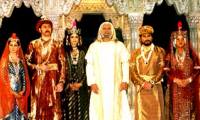
It's love at first sight for the two youngsters, Prince Khurram/Shahjahan [Zulfi Syed] and Arjumand/Mumtaz Mahal [Sonya Jehan], in a jungle. But Shahjahan's step-mother Noorjehan [Pooja Batra] has her own agenda: She wants Shahjahan to marry her daughter from her earlier marriage, Ladli Begum [Kim Sharma].
But Shahjahan and Mumtaz Mahal's romance and subsequent marriage isn't without its share of hiccups. While breathing her last, Mumtaz Mahal takes a promise from her beloved to build an edifice in memory of their love. And thus begins work on a monument that continues to attract millions of people even today.
The marriage of opulence and content in historicals brings to your mind the masterpieces created by Sohrab Modi and K. Asif in the golden days. Akbar Khan charters the same path and comes up with a film that stands tall when it comes to content as well as magnificence.
Most importantly, Khan narrates the story in the most simplistic fashion. Generally, with so many characters involved as also the fact that the generation of today may not be fully aware of the intricacies of the subject, it could be a daunting task to compress the facts in 2.30 hours and in a lingo that the average moviegoer could decipher.
In this case, right from the battle scenes at the start of the film, to the sequence of events that lead to the house arrest of Shahjahan and Jahan Ara, to Shahjahan reliving the memorable moments from his life, to Shahjahan's demise…, Khan transports you to an era that one had merely heard of, but obviously didn't witness.
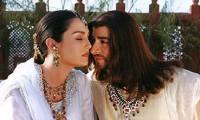
There are several sequences that have been shot with meticulous precision. The battle between Aurangzeb and Dara Shikoh at the outset, the sequence at the supper when Auranzeb presents the head of Dara Shikoh to Shahjehan in a dish, the warm turned frosty relations between Shahjahan and Noorjehan and the games Noorjehan plays to retain the throne are amongst the highpoints of the enterprise. More than anything else, TAJ MAHAL does justice to the legendary romance between Shahjahan and Mumtaz Mahal. The moments shared by the lovers and the twists and turns in the tale are bound to touch even the stone-hearted.
But the film isn't flawless…
There are two factors that dilute the impact considerably. The first is its music [Naushad, Uttam Singh], which may be in sync with the content of the film, but isn't haunting enough to leave a solid impression. Can one ever erase the memory of songs from films like MUGHAL-E-AZAM or ANARKALI? In TAJ MAHAL, the songs only slow the pace of the film, thereby making the viewer restless. Of the lot, there's just one song that stays on your lips -- 'Mumtaz Tujhe Dekha Jab Taj Mahal Dekha' -- and one of the reasons could be that it is repeated a number of times in the narrative. Also, 'Ajnabi Thehro Zara' is another decent number, but not mesmerizing. In fact, a song or two can easily be deleted to make the length more concise as also make the goings-on crisper.
That brings us to the second aspect -- loose editing. Perhaps, the editor must've fallen in love with each and every frame of the film or he may have erred in his judgment after watching the film over and over again. The film slows down considerably in the post-interval portions and deleting a few songs and scenes would only tighten the narrative [it's an 18 reeler now]. Also, the special effects could've been better.
Directorially, Akbar Khan displayed technical competency in his very first attempt HAADSA and he has only matured over the years, which is more than evident in TAJ MAHAL. Khan has not only worked on each and
 every frame, but the impact he manages to make as a storyteller also deserves
immense praise. The writing [Fatima Meer, Akbar Khan] is consistent
throughout. The writers have been successful in compressing the story in those
2.30 hours. Dialogues are natural. Even though the dialogues are in chaste
Urdu [at times], it isn't difficult to grasp the meaning thanks to the
simplicity of the scenes.
every frame, but the impact he manages to make as a storyteller also deserves
immense praise. The writing [Fatima Meer, Akbar Khan] is consistent
throughout. The writers have been successful in compressing the story in those
2.30 hours. Dialogues are natural. Even though the dialogues are in chaste
Urdu [at times], it isn't difficult to grasp the meaning thanks to the
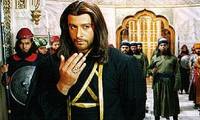
simplicity of the scenes.Cinematography [R.M. Rao] is awe-inspiring. The film not only bears an extravagant look, the expenses are visible on the screen as well. Action scenes [Sham Kaushal] are well composed, especially the battle at the start of the film and also the fight between Milind Gunaji and Zulfi Syed. The sets are opulent and majestic, bringing alive the memories of the Mughal era. Costumes [Anna Singh] are excellent. In fact, Anna's designs are sure to win her international acclaim. Ditto for the jewelry [Tejas Jogani]. Production values are grand. The makers [Akbar Khan, Irshad Alam] have spent lavishly to give the film an extravagant look.
TAJ MAHAL has a number of characters, but the ones that deliver efficient performances are Zulfi Syed, Arbaaz Khan, Pooja Batra and Kabir Bedi.
Zulfi enacts the role of the young and middle-aged Shajahan with amazing understanding. His expressions are perfect and his diction flawless; also, he looks every bit a prince. Arbaaz Khan is excellent as the conniving Aurangzeb. It wouldn't be wrong to state that he delivers his finest performance so far. In fact, one wonders why Arbaaz doesn't tap anti-hero roles since he left an indelible impression in DARAAR earlier and TAJ MAHAL now.
Pooja Batra is a revelation. Playing a calculating and scheming woman to the core, the actress is sure to make a number of film-makers sit up and take note of her talent. Kabir Bedi is, like always, dependable. The maturity with which he carries off his role only goes to prove that he's amongst the best in the business.
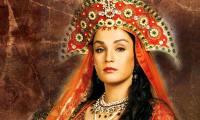
Sonya Jehan looks beautiful and enacts her part well. However, her makeup could've been better at places. Manisha Koirala is graceful in a brief, but strong role. Arbaaz Ali is effective, although he looks too young to be Zulfi's father. Kim Sharma is alright. Vaquar Sheikh is first-rate. Milind Gunaji is okay.
On the whole, TAJ MAHAL is a well-made attempt that chronologies the events of the past in the most simplistic but riveting fashion. At the box-office, the high costing as also the fact that the film lacks face-value to embark on a strong initial should prove major deterrents. Hence, the film will have to rely on a strong word of mouth to leave a mark in the wake of tough competition this week as also in the forthcoming weeks.