




|
|
|
|
|
|
|
To Get a 800.600 high resolution wallpaper click here
يالله تنام ريما
يالله تنام ريما يالله يجيها النوم
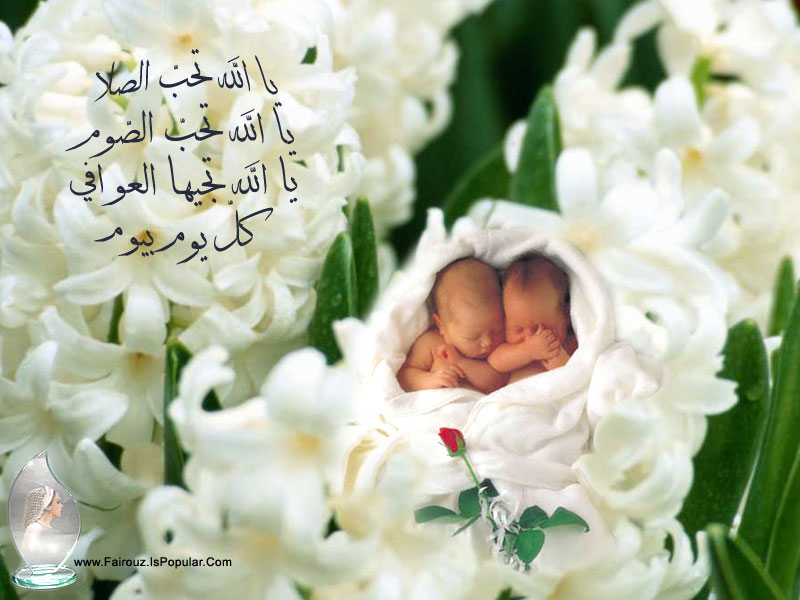
يالله تحب الصلاة يالله تحب الصوم
يالله تجيها العوافي كل يوم بيوم
يالله تنام يالله تنام لادبحلا طير الحمام
روح يا حمام لا تصدق بضحك عا ريما تتنام
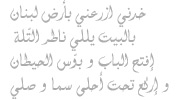
ريما ريما الحندقا شعرك أشقر و منقى
و اللي حبك بيبوسك اللي بغضك شو بيترقى
يا بياعي العنب و العنابية قولو لأمي قولو لبيي
خطفوني الغجر من تحت خيمة مجدليي
و التشتشي التشتشي و الخوخ تحت المشمشه
و كل ما هب الهوا لأقطف لريما مشمشه
هاي و هاي و هاي لينا دستك لكنك عيرينا
تنغسل تياب ريما و ننشرهن عاليسمينا
Oh Lord ! Help Rima Sleep , May she become sleepy
May she grow loving to pray and to fast
Oh God Make her healthier each day
May she go to sleep and I will cook a delicious pigeon
- Go pigeon bird , don't believe what I am saying
I just say it so that Rima will sleep
Rima , Rima , beautiful rose of the prairies
you have shining blond hair
The one who loves you shall kiss
and the one who hates you will go away
Oh merchants of grapes and of jujube , tell my mother and my father
the gypsies have kidnapped me from below the tent of "Majdaliyyeh"
I will take you on a little trip
to place where there are prunes under the apricot tree
and each time the wind blows , I will pick an apricot for Rima
Hey Lina , lend us you kettle and you bowl
So that we wash the clothes of Rima
and hang them up on the jasmine tree
Fairouz sings this sweet lullaby to her daughter in the Film "Bint Al Hares" while tucking her to bed , to listen to a clip of this song click here , and to listen to the whole beautiful song , just get the Film or the CD "Bint el Hares and safar barlÎk"
Translating this song wasn't easy at all , because as simple as it is , may be because we are used to it , yet it is full of beautiful meanings , and many forgotten vocabulary.
Even thought this song is attributed to the rahbani brothers , yet , it is not , it is a traditional song , more a prayer that Lebanese mothers used to sing to their children before they sleep , and this is the short version of the song , if someone is interested in these old songs , the tallest versions are found in the book "Kai La Tadi3" (So that it will not be lost) (The Lebanese Village : a disappearing civilization ) written by the great "Anis Frayha" the auther of "isma3 ya Rida" , and this book presents these songs in longer versions , yet doesn't explain the weird words in them like :
-الحندقا : which can hold 2 meanings , the first , and I take my mother as a reference here , the flowers oh "Henne" turned into powder and put on the babies skin so that the will smell good , yet after some search I found that there is a flower called الحندقوق ( Melillotus )and that has a very beautiful good smelling yellow flower , and that was used as a treatment before for it contains cumarine .
- التشتشي : which is a common word but that can't be found in the dictionary , but I think it is like all monosyllabic words used for children in arabic , like " نن , مبو " all coming from the very old Egyptian language , and this word in the verb for "going on a trip" like the later 2 words are the verbs for "to drink and to eat" in the very old Egyptian language .
As to the story of the tent of "majdaliyyeh" well it is a common old story , rewritten by Joseph Massoud , and Rose Ghorayyeb, and it is about a youg girl named Layla that was kidnapped by the gypsies in a fair , and had to travel with them and to sing to earn her food , so she used to sing these 2 verses hoping that one day they will pass by her parents house and they will here her , recognize her voice and save her.
So if we take a global look at this song we find what a unique intelligent mother the Lebanese mother is , throughout many generations , she first starts praying to the Lord so that her child will grow believing in him and doing only the good , she is a smart person who tries to trick her child with the pigeon story , yet she let's him know that she knows that he is intelligent , and won't fall for her trick , she won't kill the poor birds , she also promises him protection, and teaches him how to protect himself , and reminds him how the girl that was kidnapped never lost hope , and how she kept seeking her parents . And then the mother goes with her child on a fantastic trip full of surprises , with fruit of every kind and not on the appropriate tree , he will eat , and may be he will get dirty , so she will call on her neighbor , Lina the one from whom she borrows every thing , the kettle and the bowl in this song and the needle and the thread ( Lina w ya Lina , sang by Houda ) , so that they will wash the clothes of Rima and hang them up on the Jasmine tree so that they will have the beautiful jasmine smell .
You know if the mothers still sing like this for their children before they sleep instead of letting them go to sleep after watching the horrors on TV like those mutant tele tubbies , or the monsters of the pokemon or what whatever , may be if the last thing the child listens to before he goes to sleep is a prayer in his mother's voice , may be he won't have as much nightmares as he does and he won't grow up into a war loving thirsty to blood young man .
Hicham
Go Back to Fairouz Ultimate Website
Go the Fairouz and the Rahbanis Sight and Sound Gallery