King John's civil war:
1209-1213: At odds with John over the next Archbishop of Canterbury, the pope placed England under interdict for 5 years. Services ceased and the churches were closed. John made good use of this time by expelling the monks and plundering the monasteries.
Still in debt, he heavily taxed England. He also resorted to blackmail, extortion, and when all else failed, taking children hostage.
Rich subjects in debt were imprisoned.
Their land was taken as price of their liberation, and they faced torture or death if payments were not made. John also hired mercenaries who struck terror everywhere.
When King Philip II of France was ready to invade John made peace with Church and became its feudatory.
1214: Northern barons still opposed John, but Stephen Langton, Archbishop of Canterbury prevents civil war. John loses battle to regain his French empire.
6-15-1215: At Runnymede by the Thames River, the Magna Carta is signed, giving political and civil liberties to the barons. John honored the Magna Carta for only a few weeks and the civil war began.
1216: Barons got help from Scottish King Alexander II and offered the throne to Louis VIII of France. In an attempt to wage war in the north, John led his followers across the Welland and lost his baggage train in the river. Lost his crown and other possessions. After gorging on peaches, wine and cider he got dysentery and died. Rebel barons and the French still controlled southeast and eastern England, and had to be removed.
Henry's civil war:
As young king, anarchy and John's civil war left a heavy burden of debt. He owed his kingdom to the Church, and could not refuse the Church's requests for money.
1229: Simon de Montfort, who would become the leader of the Civil War, traveled to England to claim his family's estate. King John gave it to Ranulf de Blundeville, because Simon's father fought for France against England. Simon, a few years younger than Henry, gets his estate. Becomes the friend of the king and enters Henry's service.
1238: Simon marries Princess Eleanor.
1240: Simon leaves for the Crusades, truce made before he arrives. Is offered the governorship of Jerusalem, but declines.
1248: Henry appoints him seneschal of Gascony, France, quells riot. Those who were under Simon's rule resented his strict authority, and considered a revolution. This turned Henry against Simon, who is then removed from office.
1258: William of Valence damages Simon de Montfort's property. Simon and six other nobles make a pact to help one another's rights. Henry then wants tallage of 1/3rd of all possessions and many barons oppose him. Confronted by these barons who were attired in full armor, Henry agrees to abide by their advice, which is contained in the Provisions of Oxford.
1260-1261: John Mansel, Henry's chief advisor, gets the pope to absolve the king from his oaths taken from the Provisions of Oxford. Henry hires French mercenaries and appoints his own government officials and sheriffs. he and his loyal barons prepare for war.
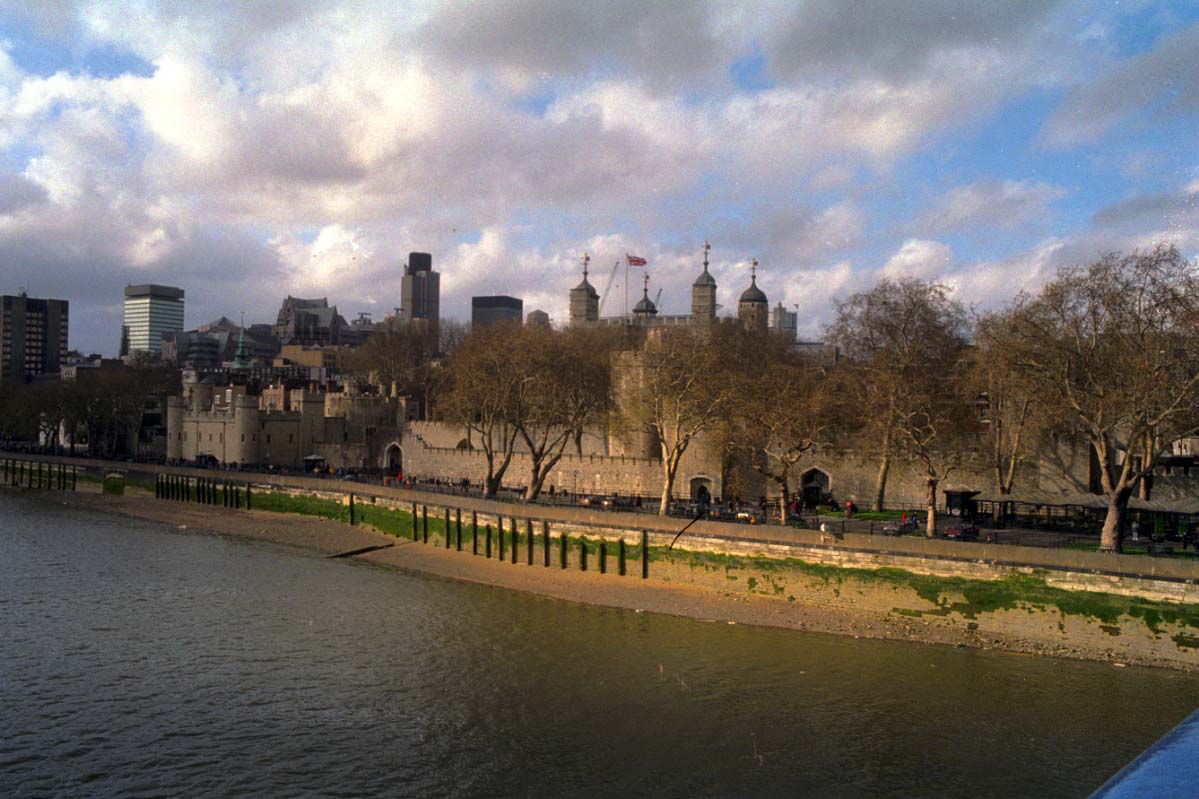
1263: Henry rejects final demands. Londoners rebel and trap him in the Tower of London. Henry agrees to their terms and Simon sets up provisional government.
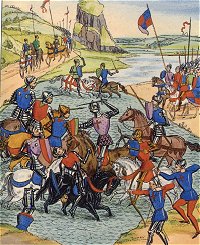
1264: After De Montfort loses some support, Louis of France is arbitrator between Henry and barons. He rules in favor of Henry and the pope agrees. The Provisions of Oxford are annulled. William of Valence plunders the adversaries estates. Battle at Lewes��Henry injured and captured; his brother Richard of Cornwall is found hiding in a windmill. Edward surrenders to De Montfort and Richard's son; Henry of Almaine is also a hostage. Rome is against the Provision of Oxford and Simon is excommunicated. Henry signs the Peace of Canterbury��confirms earlier agreements, forbids alien employment of the Crown and no punishment for the barons.
1265: Parliament at London��common men sat and voted with the lords and bishops. Edward escapes and war is inevitable. De Montfort hires Welsh archers. Edward slaughters Simon's (De Montfort's son) men in a battle. Edward then defeats De Montfort at Evesham. After this the Dictum of Kenilworth is enacted��the rebel barons could buy their land back. And the Statute of Marlboro��Edward confirms the Provisions of Oxford and the Provisions of Westminster (a compliment to the Provisions of Oxford). They become part of mainstream English law.