Throughout the ages, the 'healing' of the ill was practiced by witch doctors or shamans, important tribal leaders who used things like chanting, divination, hallucinations and spell casting when other tribal members were ailing. These shamans would also go into a trance and take the 'journey' into the spirit world in order to 'heal' the sick. (Primitive peoples throughout the world are still practicing Shamanism.)
This ancient paganism might have also been combined with such things as herbal remedies or outlandish potions that had no effect on the outcome of the 'treatment'.
Although the herbs and potions were the beginnings of the thought process, it took thousands of years to pass before men began to develop the ability to reason and actually help their patients.
There were also surgical tools invented thousands of years ago, and skulls have been found with holes in them, a sign that 'surgery' had been performed (although it is still unclear what purpose this 'surgery' served).
While the Egyptians used herbs and drugs, and performed sensible treatments and surgery the intelligent approach to health and medicine began with the Greeks, led by Hippocrates (460-377 BC). Plato, Aristotle and many others followed him. They invented the theory of the body's 'four humors', which was a big mistake.
Circa 300 BC in Alexandria, Egypt, the Greeks dissected human bodies and began to learn about the brain, heart, and lungs.
Galen (129-216 AD) was the 'top doc' of the Romans. He started everyone on the misguided notion of bleeding patients for wellness, an even bigger mistake than the four humors theory.
The four humors:
No, this is not the name of a novelty music act or a comedy troupe, but the misguided approach to the healing of the body.
The humors were blood, black bile, yellow bile, and phlegm. The Greeks thought that the disturbance of these bodily fluids led to disease.
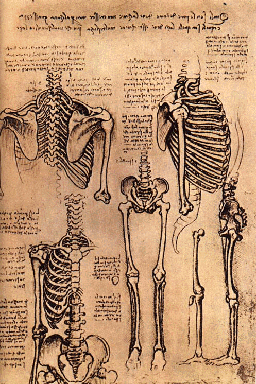
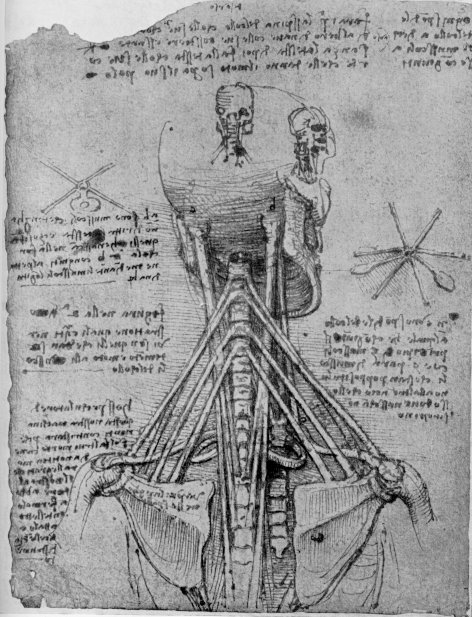
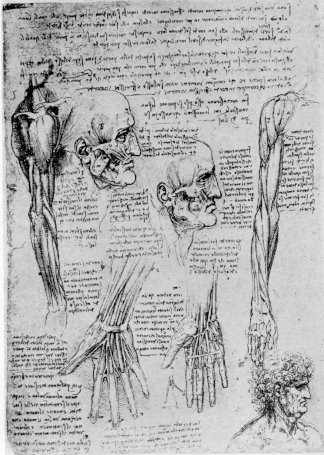
When the Arabs became a power to reckon with, they began to transcribe the Hippocratic and Galenic texts. Medicine as we know it began to take shape during the Renaissance, starting with Leonard da Vinci.
Soap:
Soap, in use since 2,000 B.C., was used somewhat for bathing throughout the ages, although it was mainly used for cleaning clothes.
During medieval times the nobles and rich merchants bathed, but the peasants didn't do much of that. The Church leaders, who had Bibles, should have known about cleanliness and demanded from the kings and barons that the peasants bathe and clean their clothes regularly.
Toothpaste:
Toothpaste, in ineffective forms, has been around since ancient Egypt, about 2,500 years ago. It was always in the form of a powder, applied to the teeth by the finger. Toothpaste finally became a useful product in the late 1800's.
Toilet paper:
It's hard to believe that toilet paper was not invented until 1857. In hindsight, that's about 300-400 years later than it should have been.
The Romans came the closest, using a (wet) sponge on a stick. Since then the more affluent people probably used cloth of some sort while the common people used leaves. Even after toilet paper was available many people still used newspapers and Sears and Roebuck catalogs.
Before Q-Tips were invented tiny, spoon-like ear-scoops were used to clean the ears.
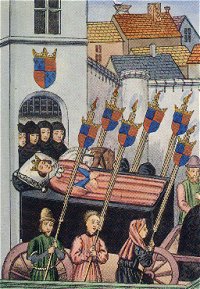
Medieval life expectancy:
The queens, baronesses etc. could live from anywhere from 50-years-of-age to 70 or on rare occasions 80 years. The peasant women didn't live more than 50 years. They had to marry young because of this, as early as age 12. Having children robbed them of their calcium, which made them weak and caused them to lose their teeth.
Aside from dying in battle, men on the average lived longer than women. Peasant men, of course, died young. Since men outlived women, there were many arranged marriages between 30-50 year-old barons and women as young as 15. This wasn't bad for the times, however, since these young women married into money and better health.
A complete failure of the medieval medical profession was the practice of "bleeding" patients for health. The idea behind bleeding was to remove impurities, but it also might have come down from ancient religious rites engaged in by pagan priests.
The medieval Church should have known from the Bible that blood is precious, and instead of banning the reading of the Bible, they should have banned this practice and other kinds of foolishness instead.
Other health problems:
Since there was no refrigeration, meats had to be salted to be preserved, and this caused scurvy and gangrene.
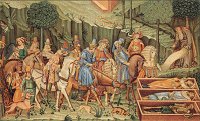
As far as the Bubonic Plague (or black plague) is concerned, this began in Asia and India and made its way through Europe. The woolen clothes of the peasants, which were not washed often, gave the fleas a great place to hide.
Someone was stricken with leprosy would be compelled to wear a gray coat and scarlet hat. He would also be banished to the woods where he would live in in a cottage.
Here are some forms of medieval "medicine":
aniseed and fennel for good breath.
comfrey��used with splint to set broken bones.
lettuce juice��narcotic for agues and fevers.
onions, leeks, radish and garlic��for colds and fevers.
gillyflower��medicinal herb for fever.
leek juice and seed��for toothpaste.
verjuice and honey��A drink made from the juice of sour apples or grapes. Besides being used as a beverage, it was also used to soothe aching joints, as a purgative or applied to wounds and festers.
On a positive note, the diet of the peasants, which consisted of vegetables, nuts, whole-grain breads and some fruits was very healthy. They were not unhealthy, overweight, constipated couch potatoes. And they didn't get cancer either.
It's a shame that Americans ruin their bodies with drugs, alcohol, cigarettes and an over-abundance of fats, salt and sugar. We have so much to live for, but we eat (or are led to eat by the packagers of our comestibles) as if we want to die early.