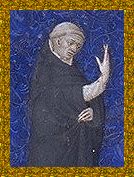
The following is a list of some churchmen of the 12th and 13th centuries:
Thomas � Becket (born 1118 died 1170):
Gualo Biancheri:
Pandulfo (born? died 1226):
Stephen Langton (born 1160 died 1228):
Edmund Rich (born 1170 died 1240):
Robert Grosseteste (born 1175 died 1253):
Adam Marsh (Adam de Marisco) (died 1265):
Walter Cantilupe:
Key definitions:
Franciscan and Dominican friars (brothers) were mendicant friars and nuns. During Henry II's reign the friars were more devout than the monks. They cared for beggars, earned food, worked in the fields and in the workshops. They also went on missions, preached and nursed the sick.
Besides caring for the needy, the church also provided Europe with educators and scientists, and also supplied almost all the teachers, lawyers, judges and many of the physicians. The monks taught the Trivium: grammar, rhetoric and dialectics (the art of reasoning). The better monks taught the Quadrivium: astronomy, arithmetic, geometry and music.
Thirteen orders of the Catholic Church:
Benedictines: Named after St. Benedict (c. 480 - c. 543). This monastic order of monks and nuns was founded in 529 AD at Montecassino. The Benedictines took vows of poverty, chastity and obedience. Also known as Black Monks.
Cluniacs: Benedictine monks in Cluny, France in the 10th century. their aim was to revive the strict asceticism of the rule of St. Benedict. Later the movement tried to abolish corruption and worldliness from the Church, especially simony.
Carthusians: An order of monks and nuns under Benedictine rule. It was founded at Chartreuse, France by St. Bruno (1030 - 1101) in 1086.
Cistercians: a monastic order of the Benedictines established in 1098 by St. Robert (1029-1111) at Citeaux, France, in an attempt to adhere more strictly to the Benedictine Rule.
Carmelites: An order of monks and nuns founded in the 12th century by St. Barhold, established on Mount Carmel, Syria. Lived as hermits, devoted to prayer, but in 13th century became mendicants. Mendicant Friars practiced monastic virtues of chastity, poverty, and obedience. Also known as White Friars.
Franciscans: The order named after St. Francis of Asisi (1182- 1226). (Also known as Minorites and Gray Friars.) Founded in Italy by St. Francis in 1209. Its members devoted their lives to the helping of other with such things and missions, preaching and nursing. They wore coarse gray or brown clothing with a cowl (or hood), an outer girdle and sandals. They were pledged to absolute poverty, itinerant preaching and manual labor. Representing the pope and the Catholic Church they persecuted "heretics" during the Inquisition.
Dominicans: Founded by and named after St. Dominic (1170-1221). This order of mendicant friars and nuns was formed in Toulouse in the year 1215. Also known as Black Friars. Representing the pope and the Catholic Church they persecuted "heretics" during the Inquisition.
Augustinians: Named after St. Augustine (354-430), bishop of Hippo (North Africa). The Augustinians were mendicant friars (or hermits) and nuns formed in 1265. The Augustinian canons were an order of monks in Ireland and England. Also known as hermits, their doctrine was of absolute predestination and immediate efficacy of grace.
Capuchins: monks belonging to a certain Franciscan order. Founded by Matteo di Bassi, circa 1526. The monks wore a capuche, a cloak with a long, pointed hood. The capuchin nuns were founded in 1538 by Maria Longa.
Jesuits: Founded in 1534 by Ignatius Loyola (1491-1556). They were the judges, juries and executioners during the Inquisition. Jesuits took vows of poverty, chastity and obedience and devoted themselves to educating the young (or mis-educating them, if you are not Catholic).
Hospitalers: A military order of monks, their full name was the Knights Hospitales of St. John of Jerusalem. This monastic order was founded in Jerusalem in 1113 by the Blessed Gerard, to care for pilgrims and to later act as an armed escort. Its members wore a black surcoat (an outer cloak that was worn over armor) with a white cross.
Templar Knights: A military and monastic order. Founded in 1118 in Jerusalem by Crusaders who were sworn to protect pilgrims and the Holy Sepulcher. Also known as Knights Templars, Knights of the Temple or Brethren of the Temple of Solomon at Jerusalem. They wore a white surcoat with red cross.
Order of Teutonic Knights founded (1191). A Germanic military order, they served in the Holy Land and also served for more nationalistic purposes in the conquest of Baltic and Slavic lands.
1154: After his training Becket entered the priesthood. He also became King Henry II's high chancellor, and as Henry's confidant sided with him against the Church. Also becomes preceptor (tutor) to Prince Henry.
1162 becomes the Archbishop of Canterbury. Becket, now acting the role of Abp. resigns as chancellor and was more inclined to oppose Henry in favor of the church.
1163: Disagreement over punishment of wayward clerics causes a rift between Becket and Henry.
1164: Becket in court to defend himself against charges of misappropriation of funds and flees to France for six years.
1170: Henry's eldest son (Prince Henry) is crowned. Although the Church and Becket oppose the move, Henry and Becket make peace. Becket returns to Canterbury, suspends and excommunicates the bishops who took part in the coronation. Henry longs to be rid of Becket, who was then murdered by four knights who thought they had their king's permission.
Was a papal legate who talked William Marshal out of retirement and into the role of guardian of Henry III.
Sent to settle dispute between Church and King John over the appointment of the next Abp. of Canterbury. Sided with John against the barons concerning the Magna Charter. Was given guardianship of King Henry III when Marshal died, and then turned Henry over to Hubert De Burgh.
Archbishop of Canterbury when the Magna Charter was signed. Sided with the barons and the Church turned against him. The pope kept him from participating in negotiations.
Was the Archbishop of Canterbury. Helped Richard Marshal remove the interlopers from Henry III's administration. Refused to partake in the pleasures of life and lived meagerly.
From poor family. Educated in Oxford and Paris. Interested in science, geometry, optics and astronomy. Taught Roger Bacon who would excel in science. Grosseteste was a critic of the king and a thorn in the sides of the popes. Supporter of the Magna Charter and opposed the Church. Was Archdeacon of Bishop and then in 1253 became Bishop of Lincoln. Critical of his fellow clergymen, their vices included drinking, concubinage, playing games in churchyards and participating in mummery. When Grosseteste found out the Church was taking three times the amount of the king's income, he opposed the Church at Rome when they requested more revenue. Opposed the appointments of non-English speaking and non-English residents for the churches, saying that they were unable to care for the spiritual needs of the people. Was Archdeacon at Leicester when Simon de Montfort assumed his lands and title, and was his friend and mentor.
A Franciscan, Marsh was confidant of Henry III, but also advised rebel barons and also had a positive influenced on De Montfort. Died during the civil war.
Another friend and teacher of De Montfort and opposed Henry during the civil war.
Monastic � life in a monastery. Monks and nuns who took religious vows and retired from the world.
Mendicant � to beg or be poor. Monastic orders were the Franciscans, Dominicans, Augustinians and Carmelites. They owned no property and lived off alms.
The Benedictine and Cistercian monks and the Parish clergy were jealous of the friars. Mid-13th century the friars also became worldly after 150 years of service. Had large congregations, and expected more fees and gifts. Wanted better clothes and food. Hired servants and professional beggars, and took alms, oppressed the poor and sold absolution.
After Islam conquered the Kingdom of Jerusalem in 1187 the Knights were confined to the County of Tripoli. When Acre was captured in 1291 they fled to the Kingdom of Cyprus. In 1310 they relocated on the island of Rhodes, where they withstood invasions by the Sultan of Egypt (1444), Mehmed II (1480) and Suleiman the Magnificent who in 1522 dispatched 200,000 men to war against 7,000 Knights. After a six-month siege the few remaining Knights retreated to the Kingdom of Sicily.
The Knights were re-established on Malta in 1530. The Ottomans invaded in 1565, destroying most of the cities and killing nearly half the Knights. Troops from Spain repelled the Ottomans and spared what remained. In 1571 the Ottomans returned, but were again defeated by the Spaniards.
Favored by the popes, Templars paid no taxes, accumulated much wealth and built imposing castles. King Philip of France sought (with Church assistance) to disband the Templars and confiscate their French properties.
The royal commission: French Templars were arrested (10-13-1307) and put on trial over their secret initiation rites, accused of denying the Savior, spitting on the Cross and idol worship. The charges could not be proven so the Templars were tortured. Many died and most admitted to being heretics.
Pope Clement V annulled the trial, but ordered a new commission. Meanwhile, French Templars were punished, the penalties ranging from acts of penance to life in prison. The Knights who recanted their confessions were turned over to Philip and fifty-four were publicly burned (5-12-1310).
The papal commission: Although the Templars were declared innocent the order was dissolved (Bull of 3-22-1312). Most Templar property was given to the Hospitalers and most unconvicted Templars joined other military orders.
The Templar chief and his three first dignitaries had confessed their guilt, but at the reading of their sentence he proclaimed his innocence and that of the Templars. By order of Philip the Templar leader and one of the dignitaries were burned at the stake.
"I love Pisa��especially with anchovies!"
