Sock Research
An In-Depth Look Into the Age of Our Socks
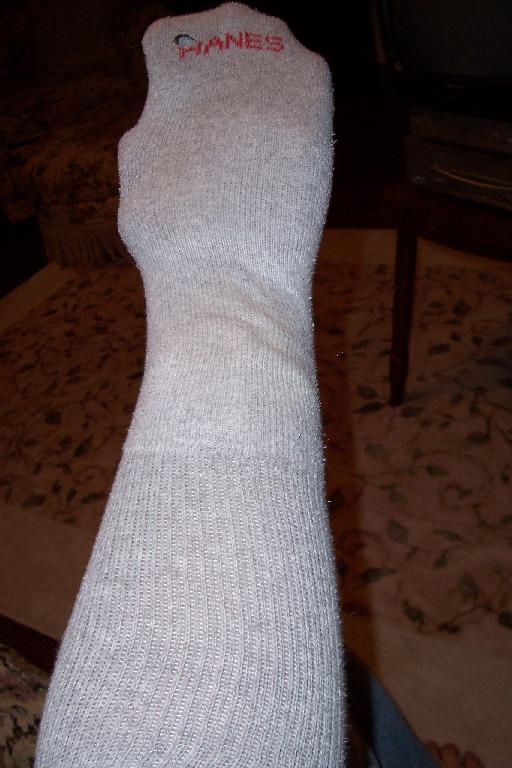
Note the hole near the top left of the sock. A small but easily noticed top-left aligned hole (alignment depending on left/right foot status)
shows wear from the big toe. This is the most common location for a hole. Contrary to popular belief, the heel is reinforced with extra
material, providing it with a much longer life than the rest of the sock, therefore, the point at which the most pressure is applies, is actually
the least likely point on the whole sock to get a tear or hole. Also note the discoloration. Very suggestive of a sock which is worn in a no-shoe
environment such as around the house. This occurs rapidly, so it is not suggestive of sock age.
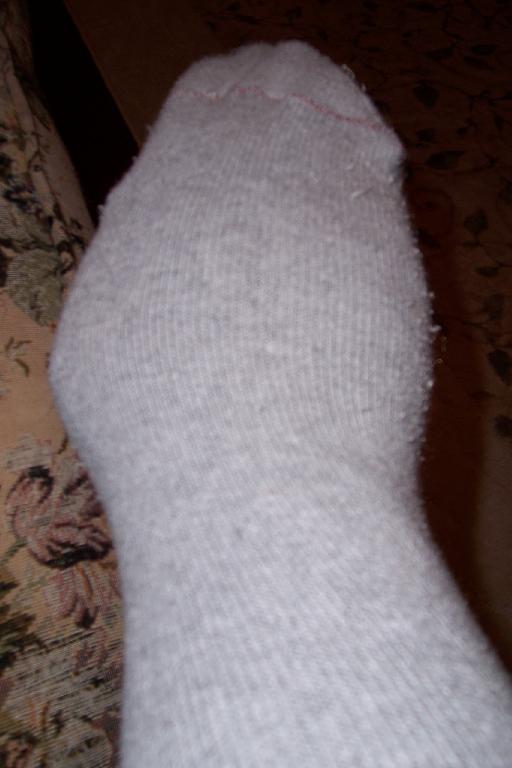
A somewhat blurry picture of a new sock. Note the fuzz on the middle-right side. This shows that it is a new sock, with much fuzz still attached.
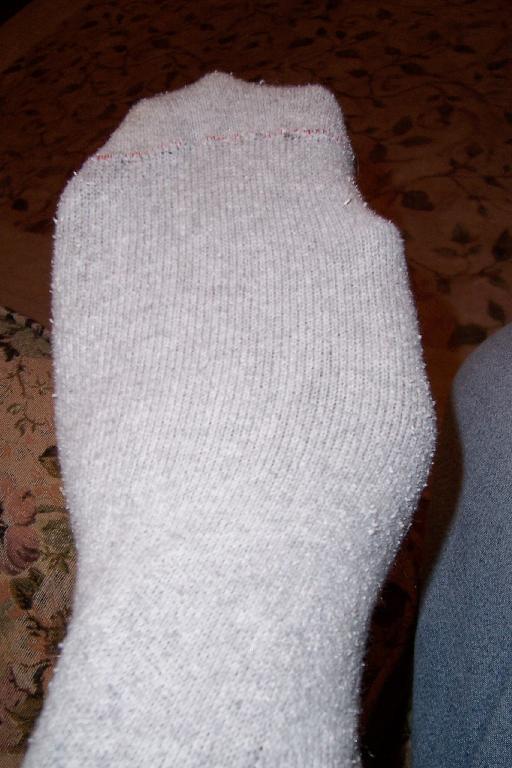
Again, please notice the holes along the clearly marked red line. Top-of-sock holes are much rarer and occur mostly in low-quality socks,
and even then, only in an older sample. Our estimate for this sock is about two months.
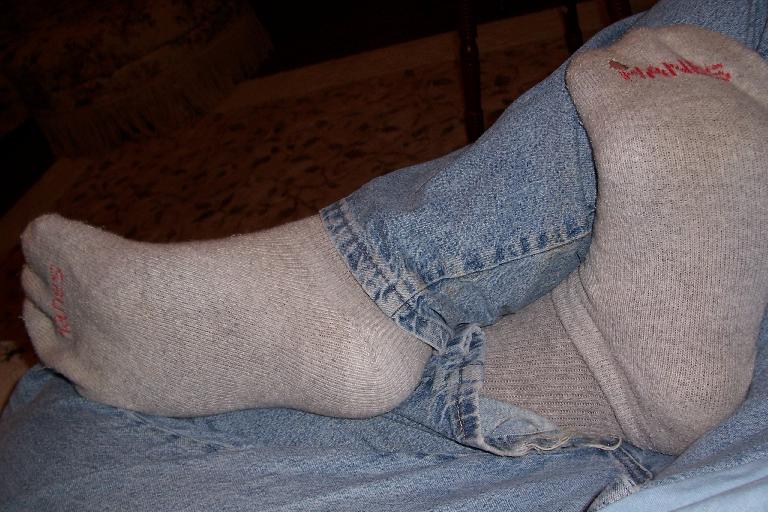
This was a failed attempt at showing the bottom of both socks at the same time. Note that I may (or may not) be having
children as a direct result of posing for this picture. Proper technique is shown below.
 And also a feline attempt
(failed,
And also a feline attempt
(failed,
but an attempt nonetheless) 
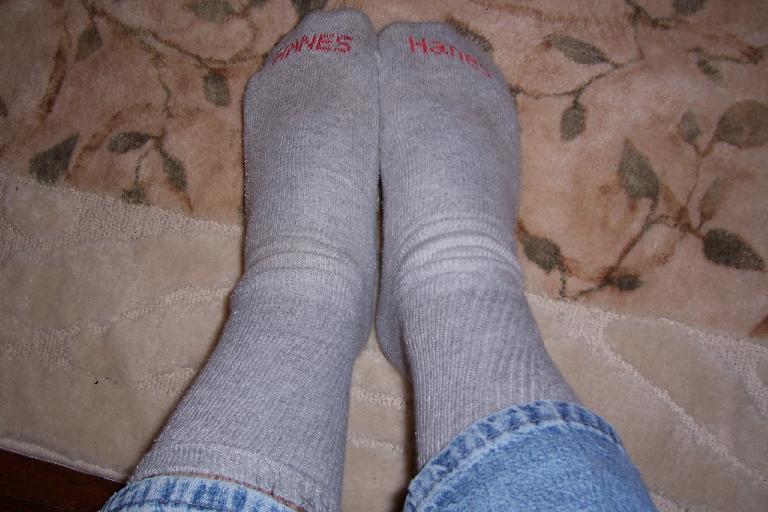
Both socks, from the top. Note that "HANES" is stretched and larger on the right (old) sock.
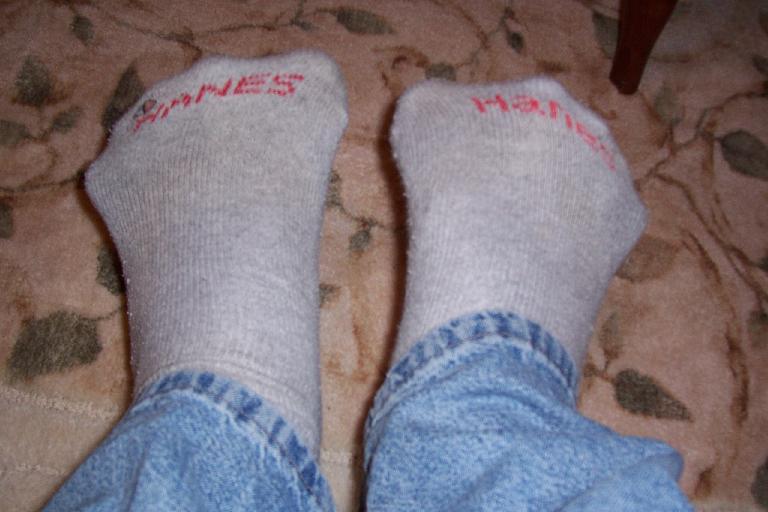
Through careful examination we discovered that the newer sock stretched much less than the older sock. This picture
may not represent our findings, but we currently have taco bell in our laps and refuse to measure a picture.
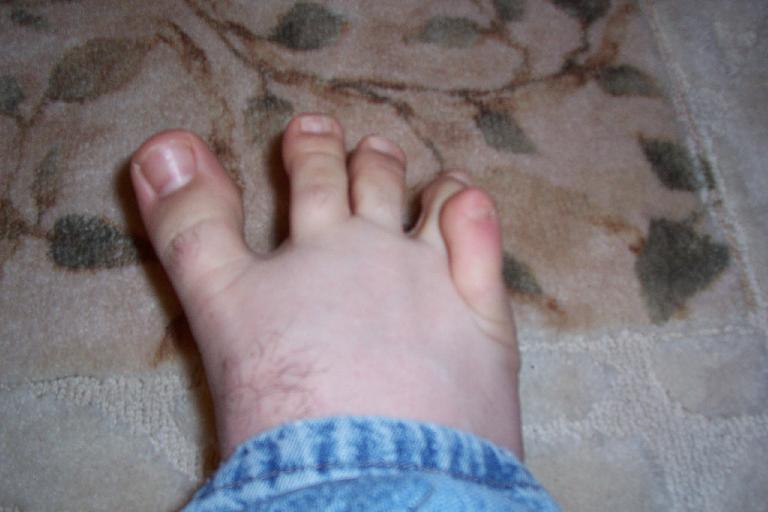
While on subject, check out this weird thing I can do with my toe. It's unexplainable. See the Video! Sorry about the crappy format.