You've probably heard about "Sick Building Syndrome" or "Building Related Illness." They're closely related problems.
Poor indoor air quality (IAQ) can cause health-related problems, including:
- nausea
- disorientation
- headaches
- chronic fatigue
- respiration difficulties.
If a clinical illness can be directly attributed to known airborne contaminants, the cause is Building Related Illness, sometimes referred to simply as BRI. If a specific illness or cause can't be diagnosed, but the problems are associated with a particular building, the term used is "Sick Building Syndrome" (SBS).
In the U.S., poor Indoor Air Quality costs
- $60 billion annually in sick leave and lost productivity
- $1 billion annually in medical costs
Both kinds of building-related health problems usually result from poor building maintenance or design. In many modern buildings, ventilation was sacrificed for higher energy efficiency. Unfortunately, the sacrifice occurred in all types of buildings:
- hospitals
- office complexes
- schools
- corporate centers
- airports
- factories
In fact, the ventilation standard in the 1970s was reduced from 15 cfm to 5 cfm of outdoor air per occupant. In contrast, the American Society of Heating, Refrigeration, and Engineering Association's (ASHREA) current ventilation standard (62-1989) requires a minimum of 20 cfm of outdoor air per occupant.
True, polluted outdoor air has an affect on indoor air quality. But, it's less than you may think. Most IAQ problems are caused by chemical contaminants within the building.
Contaminants are emitted from the most innocuous-seeming, common necessities:
- carpeting
- copiers
- furniture upholstery
- pressed wood products
Insecticides, cleansers, solvents, and disinfectants are invaluable for keeping buildings habitable and clean. Unfortunately, they also add to indoor air quality problems.
The volatile organic compounds (VOCs), such as formaldehyde, coming from all these sources may be known carcinogens. In addition, certain VOCs adversely affect human health even at low levels.
Nearly one-half of all IAQ complaints can be attributed to HVAC systems.
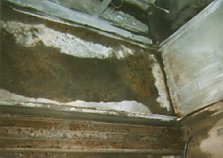
The list of IAQ problems and their health-related affects-continues. Poorly maintained HVAC systems provide an ideal breeding ground for biological contaminants. Stagnant water in air ducts, humidifiers and drain pans attract molds, fungi, virus, and bacteria--including Legionella. Remember Legionnaires' Disease?
Mold growth within an air handling unit gone undetected will multiply causing adverse health effects. Aspergillus spores frequently settle in the HVAC system dust. The spores rarely affect healthy tenants, but they do contribute to hospital patients' nosocomial infections in neo-natal, critical care, and immuno-compromised patients. Hospitals are concerned--rightfully so.
Both biological and chemical contaminants inevitably collect in air ducts. Removing particulates within the air duct can prevent tenant health problems and the long list of higher costs to building owner/managers.
The key to ensuring safe indoor air quality: thoroughly inspect, clean, and maintain your buildings' HVAC system.
Fresh Air Systems specializes in
Indoor Air Quality control
from start to finish.
Fresh Air Systems
44 West Sahuaro
Tucson, AZ 85705Toll Free: (800) 780-2820
Tucson (520) 624-2820 | Tempe (480) 966-9496
Fax: (520) 623-0438E-mail: [email protected]
Hosting by Plexus DesignCopyright © 2003 - Fresh Air Systems
Indoor Air Quality Professionals