BY ED VARLEY
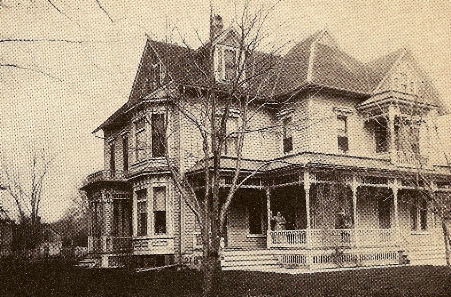
That house on Pontiac Street in a section of Baltimore, Maryland, called Brooklyn, was big and the winters were bitterly cold. Even though I was seven years old in 1932, I have vivid recollections of the problems with heating that old barn of a house and my active participation in the program to keep us warm at no cost. Today, our efforts would be considered �energy saving�, but in those days it was a matter of survival.
The two-story bungalow had what was probably the least efficient heating system invented by man. A huge furnace in the basement provided heat through a single grated �register� in the floor of the living room near the stairwell to the second floor. Hopefully, some of the hot air would rise to heat the second floor bedrooms, but the problem wasn�t the size of the house and inefficiency of the heating system.
During those Depression years, Dad was working two part-time jobs and his income barely kept food on the table and paid the rent. There was no money to buy coal to feed that hungry furnace. Fortunately, there were some more affluent neighbors who could buy coal and this provided two ways to salvage coal for our furnace.
My sister Ann, two years older, brother Harold, two years younger, and I bundled up against the cold, and armed with buckets, toured the neighborhood with a sharp eye for coal trucks making delivery. Invariably, small pieces of coal would fall out of the coal chute as it was being loaded into the lucky neighbor�s basement. We would swoop in and gather the pieces of coal, and we had to be quick, because there were other children out for the same purpose.
We would return home with maybe three or four pounds of the precious black diamonds in our buckets. Our frozen fingers, feet and other parts were soon warmed with hugs and praises delivered by our mom.
The more affluent neighbors emptied the ashpits of their furnaces and set their ashes out for the weekly pickup by the city ash collecting truck. Some dumped their ashes in the ruts in the back alleys. No matter where they disposed of their ashes, it gave us a chance to salvage some energy. On those forays, we carried our buckets and another tool - a sieve.
We�d carry the buckets of ashes set out for collection to one of the back alleys, dump the ashes into the sieve and shake vigorously. It was a dirty, dust choking job, but the reward was looking in the sieve to find tiny pieces of coal that had fallen through the grate or pieces of partially burned coal, a sort of coke. We�d throw out the pieces of slate and clinkers and dump the �good stuff� into our buckets. When there were no buckets of ashes at the curb, we would roam the alleys, looking for freshly dumped ashes, and put them through the sieve.
Men and older boys had a different method of getting coal for their furnaces, but �racking coal� as it was called was not only illegal but was dangerous in many ways.
About a mile from our home was a railroad marshalling yard where freight trains were assembled. There were always a lot of coal cars on the sidings and the coal rackers would climb into the cars, throw large pieces out, then jump off and put the coal in sacks to carry home or to sell. Many a coal racker was hurt and a few were killed under the wheels of the cars that were being bumped or shifted without warning.
Hazards of coal racking were not limited to the dangers of shifting cars. The thefts at the sidings had prompted had prompted the railroad to hire detectives, and the �railroad dicks� were not adverse to applying a well-aimed foot or swinging a blackjack at trespassers. There were few railroad detectives patrolling the yards at night and the thieves used the darkness to hide their activities. Those nighttime forays proved to be a boon to my sister, brother and I.
In their haste and because it was dark, the coal rackers only picked up the larger pieces of coal they had thrown off the cars. The smaller pieces were left alongside the tracks. Our first visit to the railroad siding was to gather wood dunnage cleaned out of the boxcars but, when we saw the bonanza of coal, that became the main cargo of our ramshackle, homemade wagon.
On one of our forays, a hard boiled railroad dick jumped out from between the cars and scared us to death. After he threatened to kick our tails, he softened his tone and gave us a lecture on the dangers of the railroad sidings. I think Ann must have charmed him with her explanation as to why we were there. After extracting our promise to gather wood and coal only at the side of the ward and never to cross even the first track and never, ever go further down the track to where the huge steam engines had coal dumped into their bunkers, he smiled.
�There�s more coal on the ground there,� he said �but it�s more dangerous down there. Besides, that�s where the railroad detectives headquarters are and they might not take too kindly to you being there.�
We saw that detective often and he was always kind and considerate. On occasion, he would tell us where a nice pile of coal or wood was and even helped us load my wagon on occasion. We also got in trouble with him.
While Ann and I were busy gathering coal just around the bend from the engine coaling station, Harold wandered off. Soon, we heard him wailing and crying and our friendly detective came around the bend, holding Harold off the ground by the back of his coat. The detective explained that Harold was down near the coaling station and had crossed two tracks. He threatened to bar us from coming on the property again but, after the detective had cooled down some, Ann used her charm and we continued our visits to the railroad siding for a few more years.
Closing off all the rooms possible and using the furnace sparingly made the old house barely livable with our contributions of fuel, but things were going to get better. We moved to a brick row house in the middle of the block on Cambria Street just a short distance from the house on Pontiac. This house had the same kind of inefficient heating system, but the brick construction and only the front and back walls of the house exposed to the cold wintry blasts made it much easier to heat and our fuel gathering expeditions seemed to really pay off, but things were to get even better.
In 1936, Dad got a full time job and there was even money to buy coal. I�ll never forget our joy at seeing that coal truck back up to the basement window and rig the chute to dump the coal in the coal bin. While Mom watched the delivery from the sidewalk to make sure she got every measure she had paid for, Ann picked up the coal that fell out of the chute and Harold and I jumped up and down in sheer ecstasy as we watched the coal pour into the coal bin in the basement. I think that was the first time Harold had ever seen anything but the coal we had gathered in the basement.
Even though we were now among the �wealthy enough to buy coal� set, our coal salvaging efforts continued. Though we ceased collecting coal spilled from chutes at a neighbor�s house and gave up our visits to the railroad siding, it was my job to clean the ashpit and put the ashes through the sieve for many years. My chores ended when we moved to another house and Dad had the coal furnace converted to an oil burner.
There aren�t many houses heated by coal burning furnaces today but, with the problems with oil, coal furnaces may stage a comeback and some of our salvage methods would be useful. Of course, it would be called energy conservation today.
Back to Hard Times