Rose Chafers - Scarabaeidae: Cetoniinae
Rose
chafers, also commonly called flower chafers, are members of the
family Scarabaeidae, and more specifically belong to the
subfamily Cetoniinae (often raised to the level of family
- Cetoniidae).
They have gained their name from the habit many species have of
frequenting flowers to feed on nectar and pollen. They can be identified
as scarabs by their distinctive antennae, which end in a three-leaved,
openable club, and by their stocky build. The main morphological
features which place them in the Cetoniinae are their clypeus,
which leave the antennal insertion of their 10 segmented antennae
visible from above, but hide the mandibles, and the form of their
mesothoracic epimeres, which are visible as two triangular shaped
structures between the hind angles of the pronotum and each elytron.
The sides of the elytra are also notched behind the shoulder, and
their structure allows the membranous hind wings to be deployed
laterally by slightly raising the elytra without needing to open
them.
Perhaps the most notable of all the features of the rose chafers
is their magnificent colouration, which is often metallic and beautifully
shining, reflecting the most gorgeous of colours and sometimes complemented
by markings. Even Europe, which has a poor number of species compared
to the tropics, can boast some truly beautiful
members of the group.
The adult beetles are most often collected whilst they feed at flowers,
but several species are attracted to mature and rotting fruit and
to sap seeping from wounds in trees, and at least one species is
quite commonly also found under dung! Their favoured habitat seems
to be the edges of woods, or clearings within them. They prefer
warm and sunny weather, so are seldomly found in the darkness of
thick forest.
The larval stages develop in decomposing vegetable matter of all
kind, from rotten logs and stumps to compost heaps, but at least
one species is thought to be able to develop in the nests of Wood
ants (Formica rufa). Once the larva is fully grown, it constructs
a cocoon from debris and pupates within it, from whence the imago
emerges the following summer.
|
|
The European Fauna
There are 30 species
in the European fauna, although the majority are native to the South
and the Mediterranean region. However several of the species are quite
widespread, and can be reasonably common in suitable habitats.
|
Identification Key to European Cetoniinae
Click HERE to view the key |
Checklist of European species
SCARABAEIDAE
CETONIINAE
Genus Aethiessa
Aethiessa floralis (Fabricius, 1787)
Genus Cetonia
Cetonia asiatica Gory & Pecheron, 1833
Cetonia aurata (Linnaeus, 1758)
Cetonia carthami Gory & Pecheron, 1833
Genus Cetonischema
Cetonischema aeruginosa (Drury, 1770)
Cetonischema speciosa (Adams, 1817)
Genus Eupotosia
Eupotosia affinis (Andersch, 1797)
Eupotosia mirifica (Mulsant, 1842)
Genus Foveopotosia
Foveopotosia judith (Reiche, 1871)
Genus Heterocnemis
Heterocnemis graeca (Brullé, 1832)
Genus Liocola
Liocola lugubris (Herbst, 1786)
Genus Netocia
Netocia afflicta (Gory & Pecheron)
Netocia hungarica (Herbst, 1786)
Netocia morio (Fabricius, 1781)
Netocia oblonga (Gory & Pecheron, 1833)
Netocia sardea (Gory & Pecheron, 1833)
Netocia squamosa (Lefebvre, 1827)
Netocia subpilosa (Desbrochers, 1869)
Netocia trojana (Gory & Pecheron, 1833)
Netocia vidua (Gory & Pecheron, 1833)
Genus Potosia
Potosia angustata (Germar, 1817)
Potosia cuprea (Fabricius, 1775)
Potosia fieberi (Kraatz, 1880)
Potosia opaca (Fabricius, 1787)
Genus Tropinota
Tropinota hirta (Poda, 1761)
Tropinota squalida (Scopoli, 1783)
Genus Oxythyrea
Oxythyrea cinctella (Schaum, 1841)
Oxythyrea dulcis (Reitter, 1898)
Oxythyrea funesta (Poda, 1761)
Genus Paleira
Paleira femorata (Illiger, 1803)
|
|
|
  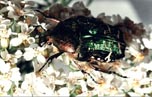 Cetonia aurata L.
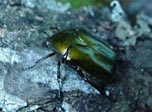 Potosia cuprea obscura
Andersch
Potosia cuprea obscura
Andersch
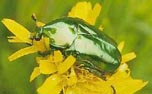 Cetonischema aeruginosa
Drury
Cetonischema aeruginosa
Drury
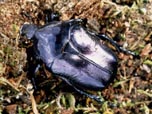 Eupotosia mirifica
Mulsant
Eupotosia mirifica
Mulsant
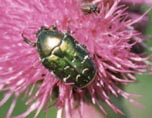 Potosia cuprea metallica
Herbst
Potosia cuprea metallica
Herbst
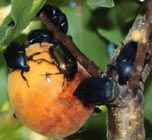 Potosia opaca F.
and
Potosia opaca F.
and
Potosia cuprea brancoi Baraud
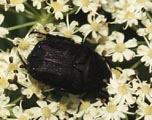 Netocia morio F.
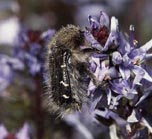
Tropinota hirta Poda
|