| CHESS |
 |
 |
 |
 |
 |
 |
 |
 |
 |
 |
 |
 |
 |
 |
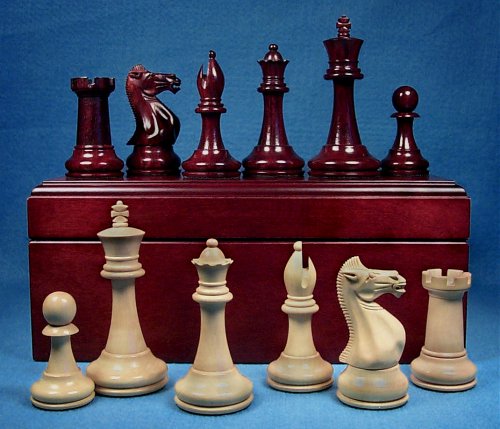
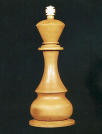
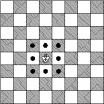
| King Kings can move only one space a turn, in any direction. Vertically, Horizontally, or Diagonally |
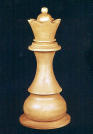
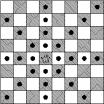
| Queen Queens can move across the board in any direction. Vertically, Horizontally, or Diagonally |
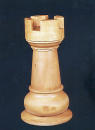
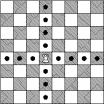
| Rook Rooks can move across the board either Vertically, or Horizontally. |
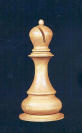
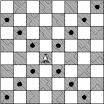
| Bishop Bishops can move across the board only Diagonally. |
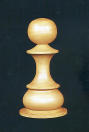
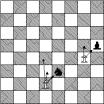
| Pawn Pawns can move only one square forward, Vertically, except on its first move, when the player may choose to move two squares Vertically. Pawns cannot capture Vertically but only one square diagonally, forward of its current position. |
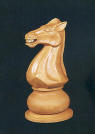
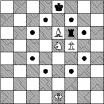
| Knight Knights can move two spaces, either Vertically, or Horizontally, and one space either Vertically, or Horizontally the opposite as before. (If you moved 2 squares vertically, you would move one square horizontally (Example: Over-two Up-one). |
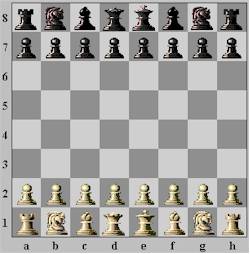
| The chessboard is 8 squares by 8 squares. For those of you who can't add, this is 64 squares total. The Horizontal rows are called Ranks, and the Vertical columns are called Files. The squares alternate colors, usually white and black. |
| Each player starts with 1 King, 1 Queen, 2 Bishops, 2 Knights, 2 Rooks, and 8 Pawns, for a total of 16 pieces. Pieces are arranged (From Left to Right starting in the row closest to you): Rook, Knight, Bishop, King or Queen (which I will explain latter), Bishop, Knight, and Rook. All 8 Pawns are in the next row out. The Queen when setting up the board always goes on her own color. If you are white the Queen goes on the center white square, and vice versa. This should be on the left of the 2 squares for white, and the right for black. There should always be a white square in the bottom-right corner of the board |
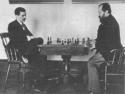
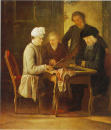
| The earliest form of chess known is from China in the 500's. From China the game spread to India, Persia, and around the world. Chess was brought to the Americas by the early spainish. Many famous people played chess, including Pope Paul III, Charlemagne, and many other kings. In 1492 King Ferdinand was playing chess while negotiating with Columbus. Earliest charted professional chess players lived in the 1600's. |
| A draw in a chess game is when neither player wins. There are multiple ways to draw: 3 move repetition When both players move the same piece in the same way 3 times in a row 50 move draw When neither player makes progress during a game - taking a piece - for 50 moves the game is a draw Agreement between players In a game both players can agree that the game is in such a difficult spot that neither think they can win. Stalemate When it is a players turn and they are not in check and have no possible moves they can make, it is stalemate |
| In chess their are multiple special moves that enable pieces to move outside their normal way of moving. One such move is castling developed in 1620. Castling allows the king to move two spaces, and the rook to move on the same turn. When castling the king moves either 2 places right or left. The rook moves to the other side of the king, either 2 or 3 squares. Castling is not allowed if either the king or the rook has been moved from is starting point at any time of the game. Also you cannot castle into, out of, or through check. When castling there can't be any pieces between the king and the moved rook. When castling towards the rook on square A-1 it is called queen-side castling because you pass the queens starting square. When moving the rook on square A-8 it is called King-side castling. Castling is only legal once a game. Another special move is called en passant, developed in 1490. En passant allows a pawn to capture an enemy pawn beside it. When an enemy pawn moves forward 2 squares to a square next to your pawn en passant allows your pawn to move diagonally behind the enemy pawn and capture it as if the enemy pawn had only moved one square. En passant is only legal the move after the opposing pawn was moved 2 squares. |
 |
 |
 |
 |
| Modern chess has only been in existence for about 500 years, when the bishops, and queens manner of moving was changed to the current style. Early bishops could jump over other pieces like knights, and only went 2 squares diagonally. Early Queens moved only one square a move, and only diagonally. The modern method of moving was probably started in France, Italy, or Spain. During the same time the Kings Advisor's name was changed and known as the Queen. |
 |
| Check Check is when the king can be captured on the next move. In case of a check the king must be moved out of danger or the checking piece must be captured. Checkmate A checkmate in chess is when you win. You checkmate your opponent by giving the opposing king no possible moves. When in checkmate the next move your opponent makes you will get his King. There are many ways to checkmate an opponent, but can be a difficult task. |
 |
 |
 |
 |
|
| The fist move in a game of chess is very important. Making a bad first move can ruin your entire game, or at least slow down your progress in the game. Every possible opening move has a name. Most are named after the pros that used them a lot. When oppening most people move one of the two center pawns to establish a menacing control over the center of the board. It is also important when oppening to consider how the move will affect your pawn-deffense structure. It is not wise to leave large gaps in your defensive line. Another goal many players strive fo r is to move pieces that alow them to castle early. This both protects the king and brings the rooks into the game. For more information on oppenings click here This page has lots about gambits and other strategic stuff too. |
| A gambit is when you sacrifice a piece to gain a strategic advantage. This piece is usually a worthless pawn, but is sometimes something more valuable. In the Vienna Gambit the queen is sacrificed. |
 |
|
| This page was made by: Aaron B. This page was last updated on: 4-29-03 I can be contacted at: [email protected] |
