
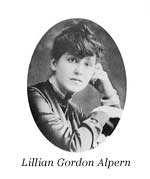
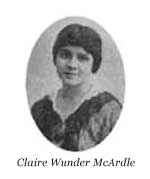
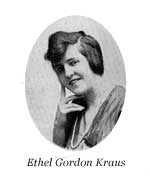
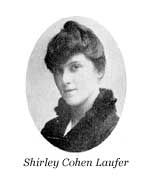
On November 26, 1913, Phi Sigma Sigma was born, unobtrusively, without the thought of expansion. It was the first nonsectarian sorority; the only one that was open to diverse membership from inception and the only one with a ritual that was not based in scripture. Under the leadership of Fay Chertkoff (our first chapter archon), Alpha Chapter was installed at Hunter College. Looking to the left, you will see the pictures of our ten founders, and the two sisters who started it all - Lillian Gordon Alpern and Ethel Gordon Kraus.
The Founders first objective was to establish the twin ideals - �The brotherhood of man and the alleviation of the world�s pain.� Each woman extended herself to her greatest capacity to live up to the standards the group chose. They attained high scholastic standing, developed intense bonds, and each served in philanthropic activities, donating to a variety of charities consistent with Phi Sigma Sigma's twin ideals and nonsectarian trait.
Lillian Gordon Alpern � born in New York City, the youngest child in a family of six; she followed in her only sister�s footsteps and attended Hunter College. While a junior, Lillian met Charles Alpern and left school to marry. She was the first Founder to pass away, in 1945.
Ethel Gordon Kraus � married and had two children, one a member of Phi Sigma Sigma. She had five grandchildren and remained a member of the Godmother�s League and the Hattie Bondy Scholarship Fund. Her hobbies included bridge, theater, and gardening. Ethel passed away in 1984 in New York City.
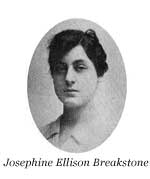
Josephine Ellison Breakstone � worked as a schoolteacher and was married. Josephine lived in New York City until her death.
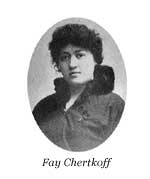
Fay Chertkoff � worked as a teacher throughout her full and interesting life. She is responsible for writing most of the Fraternity's rituals. Fay served as a national officer for many years.
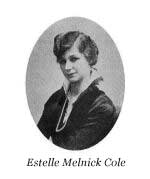
Estelle Melnick Cole � worked as a hospital volunteer in New York while taking courses in languages and the arts. Estelle served as an interpreter for her husband while they traveled extensively around the world. They later moved to Harrison, New York, where she resided until her death.
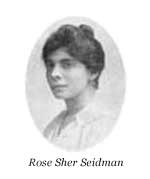
Rose Sher Seidman � married and had two sons and seven grandchildren. Rose taught school from 1915-17 before returning to teach at a private school in 1940, where she stayed for ten years. She sponsored extracurricular activities including social dance and puppetry. Rose originally desired to be a dancer/actress when that profession was not highly regarded. Later in life she studied new modern math and attended a workshop for use of audio-visual materials. She traveled throughout Europe, Iceland, the Caribbean, and the United States. In November 1987 Rose passed away in Bridgeport, Connecticut.
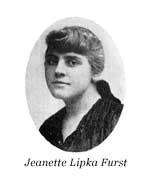
Jeanette Lipka Furst � graduated from public high school at age 11 and entered college at age 15 to become the youngest member of Phi Sigma Sigma. She graduated from Hunter College in three years at age 18. Jeanette taught fifth grade and later earned her doctorate in audio-visual education and communications.
Gwen Zaliels Snyder � graduated from Hunter College and taught school before marrying. She later had one daughter and became a textile designer, branching into private interior designing.