ESPA�OL
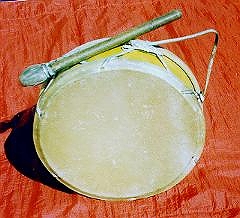
CAJA,TAMBOR,UANCAR (en lengua Aymar�) o TINYA (en lengua quechua) , son los nombres con los cuales se distingue a este peque�o membranofono de golpe directo. Es com�n su uso para chayar o cantar chayas que son melod�as que solo se acompa�an con
Este tambor , Los arque�logos desentierran restos de cajas Calchaquies de las tumbas donde descansan junto a las momias seculares , He aqu� dos de los rasgos esenciales de
Este tambor , el carnaval y su ascendencia ind�gena , tambores de este tipo han existido en todas las culturas del planeta , por ende nuestra cultura tambi�n los posee, sin olvidar que
Forma parte de la herencia del imperio inca , recordando que el noroeste de Argentina era
El Cuantisuyo o cuarto imperio inca, prueba de esto la da las cr�nicas del cronista indio
Guaman Poma de Ayala, comenta las fiestas de andesuyos y collasuyos se�alando que ?tocan y reta�en tinyas? durante su transcurso, y acompa�a las cr�nicas con ilustraciones donde podemos reconocer a nuestro legendario tambor,.Pedro pizarro vincula su ejecuci�n con el culto a los mu
ertos , mientras que el padre Cobo en sus cr�nicas dice ? celebran estos llantos bailando al son de sus tambores ,y cantando endechas tristes y lamentosas
.
ENGLISH
BOX, drum, to uancar (in Aymar� language) or TINYA (in language quechua), are the names with which it is distinguished to this small membranofono of direct blow. Its use is common to chayar or to sing chayas that is melod�as that single is accompanied with This drum, the archaeologists unearth rest of Calchaquies boxes of the tombs where they rest next to momias secular, There are two of the essential characteristics of This drum here, the carnival and their indigenous ancestry, drums of this type have existed in all the cultures of the planet, therefore our culture also has them, without forgetting that Form leaves from the inheritance of the empire Inca, remembering which the northwest of Argentina was the Cuantisuyo or fourth empire Inca, proof of this gives chronicles it of the Indian cronista Guaman Poma de Ayala, comments the celebrations they reta6nen tinyas? during its course, and it accompanies chronicles with illustrations where we can recognize our legendary drum.Pedro pizarro ties its execution with the cult to deads, whereas Cobo father in his chronicles says? they celebrate these llantos dancing to are of its sad and lamentosas drums


Click sobre la foto para escuchar el sonido