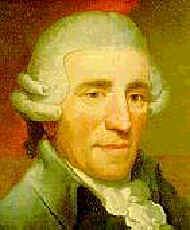
Franz Joseph Haydn
The
Austrian composer "Papa" Haydn was universally loved and an important figure in
the development of the classical symphony and string quartet.
Haydn’s
father was a poor wheelwright who sent him, at the age of eight, to Vienna to be trained
as a chorister at St. Stephen's Cathedral where he became known for his fine voice.
In
1759 Haydn was appointed music director of the small musical establishment of Count
Morzin.
In 1761 he became conductor of Prince Esterházy’s private orchestra and was appointed kapellmeister on the death of his predecessor and immediate superior Gregorius Werner in 1766.
This
post, which he filled for almost thirty years, was ideal for Haydn because it gave him the
opportunity to work with a group of fine musicians.
During
his years at the Esterházy country estate, Haydn met many Viennese artists including
Wolfgang Mozart.
The
death of Prince Nicholas in 1790 left Haydn free to come and go as he pleased and he
accepted a contract to appear in London where he was hailed as a genius.
Mozart
is said to have begged him not to go to England because he spoke so few languages to which
Haydn replied: "The language I speak is understood the world over".
Haydn
retired to Vienna and died there during the French occupation of the city.
Some of his most famous works are:
Piano Sonata No.37 in D: 1st movement
String Quartet op.64 No.2: 1st movement
 Baroque Classical
Romantic Modern
Baroque Classical
Romantic Modern