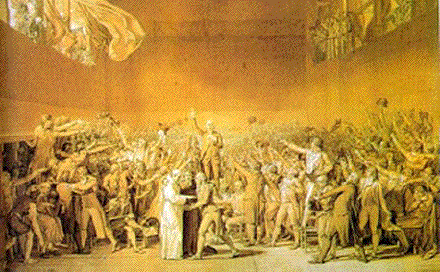
The reason the Estates General was going to meet on this day was
because of a recent
voting conflict between the Estates General that had put the estates in
deadlock for days. The Third Estate desired a change in the voting in the
Estates-General, from voting by order, which the First and Second Estates
wanted, to voting by head.
As the Third Estate stood outside the meeting hall talking about what they
would do next, after they had found out that the king had canceled the
royal session because his son died and he found out about the formation
of the National Assembly, which put him in great mourning, the sky began
to rain. Once the rain was poring and drenching the Third Estate members,
they sleeked shelter across
the street in a nearby
indoor tennis court. Inside the tennis court, Bailly, one of the main leaders
of the Third Estate, stood on a table and voiced the ideas of Mounier,
another leader. This proposal voiced by Bailly was that the Third Estate
would not leave Versailles until there was a constitution which they agreed
upon.This idea of Mounier's was taken in favor of a more radical reform
plan proposed
by Sieyes. Of the
577 members, all but one accepted this oath. This oath, which would change
Mother France forever, was known as the Tennis Court Oath.
Another key player in the Tennis Court Oath was Mirabeau. On June 23, 1789
he reminded King Louis XVI of the oath the Third Estate had taken on the
20th and also said that the Third Estate would not leave the meeting hall
till the Estates General could vote by head or were forced out by bayonets.
The King said to let them sit, but was bluffing, and finally gave way to
their proposal, and said that the Estates General would vote by head. Later,
on June 27, the King ordered his "loyal clergy and nobility" to join the
National Assembly. It seemed as if the Third Estate had won, and everyone
at Versailles was yelling "Vive Le Roi", as if the Revolution was over.
But what they didn't know was that the King had sent troops to regulate
in Paris. These troops would soon, even though they didn't know it, be
part of the storming of the Bastille where several soldiers and Parisians
would be killed and help promote the French Revolution.