 |
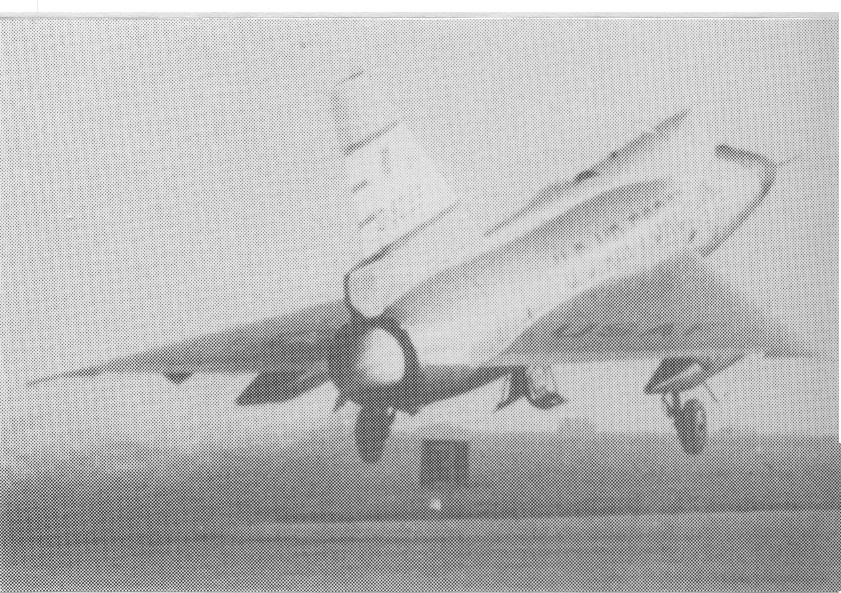
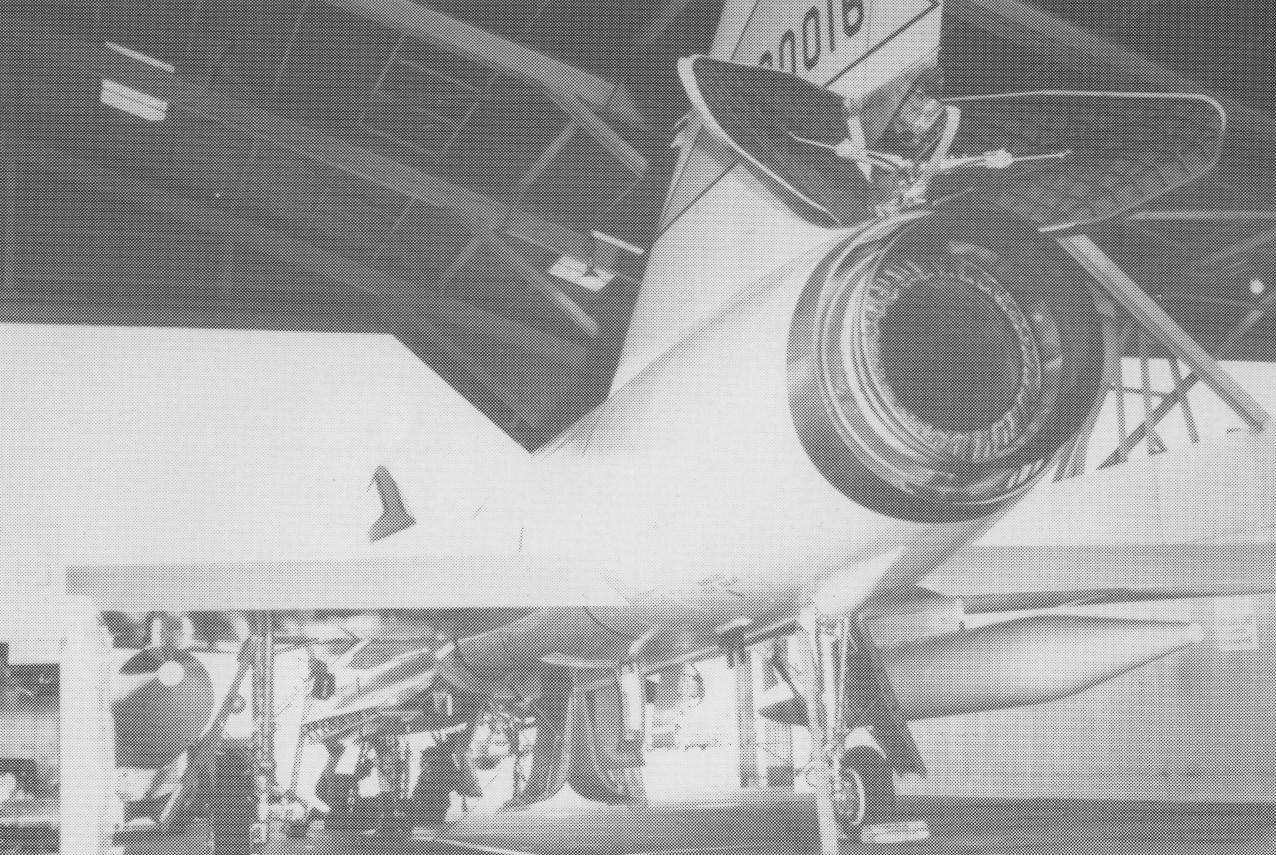
| I called the tower controller on my UHF radio to get clearance for takeoff. He cleared me onto the runway, so I pulled out onto the 12,000-foot runway and lined up in the center as usual and began the run up check of my engine. After checking all the instruments by the checklist and having received takeoff clearance, I released brakes and lit the AB. I felt the customary kick in the pants as the afterburner lit off, instantly increasing my thrust another 40 percent to 24,500 pounds. The EPR gauge dropped and then recovered normally, indicating the eyelids had opened properly. I accelerated quickly now and passing 135 knots began to feed in back pressure on the control stick to raise the nose to takeoff attitude. At 184 knots the aircraft lept into the air, 4,500 to 5,000 feet down the runway. As I reached for the gear handle to raise the landing gear, now about 50 feet off the runway, the fire light illuminated steady; no vision this time, this was for real! I quickly surveyed the other instruments to verify the fire, all was normal, but I knew this could not be a false fire light, I had just seen this exact scenario in my vision only a few minutes earlier. With my hand on the gear handle I had to make the decision. Should I raise the gear and follow the instinctive procedure drilled into my head that says if airborne, continue the takeoff and zoom to a safe ejection altitude (2000 feet) and eject? But I had just ejected a few weeks earlier and didn't want to do that again today, so I decided to abort. I brought the throttle out of AB and back to idle while lowering the nose of the aircraft for the landing straight ahead on the 2500 to 3500 feet of remaining runway. I then quickly ran through the rest of the abort procedure, reaching up to the left side of the front instrument panel to pull the drag chute handle and then rotating it 90 degrees clockwise to dump 3000 psi air into the hydraulic lines to emergency open the speed brakes and deploy the drag chute; then punching the external tanks jettison button, blowing off the dual 360 gallon tanks; followed quickly by hitting the tail hook button to extend the tail hook. The light in the button illuminated to confirm extension. |
| A mere three weeks had passed when I was holding #1 for takeoff in an F-106A single seater when I had another vision. I just saw the fire light illuminated. I could see I was in flight, but where or when I couldn't tell. Oh boy, what could I do, aborting the mission would be questioned and I still wanted to fly, so I pressed on, but with a highened sense of readiness. |
| Now all this happened in just a few seconds, at almost 200 miles per hour that runway disappears rather fast. As the two fuel tanks jettisoned from the underside of the wings they hit the runway and bounced back up, punching holes in both wings which also act as fuel tanks and were fully loaded with JP-4 fuel. A fuel similar to kerosene, very explosive, and that's just what happened. As the tower observer would later tell me, the entire aircraft became a giant fireball rolling down the runway at nearly 200 mph, and then my aircraft popped out ahead of it. I got the nose wheel lowered to the runway and applied maximum braking and just prior to the arresting gear cable got off the brakes, and quickly felt the reassuring tug as the tail hook pulled the cable out some 1200 feet before the aircraft came to a stop only a short 300 feet from the runway end. I quickly turned off the cabin pressure switch to deflate the canopy seal, pulled back on the canopy handle and opened the canopy with the electrical toggle switch. The fire trucks arrived within seconds it seemed and I frantically motioned toward my main wheel brakes. I had gotten on the brakes pretty hard during the short roll out and I knew they would be hot. I didn't want to shutdown the engine because that vents fuel near the brakes and I didn't want to cause another fire there, fuel was everywhere now beneath my plane. They quickly poured their foam on the brakes and under the wings and I shut down the engine and quickly egressed from the aircraft, using my seat straps to lower myself the eight feet to the runway. I then quickly left the scene with the safety officer and returned to the squadron debriefing room. I had violated training procedure and aborted rather than ejecting as the checklist called for, but it was the right decision, an instantaneous one made possible by my vision. |
 |
 |
| Fire! |
| speed brakes |
| external 360 gallon tanks |
| packed drag chute |
| tail hook |
 |
|
 |
|