|
|
|
|
|
|
|
|
|
|
|
|
|
|
|
|
|
|
|
|
|
|
|
|
|
|
|
|
|
|
|
|
|
Graphic Organizers |
|
 |
|
|
|
|
Not every student learns in the same way. With the way technology is changing our society, students have a more difficult time now than they did just 20 years ago when it comes to learning new material. Our students these days are very visually oriented and need to see things laid out for them, like a map. It is difficult for them to read a text and be able to pick out key points and draw conclusions without the use of a visual model or organizational tool. In addition, students cannot simply listen to a lecture or presentation and remember what is taught by simply writing it down (Marchand-Martella, Nancy, 1998). Graphic organizers are a way to help students organize the information learned, which, in turn, allows students to remember key points they need to know. |
|
|
|
Great Links for Graphic Organizers |
|
|
|
|
|
|
|
Education Place: a list of possible orgainzers |
|
|
|
|
|
|
|
Graphic Organizer Ideas |
|
|
|
|
|
|
|
Inspiration |
|
|
|
|
|
|
|
|
|
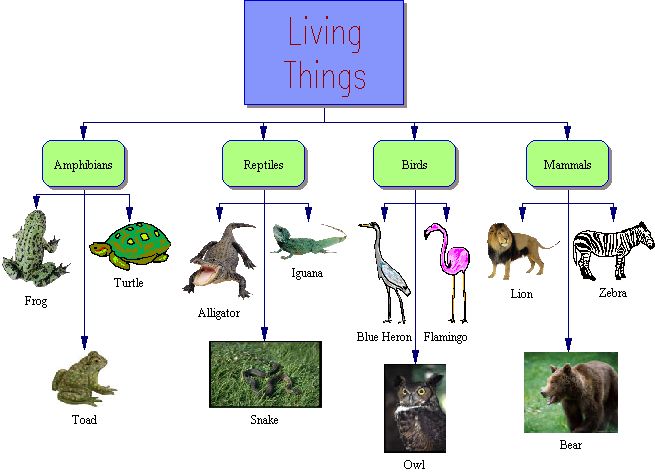
A graphic organizer is an instructional tool used to help students organize information. It is a visual representation that allows the student to �illustrate� and make connections among bits of information in a creative format. (North Central Regional Educational Laboratory). A student can use a graphic organizer to help organize information learned, prior knowledge, or ideas to expand upon in writing. �Whether used to depict an entire text's structure or to illustrate related attributes of a concept, graphic and other visual organizers help students to understand inter-concept relationships by presenting the information spatially� (Brun, 2002, p. 1). |
|
|
|
|
|
Students at in every grade level will benefit from the use of graphic organizers. From Kindergarten through college, graphic organizers provide a visual representation of information that allows it to be remembered and shared more easily. Primary students might fill the graphic organizer with pictures or words. High school and college students may fill it with facts, sentences, and diagrams. �Since many graphic organizers use short words or phrases, they are ideal for many types of learners, including English Language Learners with intermediate proficiency.� (Kipperman, D. &McKinstry, M.). |
|
|
|
|
|
There are many uses at every grade level for a graphic organizer. They can be used for outlining a story, showing event in a sequence, comparing and contrasting information, or simply categorizing information. A study was conducted on 126 fifth grade students attempting to prove that graphic organizers enhance comprehension of text and the ability to summarize. The authors designed 3 concept-mapping approaches: map correction, scaffold fading, and map generation. The results of their experiments showed that text comprehension and summarization abilities were enhanced through the use of the map-correction method and that the scaffold-fading method also assisted students in their summarization ability (Chang, Kuo-En, 2002) |
|
|
|
|
|
As one can see, there are many uses for graphic organizers at all grade levels. Students can use them to help understand information, memorize information, or share information with others. Graphic organizers make learning more enjoyable because they are a change of pace from the old lecture and take notes method of learning. |
|
|
|
|
|
|
References |
|
|
|
Sample Graphic Organizers: Just Click to See |
|
|
|
Brunn, Michael. (2002). Teaching ideas. [Electronic Version]. Reading Teacher.
Vol. 55 Issue 6. p. 522
Chang, Kuo-En. (2002) The effect of concept mapping to enhance text comprehension
and summarization. [Electronic Version]. Journal of Experimental Education.
Vol. 71Issue 1, p5, 19p
Kipperman, Doug. & McKinstry, Melissa. (n.d.) Retrieved April 3, 2004, from:
http://www.writedesignonline.com/orgainzers/index.html
Marchand-Martella, Nancy. (1998). Graphic organizers. [Electronic Version].
Teaching PreK-8. Vol. 28, Issue 4. p. 46
North Central Regional Educational Laboratory. (n.d.). Retrieved April 3, 2004, from:
http://www.ncrel.org.sdrs/areaz/issues/students/learning/lr1grorg.htm |
|
|
|
|
Web |
|
|
|
|
|
Story Outline |
|
|
|
|