South Korea

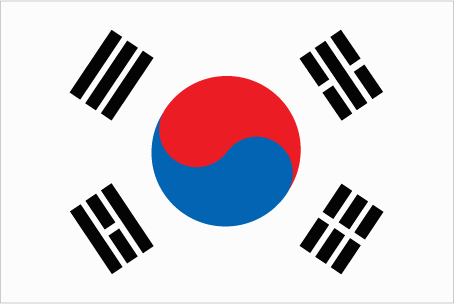
South Korea officially the Republic of Korea is a sovereign country located in the southern part of the Korean Peninsula. The name "Korea" is derived from Goryeo, a dynasty which ruled in the Middle Ages. Its neighbors are China to the west, Japan to the east, and North Korea to the north.South Korea lies in the north temperate zone with a predominantly mountainous terrain. It covers a total area of 99,392 km2 (38,375 sq mi) and has a population of 50 million. The capital and largest city is Seoul, with a population of 10 million.
Incheon
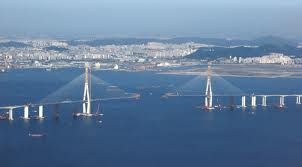
The Incheon Metropolitan City literally 'wise river', formerly romanized as Inchon, is located in northwestern South Korea. The city was home to just 4,700 people when Jemulpo port was built in 1883. Today 2.76 million people live in the city, making it Korea�s third most populous city after Seoul and Busan Metropolitan City. While people have inhabited the area from the New Stone Age, the city�s growth was assured in modern times with the development of its port due to its natural advantages as a coastal city and its proximity to the South Korean capital at Seoul. It is part of the Seoul National Capital Area, along with Seoul itself and Gyeonggi Province; as such, Incheon is the world's fourth-largest suburb by population (after New Taipei, Yokohama, and Ekurhuleni). A suburb here is defined as: not a central city from a business or infrastructure sense Incheon has since led the economic development of Korea by opening its port to the outside world, issuing in the modernization of Korea as a center of industrialization. In 2003, the city was designated as Korea�s first free economic zone. Since then, large local companies and global enterprises have increasingly invested in Incheon Free Economic Zone, including Samsung which chose Songdo International City as its new investment destination for its bio industry. As an international city, Incheon has held numerous large scale international conferences, such as the Incheon Global Fair & Festival in 2009. The 17th Asian Games Incheon 2014 will also be held in Incheon from September 19, 2014. Incheon has established itself as a major transportation hub in northeast Asia with the world renowned Incheon International Airport and Incheon Port. The city is also home to the Green Climate Fund, an international organization addressing environmental issues.
Area: 1,029 km�
Points of interest: Baengnyeongdo, Muuido, Manisan, Yeongjongdo
Gimpo
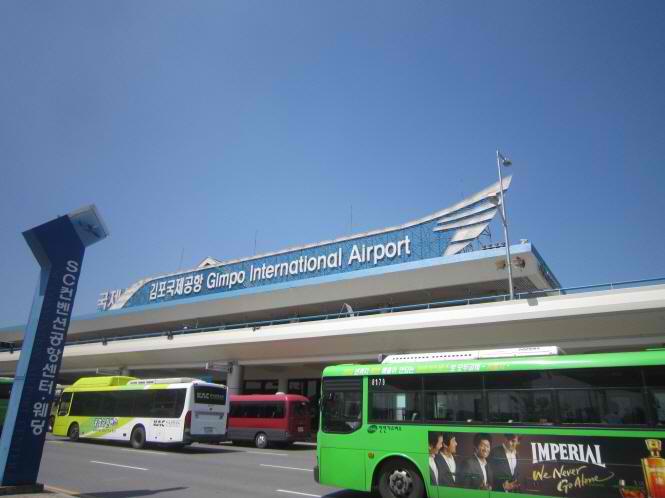
Gimpo is a city in Gyeonggi Province, South Korea. It borders on Incheon, with which it shares the South Korean side of the Han River estuary, as well as Seoul and the lesser cities of Paju and Goyang. North Korea is across the Han River. The current mayor is Young-Rok,Yoo. The city's population of more than 300,000 is made up of more than 71,000 households. Gimpo Airport (formerly Kimpo International Airport) used to be located inside the city, but is now part of Seoul. Tertiary educational institutions located in the city include Kimpo College and Joong-ang Seungga University. There are 27 elementary schools, 12 middle schools, and 8 high schools, including Gimpo Foreign Language High School. Three elementary schools, two middle, and two high schools are located in the city called Tongjin.
Area: 276.6 km�
Province: Gyeonggi-do
Bucheon
Bucheon is a city in Gyeonggi Province, South Korea. Bucheon is a satellite city of Seoul, 25 km away. This city is located between Incheon and Seoul. Manufacturing operations are located in the city. Bucheon promotes itself as the cultural centre of the Seoul Metropolitan Area. The Bucheon Philharmonic Orchestra is located there and an annual international film festival is held in July, called the Puchon International Fantastic Film Festival or PiFAN. Bucheon's institutions of higher education include: Bucheon College, Yuhan College, Catholic University of Korea Bucheon campus, and Seoul Theological University.
Area: 53.44 km�
Province: Gyeonggi-do
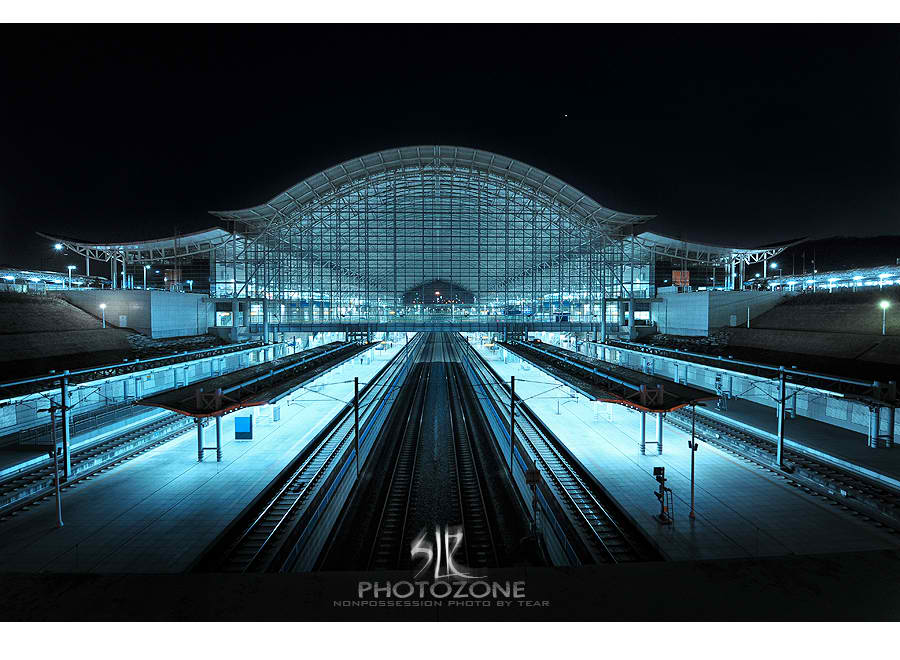
Gwangmyeong
Gwangmyeong is a city in Gyeonggi Province, South Korea. It borders Seoul to the north and northeast, Anyang to the east and south, and Siheung to the southwest. Gwangmyeong is a city in Gyeonggi Province, South Korea. It borders Seoul to the north and northwest, Anyang to the east and south, and Siheung to the southwest. Gwangmyeong City is profoundly devoted to its motto, The Ever-changing Future City of Gwangmyeong, and has set several key objectives to emerge as the Economic Hub of Western Metropolitan Area.
Area: 38.5 km�
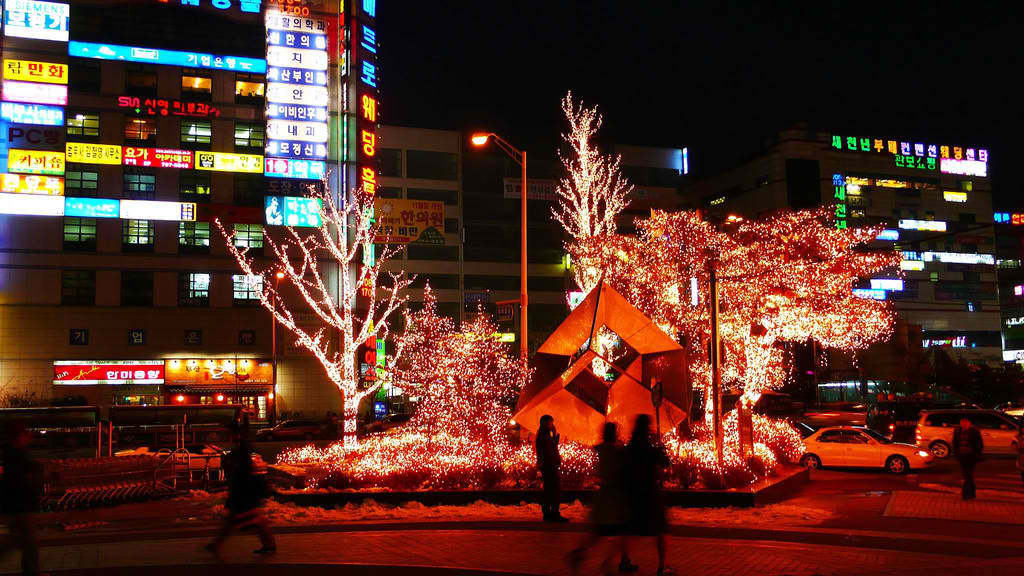
Seongnam
Seongnam is the second largest city in South Korea's Gyeonggi Province after Suwon and the 10th largest city in the country. Its population is approximately one million. Seongnam is a satellite city of Seoul. Seongnam is the second largest city in South Korea's Gyeonggi Province after Suwon and the 10th largest city in the country. Its population is approximately one million. Seongnam is a satellite city of Seoul. It is largely a residential city located immediately southeast of Seoul and belongs to the Seoul National Capital Area. Seongnam, the first planned city in Korea's history, was conceived during the era of President Park Chung-Hee for the purpose of industrializing the nation by concentrating electronic, textile, and petrochemical facilities there during the 1970s and 1980s. The city featured a network of roads, to Seoul and other major cities, from the early 1970s on. Today, Seongnam has merged with the metropolitan network of Seoul. Bundang, one of districts in Seongnam, was developed in the 1990s. To accelerate the dispersion of Seoul's population to its suburbs and relieve the congested Seoul metropolitan area, the Korean government has provided stimulus packages to large public corporations and private companies to be headquartered in the Bundang district. Bundang-gu is now home to prominent companies such as KT (formerly Korea Telecom), Korea Gas Corporation, KEPCO, and Korea Land Corporation. In recent years, a movement to have Seongnam designated a metropolitan city capable of governing itself has arisen. In August 2009, the city of Seongnam decided to merge with the city of Hanam, also in Gyeonggi-do. The city is also home to K-League soccer club Seongnam Ilhwa Chunma.
Area: 141.8 km�
Province: Gyeonggi-do
Seoul
Capital of South Korea
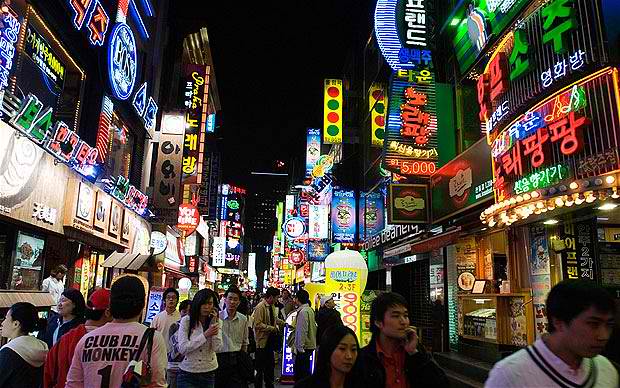
Seoul, officially the Seoul Special City, is the capital and largest metropolis of South Korea. A megacity with a population of more than 10 million, it is the largest city proper in the OECD developed world. The Seoul Capital Area, which includes the surrounding Incheon metropolis and Gyeonggi province, is the world's second largest metropolitan area with over 25.6 million people, home to over half of South Koreans along with 632,000 international residents. Situated on the Han River, Seoul's history stretches back more than 2,000 years when it was founded in 18 BC by Baekje, one of the Three Kingdoms of Korea. It continued as the capital of Korea under the Joseon Dynasty and the Korean Empire. The Seoul metropolitan area contains four UNESCO World Heritage Sites: Changdeok Palace, Hwaseong Fortress, Jongmyo Shrine and the Royal Tombs of the Joseon Dynasty. Seoul is surrounded by mountains, the tallest being Mt. Bukhan, the world's most visited national park per square foot. Modern landmarks holding Guinness World Records include Lotte World, the world's second largest indoor theme park. Moonlight Rainbow Fountain, the world's longest bridge fountain and Times Square's CGV Starium, the world's largest permanent 35 mm cinema screen. The birthplace of K-pop and the Korean Wave, Seoul was voted the world's most wanted travel destination by Chinese, Japanese and Thai tourists for three consecutive years in 2009-2011 with over 10 million international visitors in 2012. Today, Seoul is considered a leading and rapidly rising global city, resulting from an economic boom and growth known as the Miracle on the Han River which transformed it from the ashes of the Korean War to the world's fourth largest metropolitan economy with a GDP of US$773.9 billion in 2012 after Tokyo, New York City and Los Angeles. A world leading technology hub, it boasts the world's seventh largest number of Fortune Global 500 multinationals such as Samsung, the world's largest technology company, as well as LG and Hyundai-Kia. Gangnam District forms the commercial center along with Central District and the financial center, Yeoui Island and technology hub Digital Media City. Ranked eleventh in the Global Power City Index, the metropolis exerts a major influence among global affairs as one of the five leading hosts of global conferences. Seoul has a very technologically advanced infrastructure. It has the world's highest fibre-optic broadband penetration, resulting in the world's fastest internet connections with speeds up to 1 Gbps. Seoul Station is the main terminal of the KTX high-speed rail and the Seoul Subway is the world's largest subway network by length[24] It is considered the world's best subway by Jalopnik along with 4G LTE, WiFi, DMB and WiBro. Seoul is connected via AREX to Incheon International Airport. Seoul hosted the 1986 Asian Games, 1988 Summer Olympics, 2002 FIFA World Cup and the 2010 G-20 Seoul summit. A UNESCO City of Design, Seoul was named the 2
Population: 10.58 million (2011)
Area: 605.2 km�
Awards: Top Intelligent Community of the Year