Wolves In Yellowstone
Created by Erika Christianson
For 7th grade science
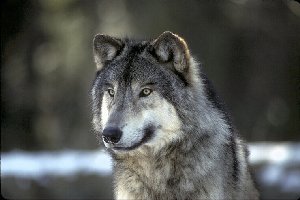
Join me on a journey to Yellowstone National Park! With the activities below, you will learn about Yellowstone and the amazing animals that live there, especially wolves!
These are very important things to learn, especially if you live in Montana. There are always news stories on television about the wolf controversy, and now you will be an expert on the wolf reintroduction! You will be able to understand why this is such a hot topic, and you can join in the debate.
Review:
Now, let's review some important information about the wolves in Yellowstone.
In the early part of the 20th century, wolves were found in Montana, including Yellowstone National Park. In 1914, Congress passed a bill approving funding for the destruction of wolves. Over the course of the next few decades, wolves were killed until no more remained in Montana, and were eventually listed as an endangered species. With the passing of the Endangered Species Act, in 1973, the Wolf Recovery program was started to restore the gray wolf to its natural habitat. In 1995, Yellowstone was a recipient of several gray wolves in an attempt to restore wolf populations in the park. Since that time, people throughout the world have established strong opinions about the wolves' presence.
Procedure:
- In the next sections you will be asked to answer questions about gray wolves.
- Read through the questions and then click on the link that will take you to the web site.
- Keep the questions in mind as you read through the information.
- When you find the answers, write them in your science journal.
Run the Web:
By finding the answers you will be one step closer to becoming an expert on Yellowstone wolves! Explore the Boomerwolf web site and you will discover the answers to these questions. (Hint: look closely at the wording of the questions in order to narrow your searching to the important sections of the site.) Click on the link below and record your answers in your journal.
- Using the knowledge you obtain about "what good is the wolf", predict some of the disadvantages of not having the wolves in an ecosystem.
- Using the data about typical wolf characteristics, differentiate between a wolf and a typical dog.
- Compare and contrast a wolf pack and a human family.
Click here to visit the Boomerwolf web site.
What did we learn?
Wolves are an essential component in an ecosystem because they control the population of other animals. An important point to consider is how efficient they are at population control. Hunters do a good job at controlling animal populations, but oftentimes they do not shoot the unhealthy, weak animals. Wolves, on the other hand, generally kill the old, the weak, and the young. Why might this be important? (Think in terms of genetics.) Wolves are also important because of the shelter they provide to other animals with their abandoned dens, as well as the food they provide for birds, coyotes, and bears after they bring down an animal.
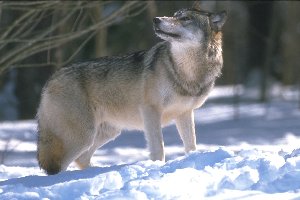
Did you look closely at the wolf pictures and notice characteristics that were different than your dog? Look at the wolf picture above and notice the large head, narrow body, and long legs. Although wolves can successfully breed with domestic dogs, there are several major differences between the two species.
Run the Web:These answers will be found at the PBS web site. Focus most of your time on the interview with Ed Bangs, and if you have time read through and listen to the information on wolf howls.
- Predict what would have happened if they had taken wolves from a warm climate without elk.
- Analyze how the Rocky Mountain ecosystem adjusted to the loss of wolves. Compare your answer from #1 in the previous section to the response Ed Bangs gave.
- Compose a short explanation of the reasons people were and are against the wolf reintroduction.
- Evaluate the changes that have occurred in the Yellowstone ecosystem since the wolf reintroduction.
Click here to visit the PBS web site.
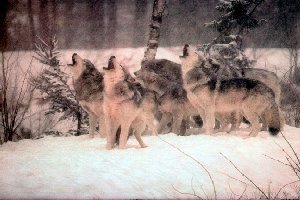
The Wolf Controversy:
The wolves in Yellowstone were completely eliminated, and left behind an area that responded with huge winter die-outs in several species. Vegetation was being heavily grazed and was no longer reproductively active. Coyote populations increased as there was no more competition from wolves.
Now that they have returned, many people are upset and feel that wolves should never have been brought back. The livestock industry is one of the most vocal opponents of the wolf reintroduction, fearing that wolves will prey on their sheep and cattle. The reality is, wolves very rarely kill livestock and would prefer to stay as far away from humans as possible.
Let's Recap what we learned:
I'd like to finish our activity on wolves with an excerpt from Aldo Leopold's A Sand County Almanac .
" I now suspect that just as a deer herd lives in mortal fear of its wolves, so does a mountain live in mortal fear of its deer. And perhaps with better cause, for while a buck pulled down by wolves can be replaced in two or three years, a range pulled down by too many deer may fail of replacement in as many decades.
So also with the cows. The cowman who cleans his range of wolves does not realize that he is taking over the wolf's job of trimming the herd to fit the range. He has not learned to think like a mountain. Hence we have dustbowls, and rivers washing the future into the sea."
Great job! I hope you all feel confident to join in the next discussion about wolves in Yellowstone. You are now armed with the knowledge to make your own opinions!!!
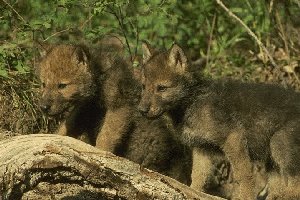
Wolf background image is from http://ladyinblack.com .
Wolf photos are from http://www.geocities.com/Heartland/Canyon/4971/wolves/wolfpixs0.html.
Purple line is from Microsoft Word Clipart.
