
(Click
on the Bold Underlined
sections. They are links.)
A while back, I became a little confused.
I was driving down one of the side roads in my home town of Cheshire, CT., and I noticed a sign
which said “Medal of Honor Recipient” in a local cemetery. Being a veteran
myself (as well as a History major in college),
I am intrigued by Medal of Honor winners and I decided to take a look. It turns
out that he (Eri
Davidson) was awarded the Medal of Honor because he
captured a Confederate flag at Cedar Creek, VA., on 19 October 1864. He received the medal
before it bore the significance that it possesses today, but that is an
entirely different story (Read the fourth paragraph in the remarks section by clicking here).
Well, this got me wondering. Walter Van Rensselaer had done the same thing at
Gettysburg.
I sent an email to Seward
Osborne, the expert on the 20th
(80th) NYVI and asked if Walter had received
any medals. He said he had not but probably should have. After all, he had been
injured twice and captured an enemy flag. I began to look around the internet
for other examples of soldiers receiving the Medal of Honor for capturing enemy
flags. There are a lot of them. I got up to about fifteen before I just stopped
counting.

So now I had a mission. I had seen/heard
of people setting out to get medals awarded posthumously, and I thought that
would be something I could do. I began looking into ways to start the process
for posthumous awards. One website said that officers were not given the Medal
of Honor for most of the Civil War, so that was a little disheartening. Anyway,
during this search, I came upon a website
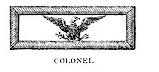
which said he had received the brevet rank of Colonel. So now I had to figure
out what a brevet rank was. This wasn’t quite so difficult. There are some
links below which explain it very well. Basically, it is basically an award for
an officer. Rather than receive a Medal of Honor, Walter Van Rensselaer was
given the brevet rank of Colonel.
About brevet ranks:
Excerpt
from U.S. Civil War FAQ, Part 1/2:
A brevet rank
was an honorary promotion given to an officer (or occasionally, an enlisted
man) in recognition of gallant conduct or other meritorious service. They
served much the same purpose that medals play today (our modern system of
medals did not exist at the time of the Civil War).
A brevet rank was almost meaningless in terms of real
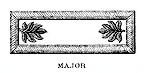
authority. For example, a major who was a brevet colonel collected the pay of a
major, wore the uniform of a major, could not give orders to lieutenant
colonels, and was only eligible for commands that normally fell to majors. But
he was allowed to use the title of colonel in his correspondence.
In addition, there were some unusual circumstances where
brevet rank carried authority. For instance, when a force consisted partly of
Regular troops and partly of state militia, command would go to the officer
with the highest brevet rank (who might neither be the highest ranking regular
officer nor the highest ranking volunteer!). This came up during the Mexican
War on some occasions, and seems to have been designed to allow Regular
officers with brevets (implying experience) to assume command over
higher-ranking militia officers who had neither experience nor brevets.
An officer could also claim his brevet rank when serving
on court-martial duty. Since an officer cannot be tried by officers ranking
lower than himself, using brevet ranks allowed more
people to qualify as possible court members.
During the war itself, brevets were very difficult to get
and were a sign of valor, but on
Like regular ranks, brevets were kept separately for the
Brevet ranks were authorized for the Regular Army in the
Articles of War of 1806; they were authorized for the
The Confederate army did not award brevet promotions.