Worship & Rites of Passage
Rev. Eric Posa
Worship is the practice of giving ourselves over to the healing powers which govern our destinies.
- Frank Carpenter
...it behooves us to be careful what we worship, for what we are worshipping we are becoming.
- Ralph Waldo Emerson
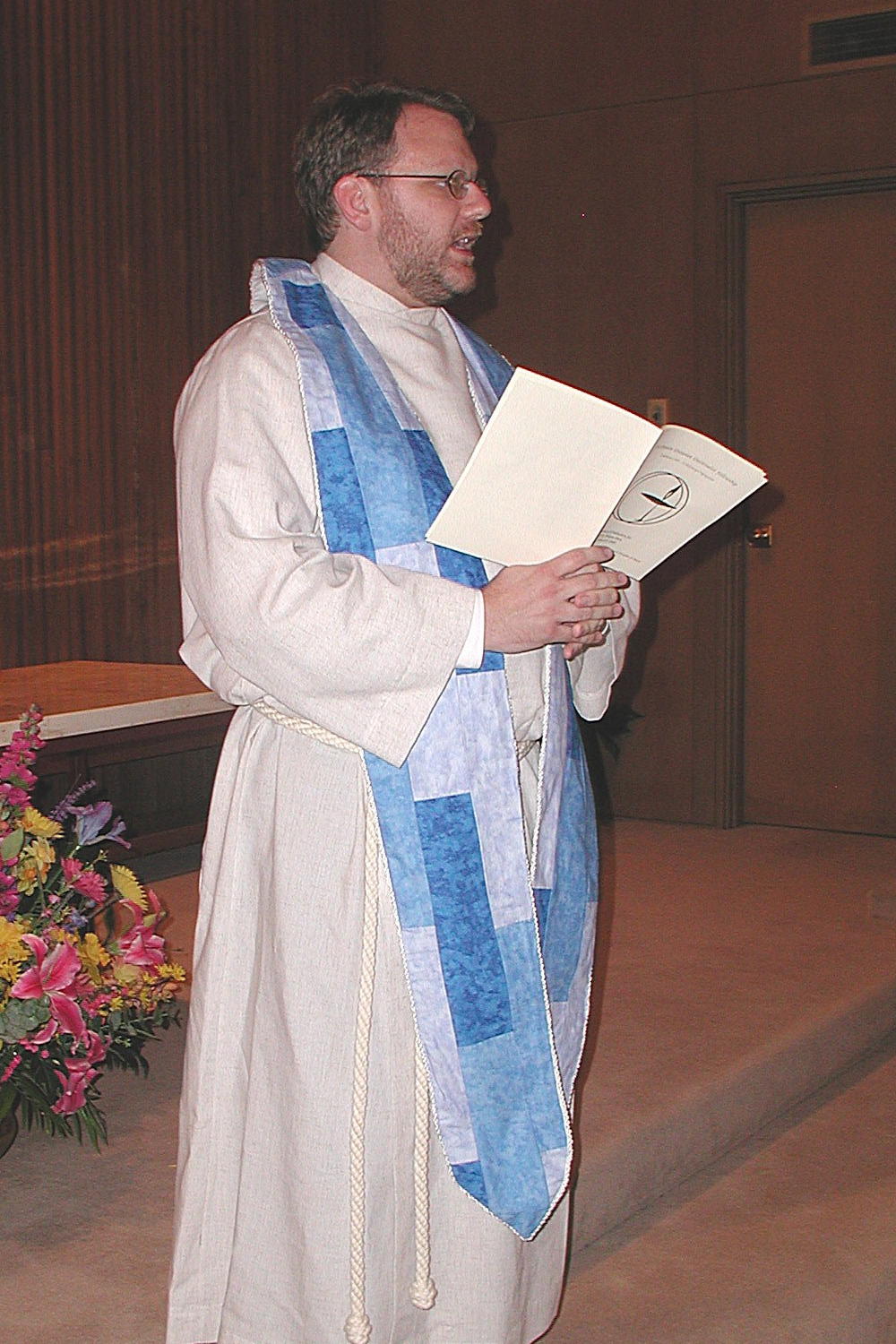 First Christian Church, Denton, Tx.
leading hymn at my ordination
June 19, 2005
At the same time, the Sunday morning gathering - especially the worship service - is the primary moment that guests and newcomers encounter the life of a church. All churches, especially UU churches that affirm the worth and dignity of everyone, are called to embody and practice radical hospitality. I view radical hospitality as both welcoming people in the doors, and also taking every meaningful step to make the church as welcoming to these guests as possible. Whenever a church is considering any decision regarding its worship, I always encourage worship leaders to ask themselves, "How will our guests and newcomers experience this?" While this is never the only issue to consider, not to give weight to it inadvertently hinders the work of the church to welcome others.
I value strongly the understanding of worship as liturgy. The word "liturgy" comes from the Greek for "the work of the people." The gathered people of the church come together not only to worship, but to lead worship; this is a shared ministry. I avoid letting Sunday service focus solely on one person, including me. Lay liturgists (often called Worship Associates) contibute valuably to the service, and I frequently ask church members to present readings.
Each congregation has its own particular worship traditions, and I respect the liturgy that has developed. I will maintain most of the order of service that has evolved in a church. However, some changes may be appropriate. For example, I do feel strongly that a sermon should not be followed only with a closing hymn and chalice extinguishing words. The sermon is not the climax of the service, but rather one of the many (albeit most in-depth) service elements to explore the theme of the worship service. I will follow the sermon with a congregational response to the message of the sermon, usually a litany or responsive reading, to offer the conregation an opportunity to invest themselves in the worship theme.
Similarly, when constructing rites of passage for particular people, such as wedding and union ceremonies, funeral and memorial services, and child dedications, I strive to construct rituals to meet the needs of the people participating in it. The meaning of such rites comes from the participant's investment in the ritual, and this investment needs the stamp of the participants to engage them.
Another vital avenue for participation in worship is music. I particularly appreciate worship in which many people are involved in the presentation of the music: the more people who sing or play, the merrier - and often it really is more merry that way, for the wide involvement not only fills out the sound, but can feel more inviting. While I regret that I don't play an instrument, and I'm not a strong singer, I am a great lover of music of many forms. I appreciate classical, formal music, especially when well-played, but also various forms of popular music: I find that meaningful and moving worship experiences can be conveyed through jazz, folk, rock, and even country music. (I am, after all, a native Texan.) While I see great value in those churches with strong formal music programs, and would never support radical changes to such programs, I am very interested also in exploring more contemporary forms of worship, to the extent the congregation is open to trying new things. (Or is it that new for you at the Brazos Valley church?)
home page