Leadership & Administration
Rev. Eric Posa
Leadership can be thought of as a capacity to define oneself to others in a way that clarifies and expands a vision of the future.
- Edwin Friedman
If you're in a community that is comfortable, then probably your coalition is too narrow.
- Bernice Reagon Johnson
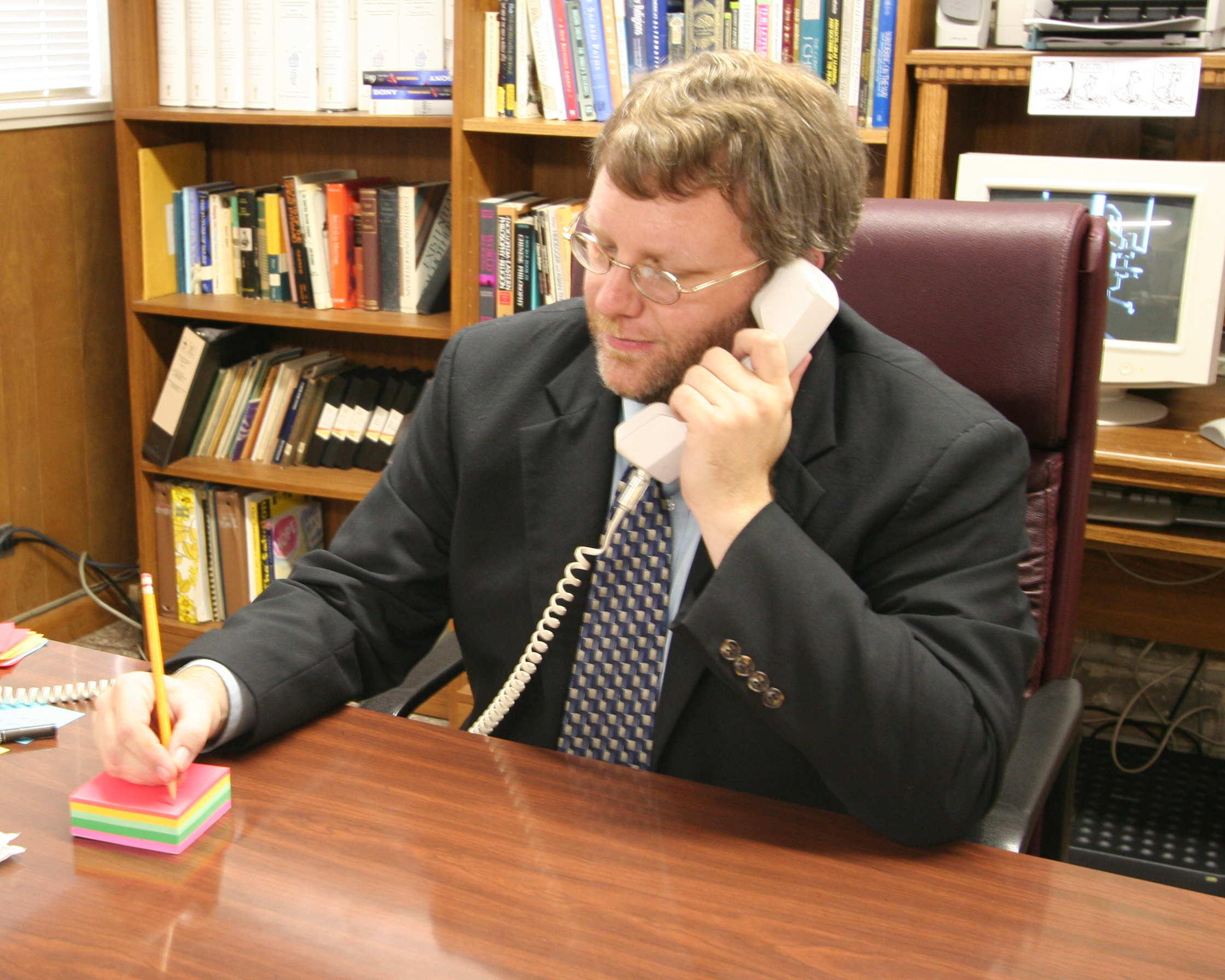 First Unitarian Universalist Church
San Antonio, Texas - Minister's Study
November 5, 2006
My role in facilitation is to help people claim their voice at the table, while also enforcing appropriate boundaries through any decision-making process. This involves gathering and equipping the people of the church, or larger community, in such a way as to promote their use of their individual and collective power to gain insights, reach decisions, and make changes that benefit the whole group. Facilitation is about guiding the process in such a way that whatever outcome is reached, all key players will feel they've been heard and that they've had a stake in the decision-making.
In both these modes of leadership, I strive to remain engaged, emotionally and spiritually present with those I'm leading, without getting caught up in the anxieties or worries of those feeling overwhelmed. Maintaining this "non-anxious presence" is not easy for anyone, and even the best of us fall short from time to time. For myself, though, my chaplaincy experiences equipped me with the tools to stay centered and focused through turmoil. I also promote as much openness in communication as I can; the majority of church fights I've experienced have involved miscommunication or lack of communication. Plus, I work to offer new insights to church leaders, with whom I work closely, that can open new ways of considering and resolving issues that face the lay and ministerial leadership alike.
home page