Common traits
There is a range of attributes that are commonly part of a
superhero's make up, although they are by no means definitive
(see Divergent
character examples). Most superheroes have a few of the
following features:
- An exemplary and strict moral code, especially a
willingness to risk one's own safety in the service of good,
without expectation of reward.
- Extraordinary powers and abilities, mastery of relevant
skills and/or advanced equipment. Although superhero powers
vary greatly, superhuman strength, the ability to fly,
enhancements of the senses, and the ability to project
energy of some kind are some of the most common. Some
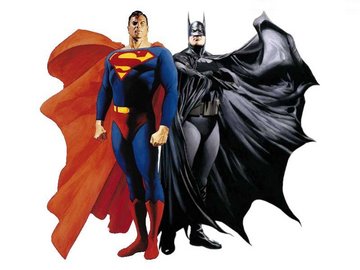
superheroes, such as Batman and the
Green Hornet, possess no superpowers but have mastered
skills such as martial
arts and forensic
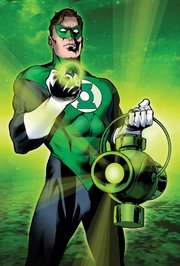
sciences. Others have special equipment, such as Iron Man’s
powered
armor and Green
Lantern’s power
ring.
- A secret
identity, instead using a descriptive or metaphoric code
name for one's public deeds. In some cases a character
without a secret identity may still use a code name. Some
characters have unusual names (such as Dr.
Strange) which are not literally code names but sound
similar.
- A flamboyant and distinctive costume that usually hides
the secret identity. It often has a symbol, such as a
stylized letter or visual icon, on the chest. Costumes
frequently reflect the superhero's name and theme, for
example Daredevil
resembles a red devil, and the
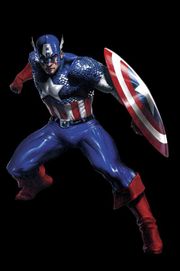
design of Captain
America's costume echoes that of the American
flag. Alternatively, a character such as the Thing
may have a naturally distinctive appearance similar to a
costume.
- An archenemy
and/or a number of enemies that s/he fights repeatedly.
- A supporting
cast of recurring characters that act as the hero's
friends, co-workers, or love interests, who may or may not
know the superhero's secret identity. Often the superhero's
personal relationships are complicated by his or her dual
life.
- Either independently wealthy (e.g. Batman or Iron Man)
or has an occupation that allows for minimal supervision
(e.g. Superman's
civilian job as a reporter).
- A secret headquarters or base of operations (e.g.
Batman's Batcave).
- A backstory,
called an "origin story", which explains the circumstances
of the character acquiring his/her abilities, as well as
his/her motivation for fighting evil.
- A special motivation, such as revenge (e.g. Batman), a
sense of responsibility (e.g. Spider-Man),
or a formal calling (e.g. Green
Lantern).
Most superheroes work independently. However, there are
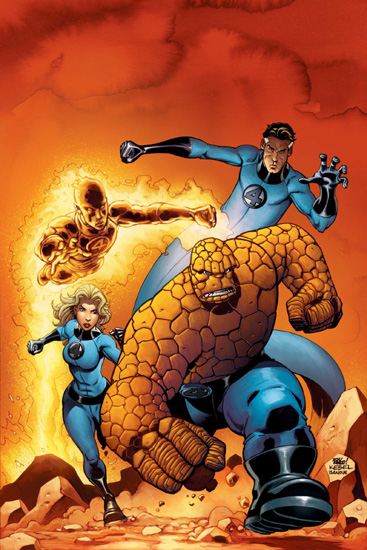
also many superhero teams. Some, such as The
Fantastic Four and X-Men, have
common origins and usually operate as a group. Others, such as
The
Avengers and Justice
League are "all-star" groups consisting of heroes of
separate origins who also operate individually.
Many superheroes, especially those introduced in the 1940s, work with
a child or teenaged sidekick
(e.g. Batman and Robin).
This has become less common since more sophisticated writing
and older audiences have lessened the need for characters that
specifically appeal to young readers and made such obvious child
endangerment seem implausible.
Superheroes most often appear in comic
books, and superhero stories are the dominant genre of American
comic books to the point that "superhero" and "comic book
character" are often used synonymously. Superheroes have also
been featured in radio serials,
prose
novels, TV series,
movies, and
other media. Most of the superheroes that appear in other
media are adapted from comics, but there are exceptions.
Marvel
Comics Group and DC Comics,
Inc. share ownership of the United States trademark
for the phrase "Super Heroes" as it applies to comics, and
these two companies own a majority of the world’s most famous
superheroes. However, throughout comic book history, there
have been significant heroes owned by others, such as Captain
Marvel, owned by Fawcett
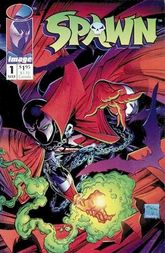
Comics (but later acquired by DC) and Spawn,
owned by creator Todd
McFarlane.
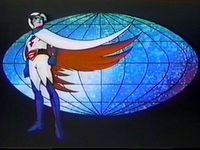
Gatchaman, one of the most famous Japanese
superheroes.
Superheroes are largely an American creation but there have
been successful superheroes in other countries, most of which
share many of the conventions of the American model. Japan is the
only country whose entertainment industry nears that of the
United States in output of superheroes. Ultraman
and Kamen
Rider have become popular in Japanese tokusatsu
television shows and Science
Ninja Team Gatchaman and Sailor
Moon are staples of Japanese anime and manga. Examples
from other countries include Cybersix from
Argentina,
Captain
Canuck from Canada and Marvelman
from the United
Kingdom.
Although superhero fiction is considered a subgenre of fantasy/science-fiction,
it crosses into many other genres. Many superhero franchises
contain aspects of crime
fiction (Batman, Daredevil), others horror
fiction (Spawn, Hellboy) and
many are similar to "hard"
science fiction (X-Men, Green Lantern).
But because the fantastic nature of the superhero milieu
allows almost anything to happen, some superhero series cross
over into a variety of vastly different genres. In the 1980s series,
The New Teen
Titans, the Titans battled a cult leader in
one story, went off to another galaxy to participate in a
space war in the following story and then returned to Earth
and became involved in a gritty urban crime drama involving
young runaways. The content of each of these stories is quite
different, yet the same principle characters are involved.
Character subtypes
In superhero role-playing
games (particularly Champions),
superheroes are informally organized into categories based on
their skills and abilities:
- "Brick": A character with a superhuman degree of
strength and endurance and usually an oversized, muscular
body, e.g. The
Thing, The
Incredible Hulk, Colossus
- "Blaster": A hero whose main power is a distance attack,
e.g. Cyclops,
Havok, Starfire.
- "Archer": A subvariant of this type who uses bow and
arrow-like weapons that have a variety of specialized
functions like explosives, glue, nets, rotary drill, etc.,
e.g. Green
Arrow, Hawkeye.
- "Mage": A subvariant of this type that is trained in
the use of magic,
which partially or wholly involves ranged attacks., e.g.
Doctor
Strange, Doctor
Fate
- "Martial Artist": A hero whose physical abilities are
mostly human rather than superhuman but whose combat skills
are phenomenal. Some of these characters are actually
superhuman (Captain
America, Daredevil)
while others are normal human beings who are extremely
skilled and athletic (Batman, Black
Widow).
- "Gadgeteer": A hero who invents special equipment that
often imitates superpowers, e.g. Forge,
Nite Owl
- "Armored Hero": A gadgeteer whose powers are derived
from a suit of powered
armor, e.g. Iron Man,
Steel
- "Dominus": A hero that uses a Giant Robot to combat
villains, e.g. Roger Smith of Big O, Super
Sentai, common in Japanese superhero series
- "Speedster": A hero possessing superhuman speed and
reflexes, e.g. The Flash,
Quicksilver.
- "Mentalist": A hero who possesses psionic
abilities, such as telekinesis,
telepathy
and extra-sensory
perception, e.g. Professor
X and Jean Grey
of the X-Men, Saturn
Girl of the Legion
of Super-Heroes.
- "Shapechanger": A hero who can manipulate his/her own
body to suit his/her needs such as stretching (Mister
Fantastic, Plastic
Man) or disguise (Changeling,
Chameleon).
- "Substance oriented Bodychanger - A shapechanger who
can change his/her body into the equivalent of a mass of a
substance that can have variable density such as sand or
water. e.g. Sand,
Husk.
- "Sizechanger": A shapechanger who can alter his/her
size, e.g. the Atom
(shrinking only), Colossal
Boy (growth only), Hank Pym
(both).
These categories often overlap. For instance, Batman is a
martial artist and a gadgeteer, and Superman is
extremely strong and damage resistant like a brick and also
has ranged attacks (heat vision, superbreath) like an energy
blaster and can move quickly like a speedster.
Divergent character examples
While the typical superhero is described above, many break
the mold. For example:
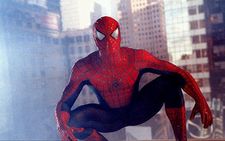
- Spider-Man
has been portrayed as an everyman hero, showing poor
judgment and being overwhelmed by the combined
responsibilities of his personal life and mission as a
superhero.
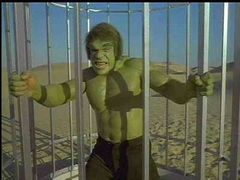
- The
Incredible Hulk is usually defined as a superhero, but
he has little self-control and his actions have often either
inadvertently or deliberately caused great destruction. As a
result, he has been hunted by the military and other
superheroes.
- Some superheroes have been created and employed by
national governments to serve their interests and defend the
nation. Examples include Captain America, who was outfitted
by and worked for the United
States Army during World War
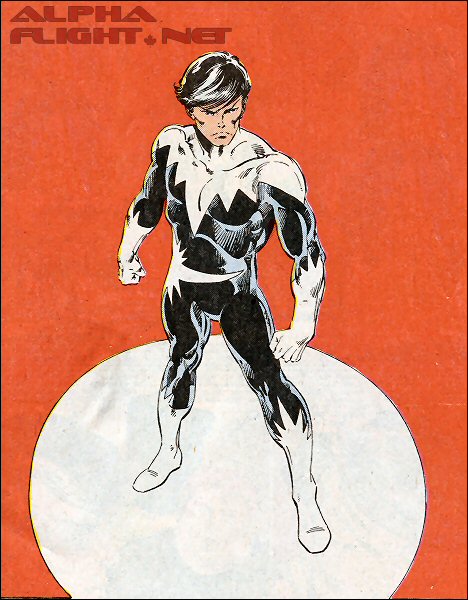
II, and Alpha
Flight, a superhero team formed by the Canadian
government.
- Spawn,
The
Demon and Ghost
Rider are actual demons, who
find themselves manipulated by circumstance to be allies for
the forces of good. Hellboy, on
the other hand, is a demon who is heroic on his own accord.
History of superheroes in comic books
Predecessors
The origins of superheroes can be found in several prior
forms of fiction. Many share traits with protagonists
of later Victorian
literature, such as The
Scarlet Pimpernel and Sherlock
Holmes. The dime novel
stories of Zorro and Tarzan also
influenced superheroes. Pulp
magazine crime fighters, such as Doc Savage,
The Shadow
and The Spider
and comic
strip characters, such as Dick Tracy
and The
Phantom, were probably the most direct influences.
By modern standards, characters like Doc Savage and The
Phantom could well be considered superheroes in their own
right, but the first appearance of Superman is
considered the point at which the superhero genre truly
began.
Golden Age
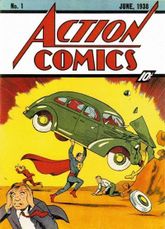
In 1938, Jerry
Siegel and Joe
Shuster introduced Superman, who
possessed many of the characteristics that have come to define
the superhero including a secret
identity, superhuman powers and a colorful costume
including a symbol and cape. His name is also the source of
the term "superhero."
DC Comics
(which published under the names National and All-American at
the time) received an overwhelming response to Superman and,
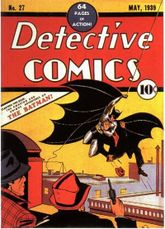
in the months that followed, introduced such superheroes as Batman and his
sidekick Robin,
The Flash,
Hawkman, Green
Lantern, Aquaman, and
Wonder
Woman. The first team of superheroes was DC's Justice
Society of America, featuring most of the aforementioned
characters.
Although DC dominated the superhero market at this time,
companies large and small created hundreds of superheroes. Marvel
Comics’ the Human
Torch and Sub-Mariner,
Quality
Comics’ Plastic
Man and Will
Eisner's The Spirit
(featured in a newspaper
insert) were also hits. The era's most popular superhero,
however, was Fawcett
Comics' Captain
Marvel, who outsold Superman during the 1940s.
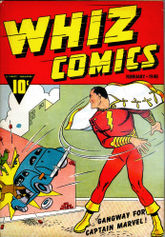
Whiz Comics #2, the first appearance of
Captain Marvel. Art by
C.C.
Beck..
During World War
II, superheroes grew in popularity, surviving paper
rationing and the loss of many writers and illustrators to
service in the armed forces. The need for simple tales of good
triumphing over evil may explain the wartime popularity of
superheroes. Publishers responded with stories in which
superheroes battled the Axis
Powers and the introduction of patriotically themed
superheroes, most notably Marvel's Captain
America.
After the war, superheroes lost popularity. Part of the
reason was that the genre had become highly formulaic and the
reading public began to tire of it. This led to the rise of
other genres, especially horror
and crime.
The lurid nature of this material sparked a moral crusade that
blamed comic books for juvenile
delinquency. The movement was spearheaded by psychiatrist
Fredric
Wertham, who argued, among other things, that "deviant"
sexual undertones ran rampant in superhero comics. In
response, the comic book industry adopted the stringent Comics
Code. By the mid-1950s, only
Superman, Batman and Wonder Woman retained a sliver of their
prior popularity, despite the fact that a efforts toward
complete inoffensiveness made their stories absurd by modern
standards. This ended what historians have called the Golden
Age of comic books.
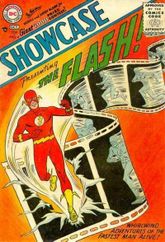
Showcase #4, first appearance of the
Silver Age Flash. Art by
Joe
Kubert.
Silver Age
In the 1950s, DC Comics,
under the editorship of Julius
Schwartz, recreated many popular 1940s heroes,
launching the “Silver
Age of comic books.” The Flash,
Green
Lantern, Hawkman and
several others were revived with new origin stories. While
past superheroes resembled myths and legends
in their origins and abilities, these heroes were inspired by
contemporary science
fiction. In 1960, DC banded
its most popular heroes together in the Justice
League of America, which became a sales phenomenon.
Empowered by the return of the superhero at DC, Marvel
Comics editor/writer Stan Lee and
the artists/co-writers Jack Kirby
and Steve
Ditko launched a new line of superhero comic books,
beginning with The
Fantastic Four in 1961. These
comics continued DC’s emphasis on science fiction concepts (radiation
was a common source of superpowers) but greater emphasized
personal conflict and character development. This led to many
superheroes that differed greatly from their predecessors with
more dramatic potential. Some examples:
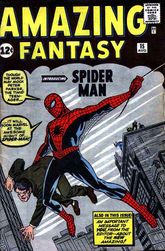
Amazing Fantasy #15, the first
appearance of Spider-Man. Art by
Jack
Kirby.
- The
Thing, a member of The Fantastic Four, was a super
strong, but monstrous creature with rock-like skin, whose
appearance filled him with self-pity.
- Spider-Man
was a teenager who struggled to earn money and maintain his
social life in addition to his costumed exploits.
- The
Incredible Hulk shared a Jekyll/Hyde-like
relationship with his alter ego and was driven by rage.
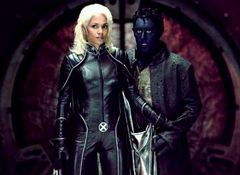
- The X-Men were
"mutants"
who gained their powers through genetic
mutation and who were hated and feared by the society
they sought to protect.
By the early 1970s, the
superhero genre had not just returned to mainstream American
comic books; it once again dominated them. Westerns,
romance,
horror,
war
and crime
comics had all but disappeared. This was due to the Comics
Code Authority, which completely banned the grittier
genres and wiped out many small publishers and to television,
which drew away much of the audience for light entertainment.
Still, comic books could produce outlandish, action/adventure
stories more easily than television and film (which required
expensive special effects for such genres), making the
superhero genre a natural choice. In the coming decades,
non-superhero comic book series would occasionally rise to
popularity but superheroes and comic books would be forever
interlined to the American public.
"Deconstruction" of the superhero
In the 1970s, DC returned
Batman to his
roots as a dubious vigilante and Marvel
introduced several popular anti-heroes
including The
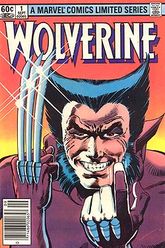
Punisher, Wolverine
and writer/artist Frank
Miller's darker version of Daredevil.
These characters were deeply troubled from within. Batman, The
Punisher and Daredevil were driven by the crime-related deaths
of family members and were continually exposed to slum life.
The X-Men’s
Wolverine, on the other hand, was a mysterious character who
was at odds with his own savage nature.
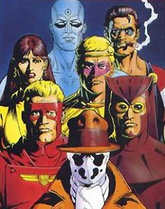
The dysfunctional superheroes of
Watchmen. Art by
Dave
Gibbons.
The trend was taken to a new extreme in the successful 1986
mini-series
Watchmen
by writer Alan Moore
and artist Dave
Gibbons, which was published by DC, but took place outside
the "DC
Universe" with new characters. The superheroes of
Watchmen were emotionally unsatisfied, psychologically
withdrawn and even sociopathic.
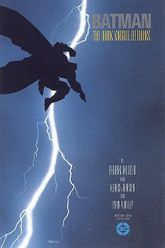
The Dark Knight Returns #1, which
redefined Batman. Art by
Frank
Miller.
Another story, The
Dark Knight Returns (1985-1986)
continued Batman’s renovation. The mini-series, written and
illustrated by Frank Miller, featured a future Batman
returning from retirement. The series portrayed the hero as a
madman on a brutal quest to mold society to his will.
Some critics believe that this trend is tied to the
cynicism of the 1980s, when the
idea of a person selflessly using his extraordinary abilities
on a quest for good was no longer believable, but a person
with a deep psychological impulse to destroy criminals was.
Regardless, both series were acclaimed for their artistic
ambitiousness and psychological depth and led to numerous
imitations.
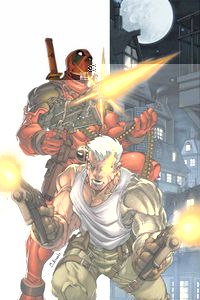
The gun-toting Cable, perhaps the archetypical
1990s anti-hero. Art by
Rob
Liefeld
Struggles of the 1990s
By the early 1990s,
anti-heroes had become the rule rather than the exception. Jim Lee, Rob
Liefeld and Todd
McFarlane, all popular Marvel Illustrators, created or
co-created the X-Men’s Bishop,
X-Force’s Cable,
and the Spider-Man
adversary Venom,
respectively. Grim, ruthless and militaristic, these
characters became some of the most popular new characters of
the 1990s.
In 1992, Lee,
Liefeld and McFarlane left Marvel and founded Image
Comics (along with three other Marvel illustrators), which
became a haven for creator-owned characters and the biggest
challenger ever to Marvel and DC's 30 years of co-dominance.
Image heroes, such as Lee’s WildC.A.Ts
and Gen 13,
Leifeld’s Youngblood
and McFarlane’s Spawn
were wildly popular but, like the artists’ Marvel-owned
creations, were criticized as over-muscled, excessively
violent and lacking in unique personality. A boom in the comic
book industry lead to a glut of new titles, from companies
large and small, and many followed the trend of gritty
anti-heroes.
Many comic book fans complained that the new wave of
anti-heroes lacked the literary and artistic sophistication of
Watchmen and The Dark Knight Returns. In 1990s, a
counter-trend occurred where notable talents like Kurt
Busiek and Alan Moore, himself, tried to reconstruct the
superhero genre with acclaimed titles like Busiek's Astro
City and Moore's Tom
Strong that combined artistic sophistication and
idealism into a superheroic version of retro-futurism.
To keep ahead of new competitors, Marvel and DC made
drastic changes to beloved characters. The hugely successful
"Death of
Superman" found the hero killed and resurrected, a new
villain broke Batman's back leading to a replacement Batman,
and a clone of Spider-Man vied with the original for the
title. While these stories drummed up publicity, often in the
mainstream media, fans complained that the essential elements
of the franchises had been diluted and they ultimately lost
interest.
By the beginning of the 2000s, a
majority of classic superheroes had returned to their roots.
However, the comic book industry’s most acclaimed writers
could make drastic changes to characters and gain general fan
approval, as was the case with Grant
Morrison’s New
X-Men series and Brian
Michael Bendis’s “Avengers
Disassembled” story arc.
As of 2005,
a decline in the comic book industry has cut the surplus of
anti-heroes but a revival of superhero films (see below) and a
rise in the sale of trade
paperbacks have kept the superhero genre healthy.
Growth in diversity
From their birth to the early 1960s,
superheroes largely conformed to the model of lead characters
in American popular fiction in the first half of the 20th
century. Hence, the typical superhero was a white, middle
to upper class, heterosexual, professional,
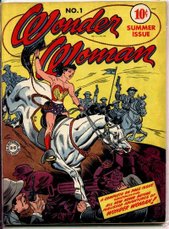
young-to-middle-aged man. An important exception was DC Comics’s
Wonder
Woman. Introduced in 1941, she was the
first female superhero and is arguably still the most
famous.
In the late 1950s and early
1960s, DC
debuted female versions of their most prominent male
superheroes, such as Supergirl,
Batgirl and Hawkgirl, as
well as female supporting
characters that were successful professionals.
Meanwhile, Marvel
introduced The
Fantastic Four's Invisible
Girl and the X-Men's Marvel
Girl, but these characters were physically weak and were
portrayed primarily as romantic interests of their teammates.
The 1970s saw these
characters become more confident and assertive and the launch
of several series starring female heroes, including Spider-Woman
and Ms.
Marvel. Initially, some characters were preachy
radical feminist stereotypes, like Ms. Marvel and DC's Power Girl,
until writers grew more accustomed with society's changing
attitudes.
By the late 1960s and early
1970s,
superheroes of other racial groups began to appear in Marvel
Comics. In 1966, the company
introduced the Black
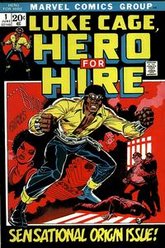
Panther, the first serious black superhero. In 1972,
Luke Cage,
an African-American
"hero-for-hire" became the first black superhero to star in
his own series and in 1974 Shang
Chi, a martial
arts hero, became the first Asian. Comic
book companies were in the early stages of cultural expansion
and many of these characters played to specific stereotypes;
Cage often employed lingo similar to that of blaxploitation
films and Asians were often portrayed as master martial
artists. Subsequent minority heroes, such as DC's Cyborg,
would lack the patronizing nature of these characters, as the
comics industry became more mature and diverse.
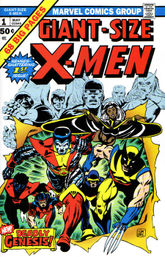
Giant-Size X-Men #1, which introduced
the first multi-cultural superhero team. Art by
Dave
Cockrum.
In 1975, Marvel
revived the X-Men, introducing a new team with members culled
from several different nations, including the German Nightcrawler,
the Russian Colossus,
the Canadian Wolverine
and the Kenyan Storm
(the first black, female superhero). The X-Men, which became
comic books’ most successful franchise in the coming decade,
continued to have a radically diverse roster and an
underlining message of tolerance and diversity.
Ethnic diversity would be an important part of subsequent
X-Men-related groups, as well as series that attempted to
mimic the X-Men’s success, such as DC’s Legion
of Superheroes and Teen
Titans.
In 1992, Marvel
braved a fair amount of controversy by revealing that Northstar, a
member of Alpha
Flight was homosexual
after years of implication. Although some secondary characters
in Watchmen
were gay, Northstar was the first gay superhero to have a
permanent presence in a continuing, mainstream series. In the
late 1990s and early
2000s, a few
other semi-prominent gay superheroes emerged, such as Gen13's Rainmaker,
The New
Mutants’ Karma
and The Authority's gay couple Apollo
and Midnighter.
In 1993, Milestone
Comics, an African-American-owned imprint of DC,
introduced a line of superheroes that included characters of
many racial and ethnic minorities, including several black
headliners. Although the comics survived for only four years,
they introduced Static,
a character adapted into the popular Cartoon
Network series Static
Shock.
Treatment in other media
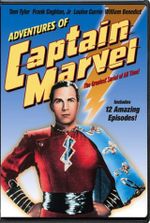
Movie poster for
The Adventures of Captain
Marvel
Film
Almost immediately after superheroes rose to prominence in
comic books, they were adapted into Saturday movie serials aimed
at children, starting with 1941's The
Adventures of Captain Marvel, which has been hailed as
the best example of the film format. Serials featuring The
Phantom, Batman, Superman and
Captain
America followed. These films were successful despite
their limited budgets, primitive special effects and silly
plotlines and dialogue.
In the coming decades, the decline of Saturday serials and
turmoil in the comic book industry put an end to superhero
motion pictures, an exception being 1966's Batman,
an outgrowth of the television series.
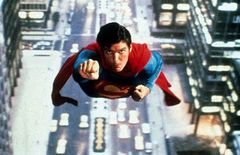
Christopher Reeve in
Superman
1978's Superman,
directed by Richard
Donner, is considered the first, and often the best,
modern superhero film. Almost a biopic of the
character instead of an action movie, the film won praise for
its state-of-the-art special
effects, Christopher
Reeve's sincere performance as Superman, and John
Williams's majestic and often imitated film score.
Superman and 1980s’ Superman
II were extraordinary success but subsequent
installments became increasingly less lucrative and critically
respected.
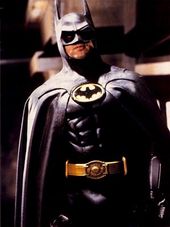
The 1989 film Batman,
directed by Tim Burton,
was the first attempt to create a superhero film with the
darker mood of recent comic books. Fantastic set designs and
acclaimed performances from Michael
Keaton as Batman and Jack
Nicholson as The
Joker made the film a model for many later superhero
movies. The Batman series continued throughout the 1990s, grossing
millions and drawing several star actors, until the fourth
film Batman
and Robin (1997) became a
critical and commercial failure. This film, along with an
unsuccessful movie based Image
Comics' Spawn,
made movie studios nervous about superhero movies.
Nonetheless, several movies based on Marvel characters
began production in the late 1990s and early
2000s. The
company had a minor success with 1998's Blade,
but 2000's
blockbuster X-Men
opened the door once again to highly successful superhero
movies and 2002's Spider-Man
broke the record for money grossed in a film's opening five
days thanks in part to Tobey
Maguire's acclaimed performance in the title role.
X-Men and Spider-Man led to a widespread
revival, which included 2003's Daredevil,
Hulk
and X2: X-Men
United; 2004's Punisher,
Hellboy
and Spider-Man
2; and 2005’s Batman
Begins (unrelated to the previous Batman films) and
Fantastic
Four, which met with varying degrees of critical and
commercial success.
There were also original films that took unusual looks at
the superhero genre. 2000’s Unbreakable
is a dark tale about a man who learns from a mysterious comic
book dealer that he is destined to become a modern day
superhero. Pixar's
digitally-animated The
Incredibles (2004) combined a more comedic, but
affectionate, approach with commentary on the superhero genre
and its history.
As of 2005,
many superhero films are hotly anticipated, especially Superman
Returns, a reboot of the
Superman franchise. Virtually every successful Marvel
franchise is slated to become a film and sequels to several
recent superhero films are being planned.
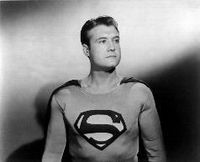
George Reeves as Superman
Live-Action television series
While animated series found immediate success, live limited
budgets and goofy writing hampered action series. The 1950s The
Adventures of Superman series starring George
Reeves - an extension of the popular movie serials -
featured very limited and unconvincing special effects but was
hugely popular.
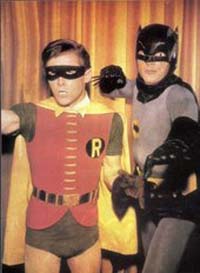
Burt Ward as Robin and Adam West in the 1960s'
Batman
The live action Batman
series of the late 1960s, starring
Adam West
and Burt Ward,
made playful use of many of the conventions of superhero
comics, including colorful costumes, visual sound effects,
implausible escapes, and heavily expository dialog. The series
helped sell color televisions and introduced the characters to
millions of viewers. It reflected and reinforced the popular
perception of superheroes as childish entertainment.
Batman led to imitators like Captain
Nice and Mr.
Terrific but only The Green
Hornet starring Van
Williams as the Hornet and a young Bruce Lee as
his sidekick Kato
approached the popularity of Batman.
By the late 1970s,
superhero-ish series, such as The
Six Million Dollar Man and its spin-off,
The
Bionic Woman, found success. This led to series which
were explicitly superhero shows such as Wonder
Woman starring Lynda
Carter, which, like the previous decades’ Batman
was a huge hit and continues to be a cult
classic despite an overhanging campiness. On the other
hand, the first prime time
live action (if short lived) television adaptation of
Spider-Man was popular, but fans complained the
producers failed to adequately emulate the book's action or
spirit. In the end, both of these adaptations would fall
victim to CBS
TV's desire to avoid being identified as "The superhero
network."
The other major superhero series of this era, The
Incredible Hulk starring Bill Bixby
as David Banner and Lou
Ferrigno as the Hulk, took a more thoughtful and dramatic
approach. The show focused on Banner’s nomadic lifestyle and
the curse that the Hulk had placed upon him. The series was a
ratings success, survived the TV superhero purge of the time
and has proven to be the most durable of this period.
Meanwhile, superhero shows aimed at children, such as The
Shazam!/Isis Hour and Electra
Woman and Dyna Girl prospered. In addition, the PBS
educational series, The
Electric Company, also prominently featured
Spider-Man stories, as well as its own creation,
Letterman, in its premise.
The 1980s saw the
launch of various live-action superhero series that did not
have their origins in comic book lore, but only The
Greatest American Hero, a series with a humorous yet
respectful tone about a superhero who could barely control his
powers, lasted for more than a few episodes.
The cover of the third season of
Smallville on
DVD.
The 1990s saw a
resurgence in superhero series, beginning with the short lived
live adaptation of The
Flash which had the misfortune of being scheduled
against the television classics, The
Simpsons and The Cosby
Show. In 1993, the ABC
Network had a success with Lois and
Clark, which reformatted the Superman mythos as a
romantic drama. This led to several non-traditional approaches
to superheroes in live action shows aimed at older audiences.
The most successful were Buffy
the Vampire Slayer, featuring a dyed-in-the-wool
idealist superhero who exists within a consciously humorous
take on the horror
genre, and Smallville,
another Superman reincarnation, which portrayed the hero’s
early years in a teen
drama format. Other recent TV superhero or superhero-ish
series enjoying varying degrees of success include: Angel,
Alias,
Dark
Angel and Mutant
X.
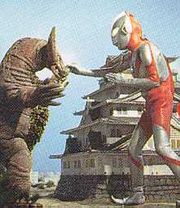
A scene from an episode of
Ultraman
Tokusatsu superheroes
In the late 1960s and early
1970s, shows
such as Ultraman,
Spectreman
Kamen
Rider defined the Japanese tokusatsu
style of action/science
fiction/superhero shows. These series rivaled the American
model in campiness but differed in that the superheroes could
often grow or transform, fought monsters and robots as often
as traditional supervillains
and the shows were more violent, albeit in a stylized fashion.
These shows found a wide audience in Japan and many other
parts of the world but gained only a sizable cult
following in the U.S.
In 1993 Mighty
Morphin Power Rangers, based on Japan’s Super
Sentai, became the first adaptation of a tokusatsu
show to become a widespread hit in the U.S.
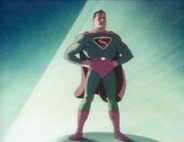
This image of Superman appeared at the
beginning of each of the Fleischer cartoons.
Animation
In late 1941, Superman
became the first superhero to be depicted in animation,
The Superman
series of groundbreaking theatrical cartoons was produced by
Fleischer/Famous
Studios from 1941 to 1943
and featured the famous "It's a bird, it's a plane"
introduction.
With the rise of television
in the 1960s,
superheroes have found success in animated television series
geared towards children, including Filmation's
Superman-Batman
Adventure Hour and Grantray-Lawrence
Animation's Spider-Man,
featuring the "does whatever a spider can" theme song.
In the 1970s, Japanese
anime strove to
emulate American superhero cartoons with their own creations.
The most successful was Kagaku
ninja tai Gatchaman (Science Ninja Team
Gatchaman) which became a television classic that created
a template that many other anime series followed.
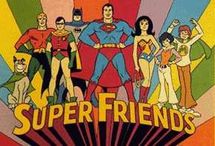
A frame from the opening sequence of
Super
Friends
In the 1970s and 1980s American
superhero animated series were constrained by the broadcasting
restrictions that activist groups like Action
for Children's Television lobbied for. The most popular
series in this period, Super
Friends, an adaptation of DC's Justice
League of America, was designed to be as nonviolent
and inoffensive as possible. The Plastic
Man Comedy/Adventure Show and Spider-Man and His
Amazing Friends were similarly tame. Kagaku ninja tai
Gatchaman aired in North
America as the Battle
of the Planets but it was so severely edited for
violence that plots were incoherent although it still won many
fans for its distinctive take on the genre.
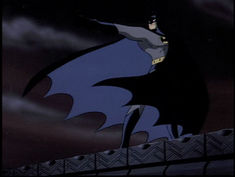
A scene from
Batman: The Animated
Series
Starting with Batman:
The Animated Series, which debuted on the Fox
Network in 1992, superhero
animated series gained a new maturity and respect for the comic books
on which they were based. This continued with Fox's X-Men,
and Spider-Man
and the original series Gargoyles,
which, like Batman were geared towards older audiences
but accessible to kids.
The widely successful Batman: the Animated Series
also had a significant influence on American animation. The
show featured simple graphics but lavish animation, a style
that was replicated in the sequels Batman:
Gotham Knights and Batman
Beyond and the spinoffs, Static
Shock and Superman:
The Animated Series and Cartoon
Network’s successful adaptations of DC's Justice
League and Teen
Titans.
Animal superheroes
In addition to the human superheroes found in comic
books, animated superhero series have often featured
comedic anthropomorphic
animal superheroes. These series combine two timeless
niches in children’s television: superheroes and funny
animals. The first such series was the Superman-inspired Mighty
Mouse, which was the flagship series of the Terrytoons
company in the 1940s. Underdog, ThunderCats
and Biker
Mice from Mars are popular examples from later
decades.
Radio
In the late 1930s and
throughout the 1940s, Superman
was one of the most popular radio serials in
the United
States. Along with, Green
Hornet, the series helped popularize superheroes
during their earliest years. By the early 1950s, the rise
of television
ended radio serials, including Superman, Green
Hornet and their imitators.
Prose
Popular superheroes have occasionally been adapted into
prose fiction, starting with the 1942 novel Superman
by George
Lowther. Elliot S!
Maggin also wrote two popular Superman novels, Last
Son of Krypton and Miracle
Monday, in the 1970s.
Juvenile novels featuring Batman, Spider-Man,
the X-Men, and the
Justice
League, have also been published from time to time, often
marketed in association with popular TV series.
George
R.R. Martin’s Wild Cards
novels, launched in 1987, were a
non-comic book-based science
fiction series that dealt with super-powered heroes.
In the 1990s and 2000s, Marvel
and DC released novels based on important stories from their
comics, such as The
Death of Superman and the year-long Batman:
No Man’s Land.
Additional examples of original superhero prose can be
found in zines, including
both fanfic and
original content by amateur writers.
Computer Games
Superheroes have appeared very irregularly in the world of
computer games. One of the most successful recent games has
been Freedom
Force (2002) and its
sequel Freedom
Force vs. the Third Reich (2005). The games
have the tone of the Silver Age comics, and the
sets/characters resemble very highly the style of the 60's,
namely Jack Kirby's art. The mixture of Real Time Strategy and
Roleplaying elements give these games a distinct "old times"
superhero feeling.
 The
SuperHeroes Background Page!
The
SuperHeroes Background Page!