| Isb�skena
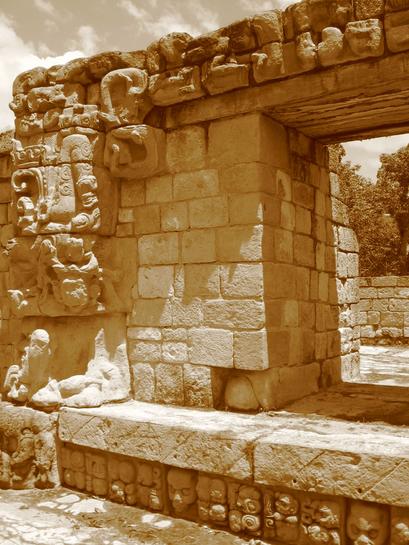
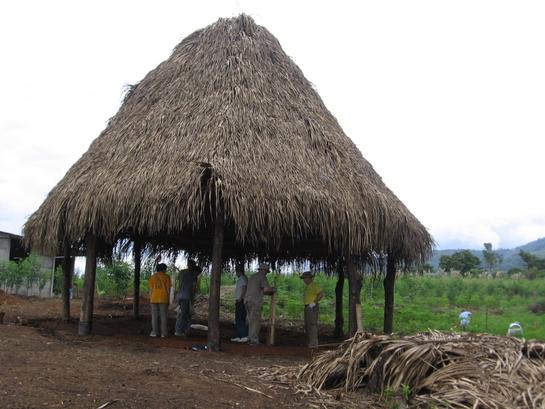
August / September 2006 Costa Rica Isb�skena. Those of you that have studied Spanish can probably tell that � isb�skena � is not Spanish; it is Bribri, the native language of the indigenous Bribri people whose territory is in the south of Costa Rica. The Bribri are one of eight indigenous peoples in Costa Rica, along with the Huetar, Brunka, Chorotega, Cabecar, Teribe, Maleku, and Ngobe. For those of you stumped by the word �indigenous� it may help to think of it as a synonym for the term �native peoples� or the various groups we refer to in the United States as �Native Americans� or, perhaps less respectfully, �Indians.� They are the people who originally inhabited the land, long before the Vikings set sail or Christopher Columbus �discovered America.� Many of these indigenous groups have been able to retain their native language, while many others have lost theirs, along with many other parts of their culture, as they began to mix with people from other parts of the world. This information (plus the Portuguese, English and French speaking countries of the continent) sure throws a loop into the thought that everyone in Latin America speaks Spanish! On the contrary, Latin America is full of many distinct languages spoken by the many different indigenous groups in Costa Rica, Panama, Guatemala, Mexico, and probably almost every other country on the American continents. I recently spent some time at the ancient Mayan ruins of Copan while vacationing in Honduras. It was fascinating to walk on the rock stairs, inspect the hieroglyphic writings, observe the stone statues, and envision these ancient peoples living in this place. I was impressed by the work it must have taken to build their large pyramids and temples, the countless hours they passed carving intricate designs into each stone, and the creativity they exemplified in covering their structures in a red paint. We do not know it happened that these ancient ruins of Copan became desolate and uninhabited, though some scientists speculate that the Mayans were unable to find adequate food sources for the population so they dispersed and moved elsewhere to survive. Many other ancient indigenous groups had a different story of their demise; a story of violence, sickness and defeat against the Europeans who had arrived to these lands: Europeans who arrived as conquistadors to savage the land and take away its riches or as colonels to settle the land and it make their own. The exploitation and oppression of the indigenous people has continued throughout history. Perhaps now much of the violence against the indigenous in many countries is simply that they are forgotten. My home town of Decorah, county of Winneshiek, and state of Iowa all have indigenous names, yet I know little to nothing about the indigenous groups that inhabited this area long ago. How many of us can even name the Native American groups that lived or live in our own state? The forgotteness and plight of the indigenous in Costa Rica, some 65,000 people, is no better. They face extreme racism and discrimination and are one of the poorest populations of the country. Those living close to the capitol of San Jos� (such as the Huetar living in Quitirrisi) experience a better economic situation due the availability of jobs in the city, but have also experienced more disintegration of their culture, losing even the words of their native language. Groups in more isolated locations of Talamanca and Cabagra experience more profound poverty, but have been able to maintain their language, at least among some individuals. Yet the indigenous are not alone in their struggle for rights, improved economic conditions, and rescue of their traditional culture. In Costa Rica, as in many Central American countries, citizens carry a national identity card called a �c�dula.� This ID card, in additional to demonstrating a belonging to a certain nation, is an integral part of obtaining such privileges as opening a bank account, getting a job, and an endless list of others. Before 1992, indigenous people in Costa Rica were not granted cedulas, and were, therefore, not considered citizens. Prominent in the victorious fight against this violation of human rights was the Iglesia Luterana Costarricense. The Iglesia Luterana Costarricense continues this role today. They are unique in their strong defense of indigenous rights and their support of the indigenous in the endless land struggles. Despite that the government designated 24 areas of land in Costa Rica as indigenous territories, much of that land, up to 70% or 80% in some areas, has been and continues to be invaded by non-indigenous. The legal program of the ILCO provides education, organizational and leadership training so that the communities can fight for their own land rights. The ILCO indigenous program provides free housing and economic support for bus fares so that indigenous community leaders can come and make denouncements in the capitol and use the justice system to fight for their legal rights. Yet the ILCO does not stop only at legal support, they also support economic endeavors through assistance in organic agriculture, disaster relief, artesian training, and build up the importance of their traditional culture. In August I accompanied a delegation from Olympia to the Bribri community of Pueblo Nuevo, Cabagra in the south of Costa Rica. In addition to a basket-making presentation, Bribri language lesson, playing with the kids, and a hike to the swimming hole, we spent time working on the new community building. This building is being constructed by support from the ILCO. It will be used for church worship services, but, like most other ILCO �churches�, it will also host a variety of other community activities. What is unique about this structure, however, is that it is a traditional indigenous structure. It has circular form and a thatched roof. The community in Cabagra has not had such a traditional structure in decades and they are excited to have a place to strengthen their cultural traditions. For me, this structure is a symbol of the work the ILCO is doing. Christian churches and indigenous peoples are a tricky combination. Traditionally, the role has been one of the church coming in and imposing their religion upon the indigenous people, calling their traditional spiritually �devil worship.� The church has been one of the key players in the disappearance and devaluation of indigenous culture. The ILCO, however, follows a different model. The ILCO practices accompaniment and respects the autonomy of the indigenous peoples. It offers legal support and social aid where needed, but only provides a pastor and faith community activities when the indigenous community requests it. While many communities do ask for pastoral presence after time, many others do not. The ILCO sees its role as church present in serving others in all forms, spiritually or not, and its goal is to be church, not to grow the church. In this perspective there is respect and freedom and the ILCO is liberated to explore ways in which it can encourage the indigenous groups to recapture and esteem their culture, without having to worry about counting the number of people in the pews, or rather, logs. In closing, I would like to add something that I read in the newspaper here in Costa Rica that shows the wisdom of indigenous people and how much we have to learn. It was an article about an interview with Rigoberta Menchu, an indigenous woman from Guatemala who won the Nobel Peace Prize for her defense of the indigenous during the violent civil war. The report asked her why her cause was among the indigenous and if the future of Latin America is in these groups. She stated, �The indigenous peoples fortunately have demonstrated as much in times of universal crisis as in times of success that we have maintained our equilibrium with the environment. Today the tremendous natural richness of our countries is concentrated in zones that our peoples protected. If it hadn�t been for them, these lands and species would have been exterminated.� Perhaps in this time of global warming and deforestation we now, more than ever, have something to learn from these forgotten cultures. Let�s celebrate that the ILCO has already begun. |
 |
 |