| A Pastor in Rubber Boots
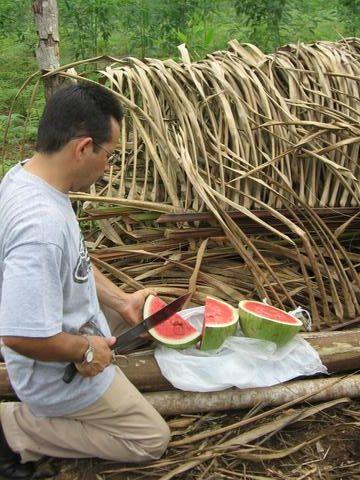
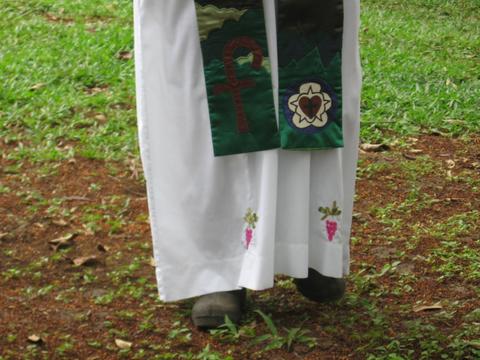
October 2006 Costa Rica When most of us think of a pastor, we envision their day consisting of things such as meetings, reading and writing in preparation for Bible studies, Sunday sermons, and catechism class, making hospital and home visits to shut-ins, meetings with the deacons, and so on. Not being a pastor myself, I am sure I am missing many of the multitudes of tasks that consume their day, but I imagine their day still differs quite a bit from the day of a pastor at the Costa Rican Lutheran Church. I invite you to join along with me, settle into the knee-high rubber boots of a pastor, as I walk you through a day I experienced with Pastor Gilberto on a trip to the rural community of Cabagra in the south of the community. Traveling in the evening after a long day of travel, you are glad that you remembered to pack your rubber boots, since you noticed the rain starting to fall; it is the rainy season, afterall. You know that even if the church�s double traction vehicle you are driving manages to bring you all of the way to your destination of Pueblo Nuevo, Cabagra, in your walk from the car to the house of Dona Piedades you are likely to stick your foot in inches of mud and water, since in this community there is no electricity to illuminate your path. Plus, a little extra rubber around the ankle wouldn�t hurt in case you get surprised by a venomous fer-de-lance snake on your way. Early in the morning (after drinking a graciously gifted cup of cold sugarless coffee from a family that has no sugar to sweeten its bitter taste) you travel 45 minutes back towards town to pick up Jefrey, an indigenous man from Terraba who is working in the community of Cabagra, most notably in the area of organic agriculture. Arriving back with Jefrey, you strap on your machete and, with other local men, go to survey the future lot for the new community house. As you go, you chop away the weeds on the new lot to allow the newly planted yucca plants room to grow. You survey the lot, discuss the plans for the building of the new community building, and then head back up to the shady spot under some trees to start children�s group so that you can finish that activity and hold a church service all before the afternoon rain begins. And then once that is finished, it is back in the car for the 7-hr return trip to San Jos�. This may not be a typical day for all pastors here, but it is an example of the myriad of challenges they encounter. Pastors here at the ILCO find themselves, in addition to preparing for weekly worship services (often in multiple communities) and children�s circles, demonstrating drawing and painting techniques, tutoring students, offering English or computer classes, arranging transportation for a few youth to attend an anti-drug abuse workshop, running to meetings at the ILCO offices, gathering price quotes for church projects, attending conferences on globalization, immigration laws and domestic violence prevention, and many other activities. Working in a poor country with little resources, pastors at the ILCO are forced to be creative in how to fulfill the ever-growing demands necessitated by working in impoverished, marginalized communities on an extremely tiny budget. As are many pastors of the ELCA, they are often stretched thin. Please keep these pastors in your prayers as they continue their important work. |
 |
 |