| The ROMAN LEGIONS, THEIR STRUCTURE and the LEGENDARY LEGIONNAIRES |
 |
 |
 |
 |
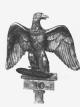
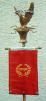
| The Roman Legions were the best fighting forces of all of Europe, Africa, Asia minor and the middle East for more than 6 centuries. The Standard for the Romans was the Eagle, (this standard might have only come out after Caesar for he was usually represented as an Eagle). Instead of saying "enlisting to the army" They would say "enlisting to the Eagles." Even though they had their banner, there was also a banner for every legion. A legion would fight by its own standard. Some Legions might have a standard such as of a wolf or a bear. |

|
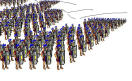
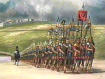
| Roman legions were well organized and a great fighting force. The most important factor was that they were divided in groups, and a couple of groups would form a bigger group and so on. 10 men = 1 Conterburnium 10 Conterburnium = 1 century 2 centuries = 1 maniple 6 centuries or 3 maniples = 1cohort 10 cohorts = 1 legion 2 or more legions = an army |
| Roman Legions also had a number. For example during Julius Caesar's times the XX legion was the best Legion and the most loyal one to him. When enlisting, soldiers also had to be fit, be a citizen and be at least 5 foot 7"(Romans and people who lived in the Italian peninsula where quite shorter than Gauls or Celts.) |
| The Roman army was also divided in Ranks. First in Rank was the Legate. He was the one who comanded a Legion. He was helped by a Camp Prefect. Then came the six senior officers. These were called Tribunes. Usually the First and Second Cohorts of a Legion were the best, since they were a little bigger and had the Seasoned Veterans. The first Cohort was led by the Primus Pilus (first spear) and the Second Cohort was led by the Princeps Secundus. The other Cohorts were led by a Pilus Prior. A Primus Pilus was one of the best 28 soldiers of the Empire. Then came the Centurions who led a century. They had the option of choosing a Second in command to him. These were called the Optios. |
