
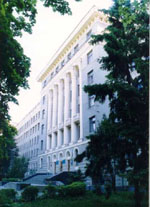
The Kharkov State Medical University is one of the oldest
higher educational establishments of Ukraine. It was
founded in 1805 as the Medical Faculty of the Kharkov
University. At present, over 600 teachers work at the
departments of this Medical University. Among them
there are 81 Doctors and 361 Candidates of Medical
Science, 29 members of academies and 5 winners of state
prizes. Since 1951, the University has been training
medical personnel for countries of the Eastern Europe,
China and Mongolia, and since 1961 it has been training
students from other countries of Asia, Africa and Latin
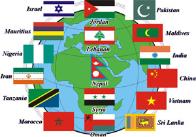
America. At present, there are about 900 foreign
students in the Kharkov State Medical University who
study at the Preparatory Department, Medical and
Stometological Faculties, undergo postgraduate and
clinical post-graduate (residency) courses as well as
professional probation at departments of the University
in stometology (dentistry), therapy, orthopaedics and
as well as other medical specialities. The University has trained over 2,000 specialists for 86 states of
Europe, Asia, Latin America, Middle East countries. Among them there are 3 Doctors and 70
Candidates of Medical Science, about 200 clinical post-graduates (residents).
The Diploma of the Kharkov State Medical University is prestigious and recognized in many countries
of the world. Among former graduates of the University there are ministers and members of
parliaments in various countries, outstanding scientists and famous specialists who founded their
own clinics abroad. Within the period of their studies the students undergo academic training in
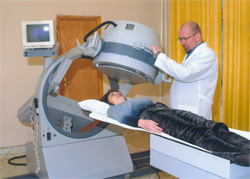
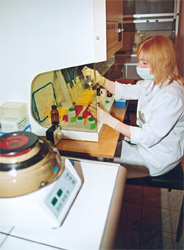
main medical specialities. They take part in examinations of patients, giving urgent aid, work at
X-ray rooms, clinical and biochemical laboratories. Particular attention is paid to clinical rounds of
patients, their management, filling in and arrangement of case histories with their subsequent
analysis. Clinical and theoretical training of the students is performed at 56 departments of the
University and the best clinics of Kharkov with use of modern medical diagnostic and therapeutical
equipment, computed provision of the academic process, a wide use of audio and video aids.
HISTORY:
Historically, Kharkov State Medical University was the first higher medical educational
institution in Ukraine.
* It was founded as the Medical Faculty of Kharkov University.
* In 1920, the Medical Faculty was united with the Women's Medical Institute, and Kharkov
Medical Academy was organized.
* In 1921, the Academy was renamed as Kharkov Medical Institute.
* In 1994, the Institute served as a base for establishing Kharkov State Medical University.
The Diploma of Kharkov State Medical University is prestigious and recognized in many
countries of the world. Since 1998, Kharkov State Medical University is a member of the
International Association of Universities (under the aegis of UNESCO).
Since 1951 the University has been training specialists for foreign countries of the Eastern
Europe, China, Mongolia, and since 1961 students from the countries of Asia, Africa, Latin
America have been studying here. Now, 900 foreign citizens study at KhSMU at the Medical
and Stomatological Faculties, at the clinical postgraduate course. More than 3,600 specialists
from 86 states of Europe, Asia, Africa, Latin America, Middle East have graduated from KhSMU
since 1951. Among them 3 Doctors and 70 Candidates of Medical Sciences, about 200
postgraduates. The languages of instruction for foreign students are Russian and English.
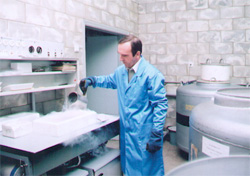
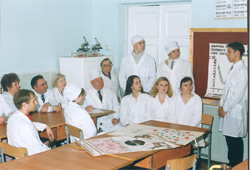
63 departments of KhSMU provided with all the necessary equipment are carrying out clinical
and theoretical training. The clinical departments of the University are based on 9 regional,
10 city, 4 departmental medical establishments. The education-research-production units
(ERPU) have been formed at the University:
* ERPU "Therapy" - the Department of Hospital Therapy and the Institute of Therapy of the
Academy of Medical Sciences of Ukraine;
* ERPU "Surgery" - the Department of Hospital Surgery and the Institute of General and Urgent
Surgery of the Academy of Medical Sciences of Ukraine;
* ERPU "Obstetrics and Gynaecology" - the Department of Obstetrics and Gynaecology No. 1
and the Institute of Problems of Cryobiology and Cryomedicine of the Academy of Medical
Sciences of Ukraine;
* ERPU "Medical Radiology" - the Department of Radiation Diagnosis and Radiation Therapy
and the Institute of Medical Radiology of the Academy of Medical Sciences of Ukraine.
* ERPU "Nephrology and Urology" - the Department of Urology and Nephrology and the
Regional Centre of Urology and Nephrology named after V.I. Shapovalov
* ERPU "Medical Genetics" - the Department of Medical Genetics and the Inter Regional Centre
of Clinical Genetics and Prenatal Diagnosis.
The organizational structure of researches at the university includes:
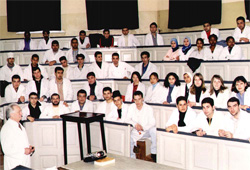
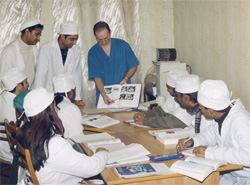
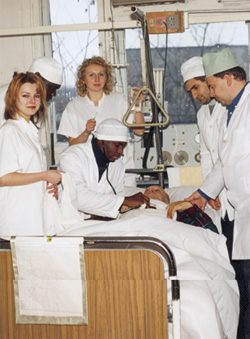
* the Central Research Laboratory;
* 20 clinics, whose total number of beds is 11,430;
* 60 laboratories;
plus such problem laboratories as:
* the Laboratory for Study of Atherosclerosis, Hypertensive Disease and Coronary Disease;
* the Laboratory for Birth Rate Control;
* Laboratory "Antibiotics and Other Biologically Active Substances of Natural Origin";
* the Laboratory for Eye Microsurgery; - the Laboratory for Haemosorption.
Students are able to use the enormous resources of the University. They have free access to
the Library, as well as full use of all the facilities provided by the University of Kharkiv.
The Library includes 6 departments, 3 subscriptions /educational, scientific and art/, 8
reading-rooms /for humanitarian studies, educational, scientific and 5 reading-rooms at
students" hostels/. The Library fund accounts 923,640 volumes of educational and
scientific literature. The number of subscribed periodicals is as follows: 257 journals and 49
newspapers.
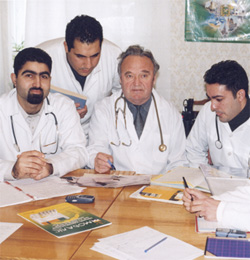
and bookshop provide books needed for work and studies.
The University has access to INTERNET. The network
enables the University students and staff to intensively use
database online for their research work and studies.
At the University, several museums function: - the Museum
of the History of the University,
* the Museum of Human Anatomy,
* the Museum of Pathological Anatomy,
* the Morphological Museum.
The museums comprise valuable collections, many of which
are as old as two hundred years. These museums contribute
to students' getting profound knowledge.
The main periodical journals:
* "Medicine Today and Tomorrow" (2 issues a year);
* "Medical Practice" (6 issues a year);
* "Experimental Clinical Medicine" (4 issues a year);
* "Ultrasonic Perinatal Diagnosis" (2 issues a year).
The training is provided in compliance with the general state syllabuses and curricula approved by the Ministry of Education
and Science and the Ministry of Health of Ukraine.
Speciality - "General Medicine".
For 6 years of training 13,474 hours out of them:
* humanitarian subjects 1,576 hours
* social-economic subjects 432 hours
* fundamental /general scientific/ subjects 2,180 hours
* professionally oriented subjects 6,098 hours
* elective courses 324 hours
* practical training 972 hours
* sub internship /in the 6-th year/ 1,892 hours
Speciality - "Stomatology".
For 5 years of training: 11,147 hours out of them:
* humanitarian subjects 1,026 hours
* social-economic subjects 486 hours
* fundamental /general scientific/ subjects 1,854 hours
professionally oriented subjects 6,701 hours out of them:
* stomatological type 3,734 hours
* clinical type 2,453 hours
* hygienic type 298 hours
* elective courses 216 hours
* practical training 1,080 hours
5) Faculties and Specialities:
At the University, the training is provided at the Medical Faculty within 6 years and 5 years at the Stomatological Faculty. In
the process of training a constant control of the current progress is conducted by means of estimating of students' knowledge on
each class.
At the end of each term the final control is provided by means of passing tests and examinations in subjects studied during this
term. At the University, a necessary infrastructure has been introduced for organization and medical provision of standardized
control of knowledge in subjects of the general scientific cycle fundamental sciences /Step 1/ after 3-rd year and subjects of the
cycle of professional and practical training at the 6-th year /Step 2/. It envisages a wide use of the test control over the current
and final levels, as well as selected pilot test. On completion of the training, state examinations are passed in main subjects:
Internal Diseases, Occupational Diseases and Infectious Diseases, Surgical Diseases with Pediatric Surgery, Obstetrics and
Gynaecology, Childhood Diseases with Childhood Infectious Diseases, Hygiene, Social Medicine, Organization and Economy of
Public Health. After successful passing of the state examinations graduates of KhSMU are awarded the qualification of Doctor,
the title the Doctor of Medicine and the Diploma of Specialist.
The Marking System Marks
* 5 excellent
* 4 good
* 3 satisfactory
* 2 unsatisfactory
Academic year
It begins:
* for students of the main faculties - on September 1;
* for clinical postgraduates-from September 1 to November 1.
Each academic year consists of two terms:
* term 1 - from September to January;
* term 2 - from February to July.
Courses
The training is given in the following specialities:
* General Medicine
* Stomatology Diplomaed graduates of higher medical educational institutions who wish to continue their postgraduate
training are given the right to undergo:
* a clinical postgraduate course (residency) lasting 2-4 years;
* a postgraduate course with an opportunity to defend a thesis competing for a scientific degree, the term of training is 3 years;
* a probation during 1-2 years.
The following Specialities are Available for Postgraduate Training
* Medicine of Urgent Conditions
* Therapy
* Dermatology and Venereology
* Infectious Diseases
* Neurology
* Pathological Anatomy
* Psychiatry
* Obstetrics and Gynaecology
* Anaesthesiology
* Traumatology and Orthopaedics
* Ophthalmology
* Urology
* Surgery
* Pediatrics
* Childhood Gynaecology
* Pediatric Infectious Diseases
* Pediatric Surgery
* Hygiene of Children and Teenagers
* General Hygiene
* Public Hygiene
* Occupational Hygiene
* Radiation Hygiene
* Hygiene of Nutrition
* Epidemiology
* Therapeutic Dentistry
* Pediatric Dentistry
* Orthopaedics
* Orthopaedic Dentistry
* Surgical Dentistry