treatment for acquired hemophilia A Acquired hemophilia A is caused by the presence of an inhibitor that destroys factor VIII when immune cells in the patient's blood encounter the factor.
If a person with acquired hemophilia is given an infusion of factor VIII, the inhibitor will attack the added factor VIII, and no beneficial effect on the patient's blood will be seen. In fact,
it is possible that inhibitor levels may rise as the immune system responds to the increased levels of factor VIII. Therefore, it is crucial that the doctor (or emergency personnel, if applicable) treating a person with acquired
hemophilia A knows the prior and present medical history of the patient to determine the best course of treatment for a given situation.
While there is no cure for acquired hemophilia A, there are several options available to treat acute bleeding and for long-term control of bleeding. To understand
how these different treatments work, it is helpful to understand how a blood clot forms (by following
the clotting cascade) and the basic workings of the immune system. I've tried to make this page as lay-friendly as possible, but immunology (study of the immune system) in
itself is very complicated. Any questions about the content on this page should be directed to your doctor, who will work with you to decide the appropriate
treatment plan for you.
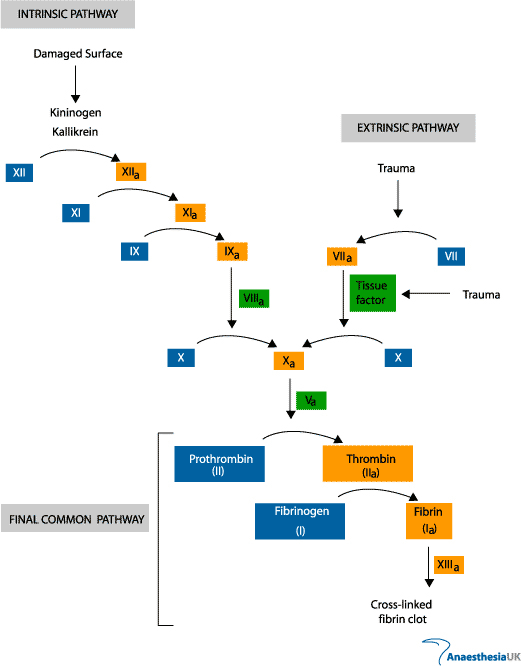
Above is a simplified diagram of the clotting cascade. Inactivated factors are numbered by Roman numeral and are in blue.
The activated forms of these factors are in orange (except in the cases of
VIII and V, which are green). There are two pathways to forming a blood clot: the intrinsic pathway and the extrinsic pathway.
The intrinsic pathway requires activated factor VIII (VIIIa, in green on the left). The extrinisic pathway requires activated factor VII (VIIa). In people with
acquired hemophilia A, VIIIa cannot be called to duty in the intrinsic pathway, because most of or all factor VIII has been destroyed by the inhibitor.
As previously noted, addition of factor VIII is of no real benefit to a person with acquired hemophilia A. Instead, a doctor is likely to make use
of the extrinsic pathway and administer recombinant factor VIIa (NovoSeven), a factor produced by genetic engineering. Compared to other options (such as blood transfusions from other people or intravenous immunoglobulin [see below]),
recombinant VIIa is relatively safe because no animal or human products are involved in its production. Possible side effects include bleeding problems, fever, high blood pressure, joint or muscle pain, and stiffness.
My attending hematologist noted that thrombosis was the most important adverse effect I should be aware of. However, in most situations as when I received factor VIIa, the patient is closely monitored by medical personnel to avoid this or any other adverse effects.
long-term control of bleeding
People with acquired hemophilia A, like people with other chronic illnesses, can lead relatively normal lives as long as they keep their condition in check. Routine
follow-up with the primary doctor and hematologist is important. But in cases of active disease, several possible treatment options are available:
High doses of intravenous (IV) corticosteroids (methylprednisolone). A corticosteroid is an immunosuppressive drug, which means it dampens
down the immune response in the body. Also, corticosteroids are similar to a natural hormone produced by your adrenal glands, so they are likely
to affect mood and activity level. Generally, corticosteroids are used for their anti-inflammatory properties, to treat such ailments as
arthritis and asthma. Possible side effects include headache, dizziness, trouble sleeping, restlessness, depression, anxiety, unusual moods, increased sweating,
increased hair growth, reddened face, acne, thinned skin, easy bruising, tiny purple skin spots, and irregular or absent menstrual periods. Oral forms are also available but take longer to have a systemic (all body) effect and may cause stomach problems.
Cyclophosphamide (Cytoxan) or other chemotherapy. Cyclophosphamide is commonly used to treat cancer, kidney disease, and autoimmune disease. In all cases,
cyclophosphamide interferes with the multiplication of bad cells, such as cancer cells of tumors or autoantibodies (such as factor VIII inhibitor) or autoantibody complexes in people with autoimmune
disease. Because of the systemic effect of chemotherapy, patients may find the side effects hard to deal with, such as loss of hair. The most common
and possible side effects include cough or hoarseness, fever, chills, lower back or side pain, missing menstrual periods, painful or difficult urination,
blood in urine, dizziness, confusion, agitation, fast heartbeat, joint pain, shortness of breath, swelling of feet or lower legs, unusual tiredness or weakness,
darkening of skin and fingernails, loss of appetite, nausea, or vomiting.
IV immunoglobulin (IVIG). IVIG is made from pooled blood and is a concentrate of immunoglobulin (antibodies in the blood).
IGIV works by boosting the body's natural response in patients with compromised immune systems (e.g., patients with HIV and premature babies) and increasing the number of platelets (a part of the blood that also assists
in blood clotting) in patients with idiopathic (of unknown cause) thrombocytopenic purpura (a medical
condition in which the immune system attacks and destroys platelets). In people with acquired hemophilia A, the hope is that the inhibitor will be grabbed out of the blood
and keep it from attacking factor VIII.
Possible side effects include, backache, headache, joint or muscle pain, general feeling of discomfort, leg cramps, and rash.
Blood transfusion. Blood is taken out of the patient's body and replaced by whole blood or a part of blood (like red blood cells) from a donor. ABO blood typing must be done to prevent
cross reaction of a patient's blood to the blood of the donor (this will occur if the blood types [A, B, O, AB] and/or the Rh factors [+/-] do not match).
Possible side effects include infection and reactions of the patient's immune system to the donor blood.
Plasmapheresis. Blood is taken out of the patient's body by a special machine that processes it to remove certain parts (such as autoantibodies [antibodies
that are directed towards normal parts of the immune system in people with autoimmune disorders]) and then put back into the body.
Possible side effects include a drop in blood pressure, feelings of faintness, dizziness, blurred vision, coldness, sweating, or abdominal cramps.
Rituximab (Rituxan). Rituximab is a man-made antibody used to treat non-Hodgkin's lymphoma (a type of cancer). The drug blocks the CD20 antigen found on the surface of B cells (precursors of
antibodies) and is known to deplete B cells when administered intravenously. In acquired hemophilia A, it is hoped that rituximab will grab factor VIII inhibitor (also
made from B cells) and prevent it from interacting and destroying factor VIII. Rituximab likely takes factor VIII inhibitor out of commission and marks it so the immune system will destroy it.
Unlike traditional chemotherapy, there are less side effects, and side effects will probably occur at the first administration. Possible side effects include
fever, chills, nausea, feeling of weakness, and headache.
the future of treatment Don't lose faith! New treatments and therapies are in the pipeline as we speak.
Some of the information contained on this page can be found at MedlinePlus.