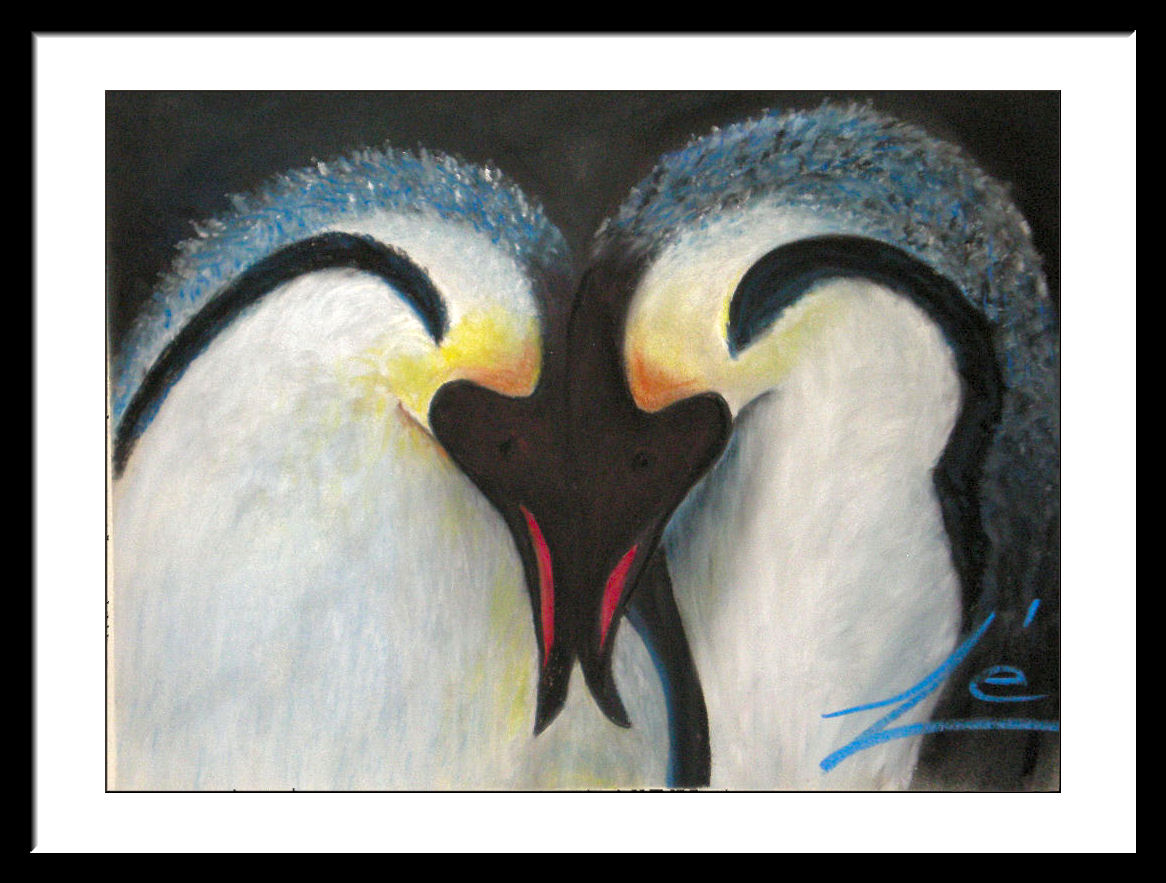
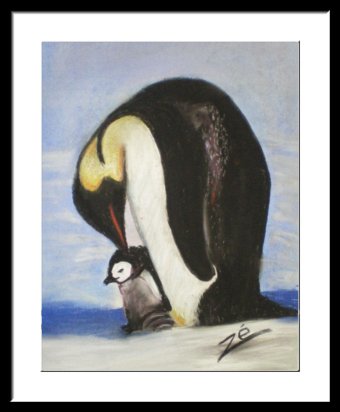
March of the Penguins, literally The Emperor's March
The film depicts the yearly journeys of the emperor penguins of Antarctica. In autumn, all the penguins of breeding age (five years old and over) leave the ocean, their normal habitat, to walk inland to their ancestral breeding grounds. There, the penguins participate in a courtship that, if successful, results in the hatching of a chick. For the chick to survive, both parents must make multiple arduous journeys between the ocean and the breeding grounds over the ensuing months.
The Emperor Penguins use a particular spot as their breeding ground because it is on pack ice that is solid year round, so that there is no danger of the ice becoming too soft to support the colony. It is also in a protected area, which shields the colony from winds that can reach 300 km/h. At the beginning of Antarctic summer, the breeding ground is only a few hundred meters away from the open water where the penguins can feed. However, by the end of summer, the breeding ground is over 100 km away from the nearest open water. In order to reach it, all the penguins of breeding age must walk this great distance, occasionally sliding on their bellies.
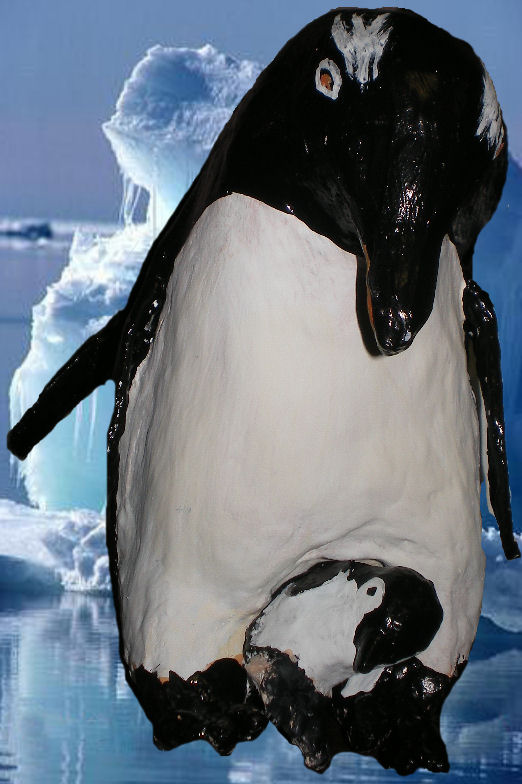
The penguins are monogamous within each breeding season - life-long bonding would cause problems as mortality rates are high in this harsh environment. The female lays a single egg, and the co-operation of the parents is needed if the chick is to survive. After the female lays the egg, she transfers it to the feet of the waiting male with a minimal exposure to the elements, as the intense cold will kill the developing embryo. The male tends to the egg when the female returns to the sea, now even further away, both in order to feed herself and to obtain extra food for feeding her chick when she returns. She has not eaten in two months and by the time she leaves the hatching area, she will have lost a third of her body weight.
For an additional two months, the males huddle together for warmth, and incubate their eggs. They endure temperatures approaching -62 �C (-80 �F), and their only source of water is snow that falls on the breeding ground. When the chicks hatch, the males have only a small meal to feed them, and if the female does not return, they must abandon their chick and return to the sea to feed themselves. By the time they return, they have lost half their weight and have not eaten for four months. The chicks are also at risk from predatory birds such as Skuas.
The mother penguins come back and feed their young, while the male penguins go all the way back to sea (70 miles) to feed themselves. This gives the mothers time to feed their young ones and sympathize with them. Unfortunately, the fierce storm arrives where most of the chicks perish either by misplacement (the winds blow the chicks away) or they cannot stand the cold.
The death of a chick is tragic, but it does allow the parents to return to the sea to feed for the rest of the breeding season. When a mother penguin loses its young in a fierce storm, it sometimes attempts to steal another mother's chick. At times, the young are abandoned by one parent, and they must rely on the return of the other parent, who can recognize the chick only from its unique call. Many parents die on the trip, killed by exhaustion or by predators (such as the Leopard Seal), dooming their chicks back at the breeding ground.
The parents must then tend to the chick for an additional four months, shuttling back and forth to the sea in order to provide food for their young. As spring progresses, the trip gets progressively easier, until finally the parents can leave the chicks to fend for themselves. |