| Saving the Odd Species |
| Saving the Odd Species. If the Slender Loris, a big-eyed, insect-eating primate in Sri Lanka, were to disappear, an entire branch on the evolutionary tree of life would snap off. To prevent the loss of the Slender Loris and scores of other species with few close relatives, the Zoological Society of London has launched a program to identify and assist the most Vulnerable of EARTH'S one-of-a-kind Creatures. Called EDGE, for Evolutionarily Distinct and Globally Endangered, the fund-raising project has put out a list of the Top 100 Mammals with unusual traits that are at risk of EXTINCTION. Over the next five years, EDGE hopes to initiate conservation plans for all 100, with similar programs to follow for amphibians and birds................Tom O'Neill |
| And the Losers Are........ |
 |
 |
 |
 |
 |
 |
 |
 |
 |
 |
| #1 Yangtze River Dolphin |
| Yangtze River Dohpin - Believed to be Extinct Humans have achieved a dubious first by killing off every member of a species of cetaceans, the group that includes whales, dolphins and porpoises. An intensive six-week hunt for the Yangtze River dolphin, or baiji, in late 2006, covering the complete historical range of the dolphin in the main Yangtze channel, "failed to find any evidence that the species survives," the researchers reported in Biology Letters. "We are forced to conclude that the baiji is now likely to be extinct," probably because fishermen caught them accidentally along with other species. Pollution and collisions with ships may also have contributed to the dolphin's extinction. This represents the first global extinction of a large vertebrate for over 50 years, only the fourth disappearance of an entire mammal family since AD 1500, and the first cetacean species to be driven to extinction by human activity." The dolphin, 20 million years old, was one of the world's oldest animals. It was called the "goddess of the Yangtze" in China. While the result was expected and had been telegraphed by reports from the survey last year, the publication confirms the extinction. The baiji � Lipotes vexillifer � has been recognized as endangered for many years. From as many as 400 in the 1980s, its numbers fell to 13 in a 1997 survey. The population of the Yangtze finless porpoise is also falling, to fewer than 400, the researchers reported. The researchers travelled nearly 3,500 kilometres on two research boats from near the Three Gorges Dam to the river delta and back, using high-performance optical instruments and underwater microphones in the hunt. |
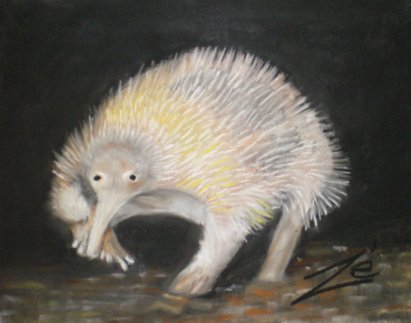
| Recently classified as three separate species, long-beaked echidnas belong to an ancient clade of egg-laying mammals that includes the platypus of Australia. They are easily distinguished from short-beaked echidnas by their long snouts, which account for two-thirds of the length of the head. Despite laws designed to protect these species, they are in decline in areas accessible to humans. Echidnas have lost much of their forest habitat to logging, mining and farming, and are regarded as highly prized game animals by local people, who hunt them with specially trained dogs. One species, Attenborough's long-beaked echidna, is thought to have an extremely restricted range and may be at high risk of extinction. This species of the egg-laying mammal hasn't been reported on New Guinea since 1961. |
| # 2 Attenborough's Long-beaked Echidna |
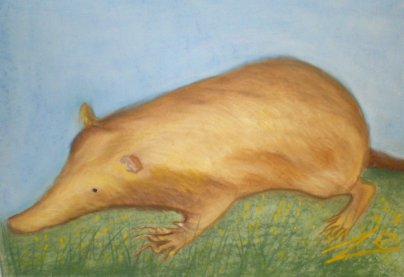
| The Hispanioan Solenodon (Solenodon paradoxus), also known as the Haitian Solenodon or Agouta, is a solenodon only found on the island of Hispaniola, shared by Haiti and the Dominican Republic, and was unknown to science until 1833, when it was first described by Brandt. There was also another species present on the island, S. marcanoi, which became extinct after the initial colonization period. All solenodon species belong to the order Soricomorpha and the family Solenodontidae. Solenodon attacks by cats and dogs introduced to Hispaniola have put the shrewlike insectivore ar risk. |
| # 3 Hispaniolan Solenodon |
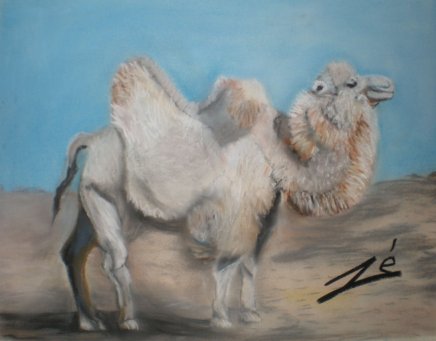
| The Bactrian camel (Camelus bactrianus) is a large even-toed ungulate native to the steppes of eastern Asia. The Bactrian camel has two humps on its back, in contrast to the dromedary which has one.
Nearly all of the estimated 1.4 million Bactrian camels alive today are domesticated, but in October 2002 the estimated 950 remaining in the wild in northwest China and Mongolia were placed on the critically endangered species list. Hunting, mining, and habitant loss jeopardize the two-humped Bactrian in China and Mongolia. |
| # 4 Bactrian Camel |
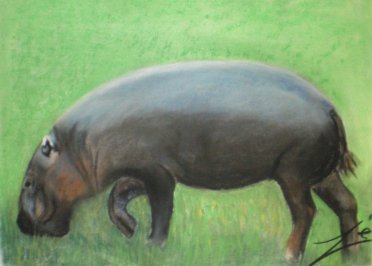
| This threatened species from western Africa ranges throughout sections of the Ivory Coast, Liberia, and Sierra Leone. It is a smaller version of the regular hippo with a shorter rounder head. They tend to be more terrestrial than their larger relatives, spending their time as solitary animals within the dense forests of their range. Because they are shy nocturnal animals and are rarely seen in their natural habitat, initial reports of this animal were dismissed as imagination. When specimens were finally obtained the demand for these animals resulted in severe impact on the wild populations. Loss of habitat, hunting by the natives for food and for their teeth, especially the incisors which are considered better ivory than elephant tusks, and trapping for export, have decimated the remaining populations. Even with existing protection, these animals are in danger. Hunted for meat, the pygmy-hippo survives mostly in war-torn Liberia. |
| # 5 Pygmy Hippopotamus |
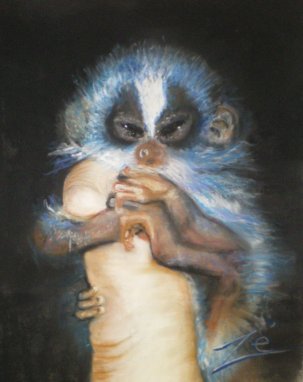
| Slender loris - possibly Endangered Location: Southern India and Sri Lanka, Habitat: Arboreal. Tropical forests, swampy forests, and woodlands. Description: The slender loris is tail-less, with soft dense fur that is brown in color, with the underside silver-gray. The nose is pointed and the eyes are very large. The ears are round and prominent and hairless at the edge. The hands and feet are both good at grasping with the thumbs and big toes opposable. There are small flat nails on all digits except the second toe, which is reduced and has a specialized grooming claw. Length of head and body about 10 in; weight up to 12.3 oz. Hunters seek the primate's tears for use in traditional medicine |
| # 6 Slender Loris |
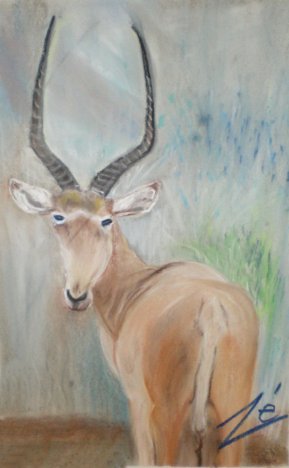
| # 7 Hirola |
| The Hirola (sometimes Damaliscus hunteri also known as Hunter's Hartebeest) is found in arid grassy plains in a pocket on the border between Kenya and Somalia. Perhpas the world�s rarest and most endangered antelopes, the hirola is the sole survivor of a formerly diverse group, and is often referred to as a living fossil. Once common throughout East Africa, the species has suffered a devastating decline in the last 30 years, with numbers plummeting from around 14,000 in the 1970s to an estimated 600 today. The surviving hirola are threatened by drought, poaching and habitat loss. Intensive conservation efforts are needed if this rare and beautiful antelope is to survive. The rare antelope's enemies are East African drought, and poaching. |
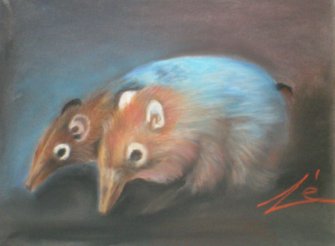
| # 8 Golden-rumped Elephant Shrew |
| Various species of elephant-shrew live throughout Africa except in western Africa and the Sahara, where they inhabit forests and dense woodlands or savannas, scrubland, and deserts. Many of the species have small or fragmented distributions, however, and of the 15 elephant-shrews, three are listed on the IUCN Red List of Threatened Species�one is near threatened, one is vulnerable, and the other is endanegered. The black and rufous giant elephant-shrew is vulnerable. It lives in only forests and dense woodlands in parts of eastern Kenya and Tanzania, habitat that is rapidly disappearing due to human development activities. People also catch and kill them for food. The Association of Zoos and Aquariums (AZA) is coordinating a conservation breeding program for the species in North American zoos. Distantly related to elephants, the shrew with a flexible snout is losing forest habitant in Kenya. |
| # 9 Bumblebee Bat |
| The Worlds smallest (bee-size) mammal is threatened by the burning of forest near caves where it roosts in Thailand.This tiny bat weighs less than 2 grams. Its body is about the size of a large bumblebee, hence the common name �bumblebee bat�. Since it was first described in 1974 this tiny mammal has been disturbed by collectors and tourists wanting to see the world�s smallest mammal. |
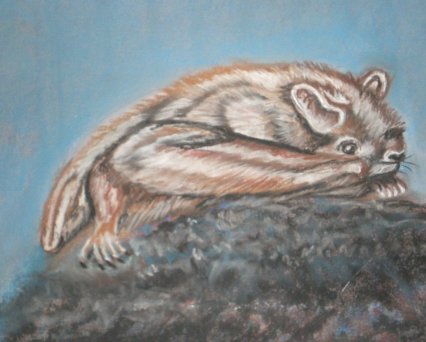
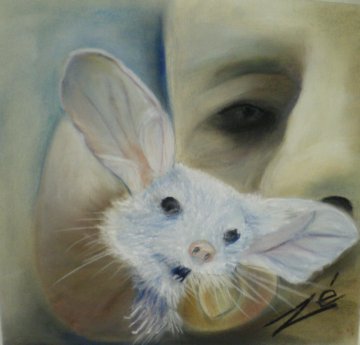
| # 10 Long-eared Jeroba |
| Jerboas are the members of the family Dipodidae; they are small jumping desert rodents of Asia and northern Africa that resemble mice with a long tufted tail and very long hind legs. The small forelegs are not used for locomotion. In general, Asiatic jerboas have five toes on their hind feet and African jerboas have three; the shapes of their ears vary widely between species. Jerboa fur is long, soft and silky. Diet varies considerably: some are specialist seed, insect, or plant eaters, others are omnivores. No one knows how many of the obscure jumping rodents remain in the Gobi desert. |

|
 |