The medieval castle is inseparably connected with fortification and architecture. In heraldry, the castle and tower were used in the coat of arms of those who built castles or who successfully assaulted them.
In this century, "castle" has been applied to the strongest of our early fortifications. These and the entire system of permanent defenses of our country are particular achievements of the Corps of Engineers.
Colonel (later General) Joseph G. Totten, Chief of Engineers, adopted the castle as the official engineer insignia in 1839. It was to be worn on the belt plate. West Point cadets wore the castle on their cap plate. Other regulations provided that the Corps of Engineers uniform include a silver turreted castle within the epaulet crescent. In 1857, the castle was used as a hat ornament. Later, it appeared on the shoulder knot, the saddle cloth, buttons, the forage cap, and as a collar ornament. In 1921, the castle's color was changed from silver to gold. This gold castle remains the distinctive symbol of the Corps to this day.
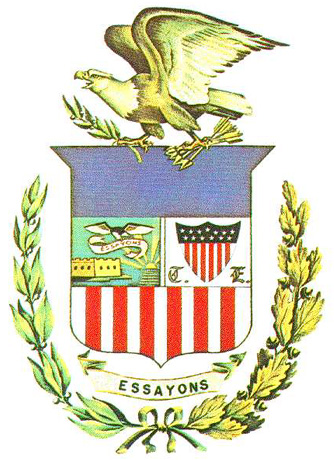
The U.S. Army Corps of Engineers officially adopted the seal on April 6,1897. The official seal commemorates the achievements of both the Army Corps of Engineers and the Corps of Topographical Engineers, which were consolidated in 1863.
The shield is divided into three horizontal sections with the center section bearing the original shields of the two Corps. The national eagle and "Essayons", the Corps' motto, dominate the overall design, as they originally did in the decorative sections of the Corps' maps of 1806 and 1807. The wreath of laurel foliage represents victory and achievement; the oak leaves symbolize strength.